
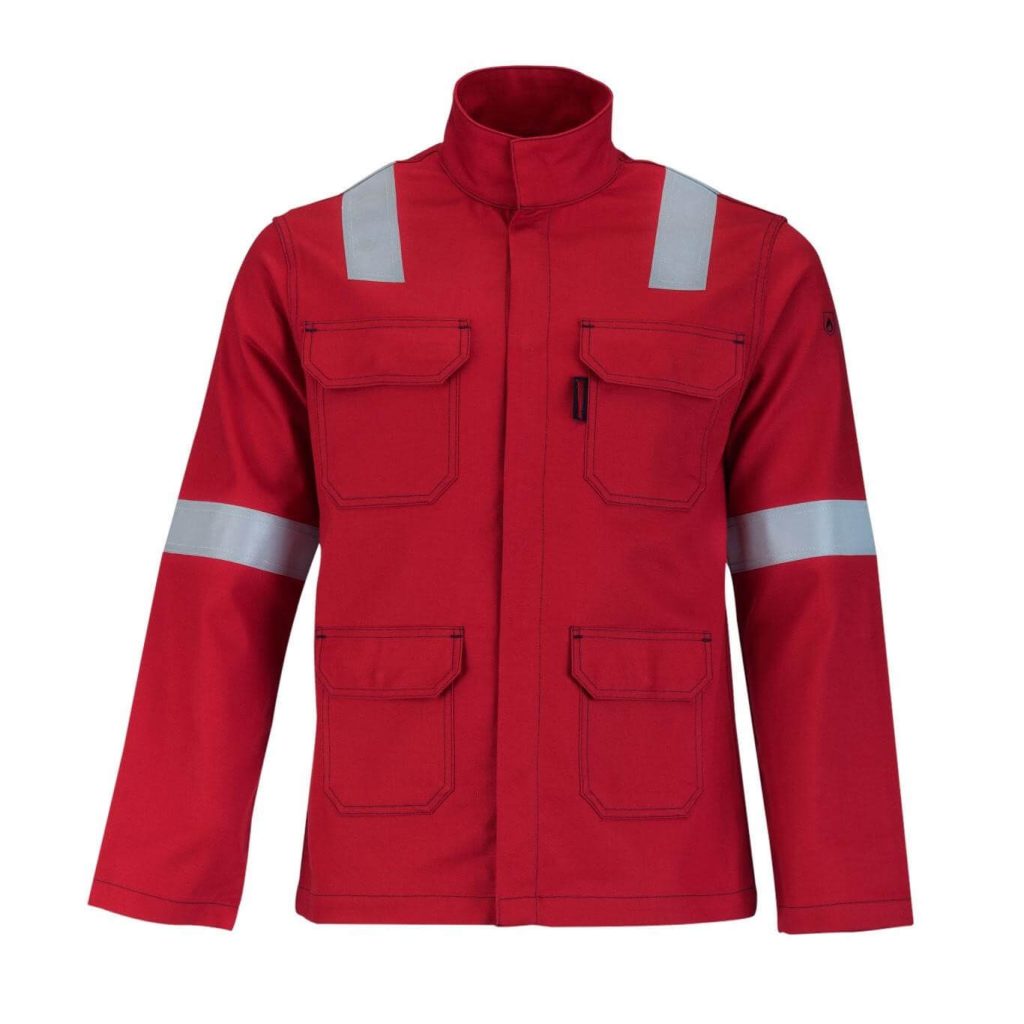
Natural fiber long-sleeve shirts, preferably 100% cotton or treated FR cotton, provide the safest base layer under a welding jacket. VisonSafety constructs its NFPA 2112-certified welding jackets using flame-resistant fabrics from 240gsm to 320gsm. Synthetic materials like polyester or nylon must be avoided, as they melt onto skin when exposed to sparks or radiant heat.
Get a Custom FR Welding Jacket Quote from VisonSafety
Why does your underlayer matter for welding safety?
An underlayer serves as the final barrier against thermal transfer and rogue sparks. Spatter slips past collars, cuffs, and hems even when an outer jacket fits correctly. What sits beneath the jacket determines whether a stray spark smolders out or melts into skin, as noted by guidance from Lincoln Electric and Miller Electric. That single layer prevents burns that protective outerwear cannot stop alone.
What fabrics should never be worn under a welding jacket?
Synthetic fibers create a direct hazard. Polyester and nylon ignite or melt when sparks land on them. Baker’s Gas & Welding Supplies warns that personal welding safety begins with never wearing anything synthetic. Melted material drips onto skin and causes severe burn injuries. The damage compounds because the fabric fuses to the wound.
How does full body coverage reduce injury risk?
Every inch of exposed skin becomes a target. Sparks, heat, and molten metal splashes strike bare arms and necks continually. The welder’s clothing must cover the entire body without gaps. A long-sleeved cotton shirt under the jacket eliminates the vulnerability at the wrist and collar. Coverage extends protection beyond what the jacket alone provides.
The underlayer also supports compliance with established safety standards. VisonSafety constructs welding jackets using flame-resistant fabrics tested to meet NFPA 2112 and EN ISO 11612 standards. These certifications confirm consistent performance in high-risk settings such as welding workshops, oil refineries, and construction sites. Selecting the right flame-resistant clothing for the underlayer aligns daily workwear with those same protective benchmarks.
Natural fibers remain the only safe choice. Heavy, tightly woven cotton or wool resists ignition and does not melt. The fabric may char but it will not fuse to skin. That difference prevents a minor spark from becoming a serious medical event.
Which fabrics are safe to wear under a welding jacket?
Safe underlayer fabrics fall into two categories: natural fibers that resist ignition and certified flame-resistant materials engineered for repeated exposure. The wrong choice melts into skin. The right choice smolders out.
What to wear under welding jacket conditions starts with heavyweight 100% cotton. Baker’s Gas & Welding Supplies notes cotton resists sparks far better than synthetic shirts. Stick welding ruins cotton eventually. That is an accepted trade-off for a non-melting base layer.
Wool offers another natural option. A heavy, tightly woven wool shirt provides protection without synthetic melt risk. Wool also retains insulation even when damp, a practical advantage in humid fabrication shops.
Get a Custom FR Welding Jacket Quote from VisonSafety
What is the difference between treated cotton and inherent FR blends?
Treated cotton starts as standard cotton fabric, then receives a chemical treatment that imparts flame resistance. Inherent FR blends use fibers like modacrylic or Nomex that resist ignition at the molecular level. Both approaches appear in certified FR/AR base layers.
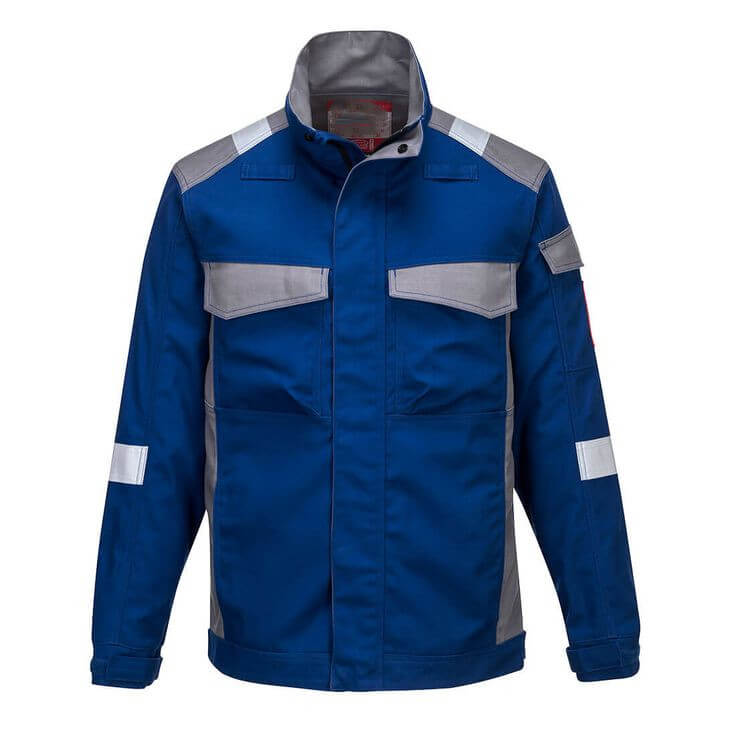
VisonSafety manufactures welding jackets using treated cotton and inherent FR blends. Fabric weights range from 240gsm to 320gsm. Jackets meet NFPA 2112 and EN ISO 11612 standards.
Which fabrics should welders never wear under a jacket?
Synthetics are the absolute exclusion. Polyester, nylon, and spandex melt when sparks land. Melted fabric bonds to skin and deepens burn severity.
Certified FR base layers made from modacrylic, Nomex, or treated cotton deliver documented protection. These garments retain performance through repeated wash cycles when laundered correctly.
How to stay cool under a welding jacket in summer?
Staying cool under a welding jacket in summer requires strategic fabric selection and ventilation. The right underlayer prevents heat exhaustion without sacrificing the protection that welding demands.
What fabric works best under a welding jacket in hot weather?
Lightweight, moisture-wicking FR knits pull sweat away from the skin. This active transport reduces the soaked, heavy feeling that thick cotton creates. What to wear under welding jacket conditions shifts dramatically in summer. WeldingToolshub.com notes that sweating under a thick jacket leads to skin irritation and distraction. Distraction near an arc is dangerous. A dry, cool underlayer keeps focus sharp.
Can leather accessories replace a heavy jacket in summer?
Leather aprons, bibs, and sleeves paired with a cool cotton shirt offer a practical alternative. Baker’s Gas & Welding Supplies confirms this combination improves safety and comfort. The leather stops sparks and spatter where they hit most often. The cotton shirt breathes everywhere else. This modular approach adapts to changing shop temperatures throughout a shift.
Ventilation in the outer jacket matters just as much. Mesh ventilation panels release heat during stops, while adjustable features customize fit. Air movement through the jacket prevents the dangerous heat buildup that accelerates fatigue. A lightweight design keeps the welder agile. Heat stress slows reaction time. Every second counts when molten metal flies.
What to wear under a welding jacket in cold weather?
Cold-weather welding demands a base layer that resists flame while trapping heat. A heavy, tightly woven wool or 100% cotton shirt provides the necessary thermal barrier without introducing melt hazards. Synthetics have no place here. A stray spark that slips past the jacket collar smolders on natural fiber. On polyester, that same spark melts into skin.
Get a Custom FR Welding Jacket Quote from VisonSafety
Why does fabric weight matter for winter welding underlayers?
Fabric weight determines both insulation and durability under a welding jacket. Heavier weaves block cold air and resist abrasion from layered outer gear. A lightweight cotton tee offers little protection when temperatures drop and spatter finds gaps. The right what to wear under welding jacket in freezing conditions starts with substantial, flame-resistant material that holds up to daily industrial use.
How should cuffs and hems be configured to prevent spark entry?
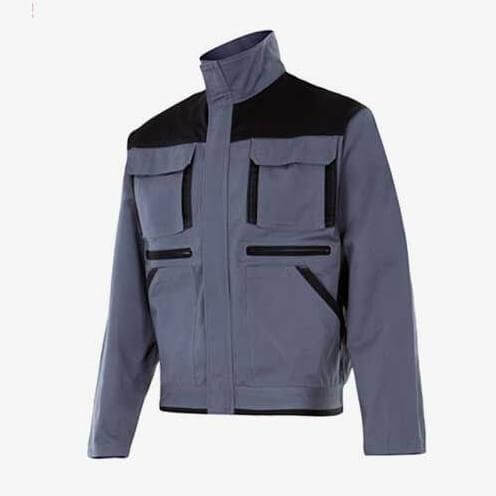
Cuffs, collars, and hems must fit snugly to eliminate spark traps. Loose openings invite spatter into the layering system. Adjustable cuffs and extended back hems on the outer jacket seal out cold drafts and deflect sparks away from the body. These features maintain protection even when a welder bends, reaches, or works overhead. Reinforced seams and bar-tack stress points keep those closures intact through repeated stress. Heavy winter layering strains standard stitching. Without reinforcement, seams split and expose skin to both cold air and burn risks. The outer jacket’s abrasion-resistant shell preserves the entire system’s integrity shift after shift.
How do safety standards apply to underlayer choices?
Safety standards govern underlayers because sparks and spatter reach beneath outer jackets. NFPA 2112 and NFPA 70E set requirements for flame-resistant garments, including base layers in industrial settings. A welder wearing a synthetic shirt under a compliant jacket still risks melt injuries when stray spatter slips past the collar or cuffs.
EN ISO 11611 and EN ISO 11612 specify protective performance for welding and heat-exposure workwear. These standards address the entire protective system, not just the outer shell. Underlayers made from untreated polyester or nylon defeat the purpose of certified outerwear.
What standards apply to base layers worn under welding jackets?
NFPA 2112 establishes minimum performance requirements for flame-resistant garments. NFPA 70E extends those requirements to protective clothing used in electrical arc flash environments. Both standards treat base layers as part of the protective ensemble when thermal hazards exist.
EN ISO 11612 covers clothing protecting against heat and flame, including radiant heat and molten metal splash. EN ISO 11611 applies specifically to welding operations. Procurement specialists should verify that underlayer fabrics meet the same hazard category as the outer garment.
Does laundering affect FR compliance for underlayers?
Proper laundering preserves FR properties. Harsh detergents or residue reduce a garment’s ability to self-extinguish. VisonSafety batch-tests 100% of fabrics and maintains traceability records for more than three years, operating within an ISO 9001 environment.
The company’s testing protocol confirms that fabric performance remains consistent after repeated wash cycles. Safety managers should specify FR-compatible detergents for all underlayer garments. A compliant garment loses its protective value when laundered incorrectly.
Selecting appropriate underlayers requires understanding when to choose FR clothing for specific thermal hazards. The standard applies to every layer touching the skin.
FAQ
What fabrics should never be worn under a welding jacket?
Synthetic fibers like polyester and nylon ignite or melt onto skin when exposed to sparks or radiant heat, causing severe burn injuries.
Why does the underlayer matter for welding safety?
The underlayer serves as the final barrier against thermal transfer and rogue sparks that slip past collars, cuffs, and hems, preventing burns outerwear cannot stop.
Conclusion
Choosing the right underlayer for a welding jacket is a safety decision that directly affects burn protection and comfort across every season. FR-rated natural fibers or treated fabrics block thermal transfer and resist ignition, while synthetic materials introduce melt hazards that compromise the entire protective system. Proper laundering preserves this performance, and snug cuffs and hems prevent spark entry. Evaluate your current underlayer against these standards and replace any garment that introduces risk.
 English
 Deutsch
 Français
 Polski
 Português do Brasil
 Español
 日本語
 Русский
 العربية
 Italiano
 Nederlands
 Türkçe
 한국어