
FR jeans alone do not provide adequate protection for welding. NFPA 2112 and EN ISO 11612 standards require flame-resistant fabrics that withstand sparks and molten metal. VisonSafety’s custom welding jackets use FR blends from 240gsm to 320gsm. Welders need dedicated FR pants with reinforced stitching and non-melting materials for full lower-body safety.
Get a Custom FR Jeans Quote from VisonSafety
Can you wear FR jeans for welding?
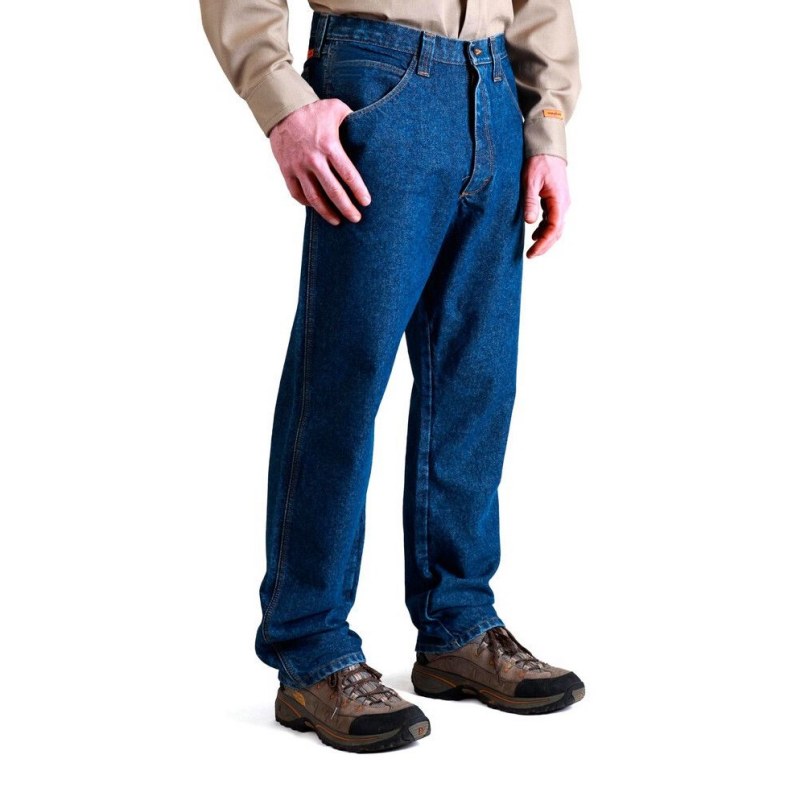
Yes. FR jeans for welding are flame-resistant garments designed to self-extinguish after contact with sparks and never melt onto skin. The fabric chars and stops burning within seconds. Regular denim catches fire and continues to burn, fusing to skin and causing catastrophic injury.
The best FR gear for welding combines flame-resistant cotton fabric with reinforced stitching and a snug, non-melting fit. This construction matters. Loose threads ignite. Baggy cuffs catch slag. A proper FR jean eliminates those failure points through deliberate engineering, not luck.
How do FR jeans protect against welding sparks?
FR fabrics self-extinguish when exposed to flames or high heat. The American Welding Society explains that the material chars rather than burning, creating a barrier that prevents the flame from reaching skin. This mechanism works even after repeated exposure. The protection does not wash out or wear off when the garment uses inherently flame-resistant fibers.
VisonSafety manufactures FR clothing, including pants and bibs, engineered to meet stringent global standards such as NFPA 2112 and EN ISO 11612. These standards test for flame spread, heat transfer, and thermal shrinkage. Garments that pass provide a documented, repeatable level of protection against molten metal splash and radiant heat.
What makes FR jeans different from regular denim?
Regular denim is fuel. It ignites, burns independently, and melts synthetic blends onto skin. FR jeans stop burning when the heat source is removed. The difference is not cosmetic. It is the margin between a minor incident and a reportable injury.
FR clothing keeps workers safe from high heat and sparks generated by welding. This extra layer of protection remains intact even when the garment faces direct flame contact. For safety managers and procurement specialists, specifying FR jeans means closing a gap that non-FR alternatives leave wide open. The decision to choose FR clothing hinges on understanding that thermal hazards do not announce themselves before striking.
How does FR denim behave around welding hazards?
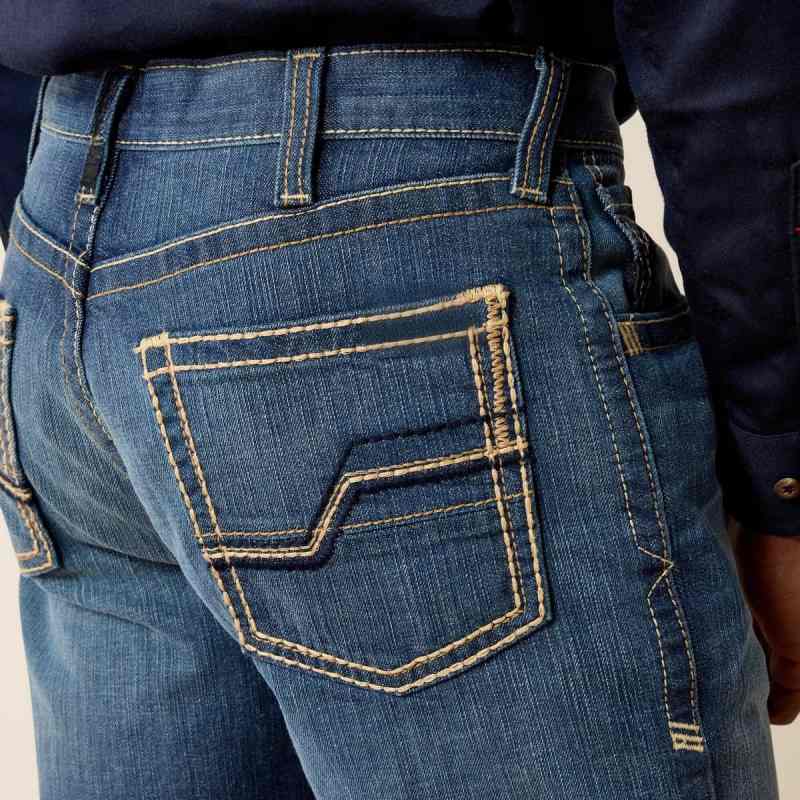
FR denim resists ignition and self-extinguishes when exposed to welding sparks, molten metal splashes, and radiant heat. Unlike standard cotton or polyester blends, fr jeans for welding do not continue burning and will not melt onto skin. The fabric chars locally, then stops. That behavior buys critical seconds.
Get a Custom FR Jeans Quote from VisonSafety
What makes the fabric stop burning?
FR denim is constructed using flame-resistant fabrics designed to withstand sparks, molten metal splashes, and radiant heat. Fabric options include treated cotton and inherent FR blends with weights ranging from 240gsm to 320gsm. Treated cotton relies on chemical additives that trigger charring. Inherent blends use fibers that are flame-resistant at the molecular level. Both approaches produce the same result: the material extinguishes itself once the ignition source is removed.
Self-extinguishing fabric is not the same as a heat-impervious barrier. Pinhole burns and slag burn-through remain risks. A glob of molten slag can still punch through denim if it sits in a cuff or lap fold. The fabric stops burning after the slag cools, but the hole is already there. Supervisors who treat FR denim as invincible armor invite preventable injuries.
How does FR denim compare to standard work pants?
Standard cotton pants ignite and keep burning. Polyester blends melt into the wound. FR denim does neither. The difference is stark.
The charred area on FR denim acts as a thermal barrier, reducing heat transfer to skin. That protection degrades with repeated exposure. Safety managers track garment condition because compromised fabric loses its self-extinguishing property. Understanding the distinction between arc-rated and flame-resistant protection helps procurement teams specify the correct lower-body PPE for each job role.
What specifications matter in welding-grade FR jeans?
Welding-grade fr jeans for welding must meet specific technical thresholds to protect workers from burns and ignition hazards. Fabric weight, material composition, and design geometry determine whether a pair of jeans sheds sparks or traps them against the body. A single overlooked specification creates a direct path to injury.
What fabric weight is required for welding FR jeans?
Heavy denim is critical for welding FR jeans. Lighter denim lacks the thermal mass to resist spark penetration and radiant heat. The heavier weight absorbs and dissipates energy before it reaches skin. Procurement teams who substitute standard-weight denim compromise the entire protective envelope.
How do material blends affect spark shedding?
Material choice splits into two distinct paths. FR treated cotton chars and self-extinguishes on contact, forming a carbonized barrier that blocks further heat transfer. Modacrylic/aramid blends offer inherent flame resistance without chemical treatment, maintaining their protective properties through repeated industrial laundering. Each option sheds sparks differently. Treated cotton relies on the char layer. Inherent blends resist ignition at the fiber level. The right selection depends on the specific welding process and exposure duration.
Why does leg design matter for welder safety?
Cuffless straight-leg designs prevent slag from trapping in boot collars. A folded cuff creates a shelf that catches hot debris. Straight legs allow sparks and molten metal to fall away from the footwear opening. This single design choice reduces burn injury risk more than any fabric upgrade applied to a cuffed garment.
VisonSafety tests every fabric roll before production for flame resistance, shrinkage, and colorfastness. This pre-production verification ensures that the specified weight and blend perform as engineered. Without roll-level testing, batch variation introduces compliance gaps that field inspections miss. The company’s approach to flame-resistant clothing integrates material science with practical design constraints. Shrinkage control matters. A jean that fits correctly on day one but shrinks after washing exposes the ankle and creates the same hazard as a poor initial design.
Where do FR jeans work and where do they fall short?
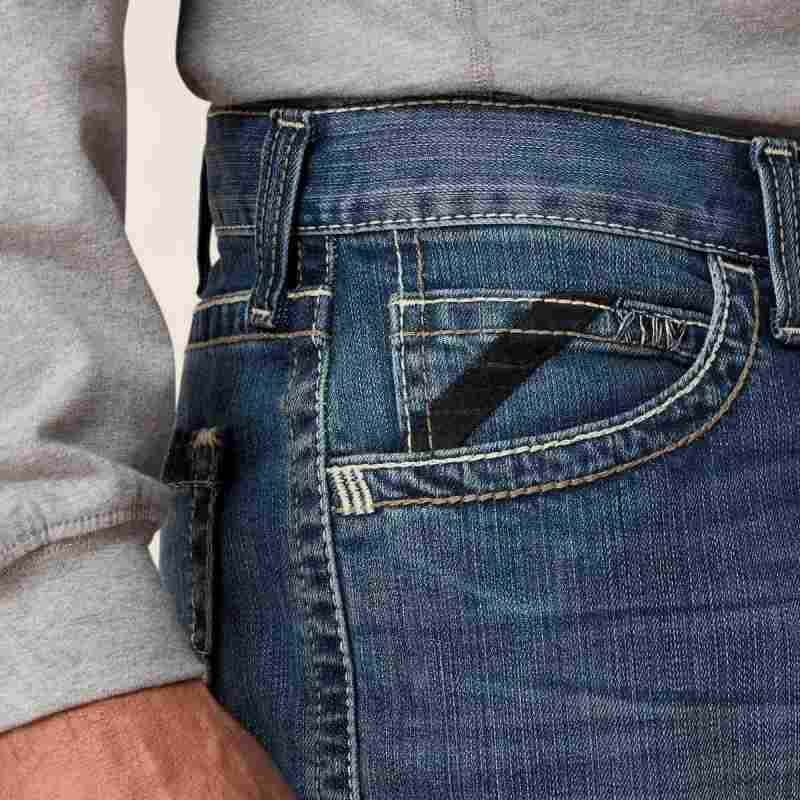
FR jeans for welding provide dependable lower-body protection during specific processes but reach clear performance limits in others. A safety manager who misjudges that boundary exposes workers to preventable burn injuries. The fabric’s self-extinguishing properties and non-melting construction make it a practical choice for controlled arc welding. Heavy spatter and molten metal change the equation entirely.
Get a Custom FR Jeans Quote from VisonSafety
Which welding processes suit FR denim best?
TIG welding produces clean arcs and lower spatter, making FR denim highly suitable for this process. The controlled heat input and minimal droplet transfer mean the fabric rarely faces sustained flame contact. Welders performing bench work or light fabrication get adequate coverage without the weight of leather.
MIG and Stick (SMAW) welding involve medium-to-heavy spatter that requires careful evaluation of FR denim performance. The fabric chars and self-extinguishes on contact, but concentrated spatter can burn through untreated cotton blends. Supervisors should assess spatter volume and welder positioning before specifying denim for these applications.
When do FR jeans become the wrong choice?
Heavy gouging, overhead welding, and cutting operations require leather or split-cowhide chaps as mandatory protection. Gravity pulls molten metal downward during overhead work. Denim, even when treated, lacks the mass and density to deflect that volume of hot material. A single missed spark in a gouging operation can penetrate the fabric instantly.
VisonSafety jackets are tested to meet NFPA 2112 and EN ISO 11612 standards for high-risk industrial settings like welding workshops. That testing framework underscores a critical point: upper-body protection demands certified performance, and lower-body PPE follows the same logic. FR jeans serve well within their design envelope. Outside it, leather remains the only defensible specification.
How should you care for and retire welding FR denim?
Proper care preserves the protective properties of fr jeans for welding. The safest detergents for FR garments are mild, low-residue formulas that use non-ionic surfactants, avoid oxidizers, and contain no fabric softeners or optical brighteners. Harsh chemicals or residue from laundry soap reduce a garment’s ability to self-extinguish and affect compliance. That loss of protection goes unnoticed until an incident occurs.
What laundry products damage FR denim?
Fabric softeners leave a flammable coating. Optical brighteners mask contamination. Oxidizers degrade the flame-resistant treatment. Any of these compromises the self-extinguishing mechanism. The damage accumulates with each wash cycle. A garment that looks clean may no longer meet its rated protection.
How do you know when to retire welding FR jeans?
Inspection determines retirement timing. Safety managers check for burn holes, oil contamination, and fabric thinning. Oil-soaked denim ignites and sustains combustion. Thinned fabric tears under stress and exposes skin. Burn holes larger than a pencil eraser signal replacement. VisonSafety maintains traceability records for more than three years, which supports fleet laundering schedules and systematic replacement programs. A documented retirement protocol prevents degraded jeans from returning to the shop floor.
FAQ
How do FR jeans behave when exposed to welding sparks?
The material chars rather than burning, creating a barrier that prevents the flame from reaching skin.
What makes FR jeans different from regular denim for welding?
Regular denim ignites, burns independently, and melts synthetic blends onto skin. Conclusion FR jeans for welding protect within a defined envelope, TIG and light MIG work, but fail under heavy spatter, gouging, or overhead operations where leather remains the only defensible choice. A safety manager who matches garment design to process, enforces cuffless straight-leg construction, and retires denim at the first sign of burn-through or oil contamination eliminates the gap between compliant PPE and real-world protection.
 English
 Deutsch
 Français
 Polski
 Português do Brasil
 Español
 日本語
 Русский
 العربية
 Italiano
 Nederlands
 Türkçe
 한국어