
Safety vests are essential high-visibility garments that make personnel identifiable in reduced-visibility environments. This article summarises vest function, key technical features, relevant compliance standards, and the operational advantages of customisation so organisations can protect staff while maintaining brand presence on site.
How Do Safety Vests Enhance Worker Safety and Visibility?
Vests combine fluorescent background fabrics and retroreflective tape to maximise daytime and night-time conspicuity. Fluorescent hues (neon yellow, orange) boost daytime detection; retroreflective materials restore visibility under headlights or in poor weather. Properly specified vests reduce incident risk in low-light, high-traffic settings and help meet mandated requirements.
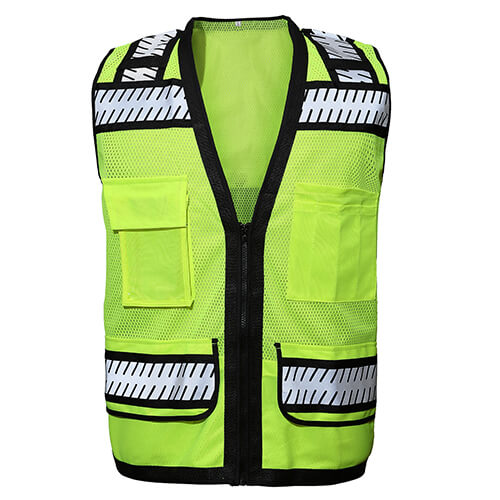
Get a Custom Hi-Vis Vest Quote from VisonSafety
Empirical research consistently demonstrates that high-visibility apparel is a critical factor in preventing severe workplace incidents.
High-Visibility Apparel Prevents Workplace Fatalities
Traffic-related fatalities represent a leading workplace hazard within law enforcement, accounting for approximately 44% of all occupational fatalities in that field between 2002 and 2011. Many officer deaths result from being struck by vehicles; use of High-Visibility Safety Apparel (HVSA) could mitigate a substantial portion of these incidents. The need to improve compliance with traffic-protective behaviours is frequently underestimated due to workplace misperceptions. Relatively few studies have investigated HVSA-wearing behaviours in relation to social and psychological factors, leaving subjective and objective experiences insufficiently characterised. Rigorous assessment of law enforcement officers’ attitudes and safety behaviours is essential to reduce traffic-related fatalities and to enhance overall occupational health and safety within the law enforcement community.
Personal Protective Clothing: Law Enforcement Officers’ Attitudes and Safety Behavior Assessments Toward High-Visibility Safety Apparel, 2010
What Are the Key Features of High Visibility Clothing?
High-visibility clothing, including safety vests, is defined by technical attributes that maximise conspicuity and wearer acceptance. These attributes guide material choice, construction, and certification.
Fluorescent Colors : Bright colours increase daytime visibility.
Reflective Materials : Strips or tape enhance detection in low light.
Comfort and Fit : Good fit and comfort drive consistent use.
Together, these elements deliver measurable improvements in conspicuity and practical wearability.
How Reflective Safety Gear Improves On-Site Awareness
Retroreflective gear makes personnel easier to detect, shortening reaction time for drivers and equipment operators and lowering accident probability. This is critical on construction sites, roadwork zones, and operations with limited sightlines. Proper specification also supports compliance with formal safety standards.
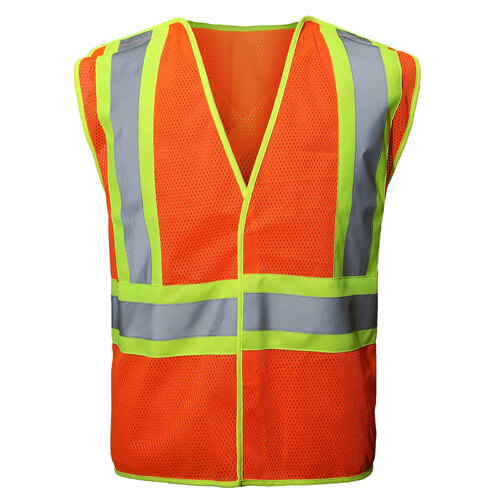
Get a Custom Hi-Vis Vest Quote from VisonSafety
Which Compliance Standards Govern Safety Vest Effectiveness?
Standards provide objective criteria for vest performance. ANSI/ISEA 107 specifies visibility requirements in the United States; EN ISO 20471 provides comparable criteria in Europe. Conformance improves worker protection and reduces employer liability.
What Are ANSI Safety Standards and Their Impact on Safety Vests?
ANSI standards set parameters for retroreflective placement, background material performance, and overall visibility so vests perform in low-light and inclement conditions. Employers should issue vests that meet the appropriate ANSI class for their operational environment.
How Do Safety Vests Meet OSHA and ISO Requirements?
Vests should align with OSHA expectations and applicable ISO specifications for personal protective equipment. Employers are responsible for supplying PPE that meets recognised standards, including correct sizing and fit to preserve visibility and comfort.
Proper fit is a determinative factor in vest performance, as ill-fitting garments can undermine wearer protection.
Importance of Properly Fitting Safety Vests
As the construction workforce becomes more diverse, personal protective equipment must accommodate a wider range of body types. The historic “one size fits all” approach is no longer an adequate metric for vest fit. Prior research indicated a broad consensus that construction workers often lack vests with appropriate fit. In response, the Cal Poly Construction Management Department convened the first Verifying Everyone’s Safety Together (VEST) Hackathon. This two-day event brought industry participants, students, and faculty together to develop prototypes designed to better accommodate diverse populations. Common themes emerged during discussions and interviews at the event, which this research aims to address in order to inform future PPE design and procurement decisions.
Safely Covered or Dangerously Exposed: Analyzing the Safety Vest Code of Compliance, 2015
What Are the Business Benefits of Custom Safety Vests?
Custom safety vests combine regulatory compliance with clear brand presentation, delivering operational and commercial value.
Cost-Effectiveness : Reduces incident-related costs, producing long-term savings.
Enhanced Employee Morale : Branding and fit can improve staff pride and retention.
Increased Brand Recognition : Logos and livery increase visibility on site.
Investment in customised safety apparel supports both safety outcomes and organisational objectives.
How Does Customization Improve Worker Safety and Brand Recognition?
Adding company livery and logos reinforces a professional image and signals a commitment to safety. Customisation that preserves required visibility features aids identification on site and strengthens brand recognition with clients and the public.
What Are the Cost and Operational Advantages of Custom Safety Apparel?
Custom safety apparel yields advantages such as risk mitigation, longer asset life and improved user compliance, all of which lower total cost of ownership and smooth site operations.
Reduced Legal Exposure : Vests that meet standards can help limit legal risk after incidents.
Durability : Quality construction extends service life and reduces replacement cycles.
Comfort : Comfortable garments encourage consistent wear.
Compliance, durability and wearer acceptance make customised apparel a prudent procurement choice.
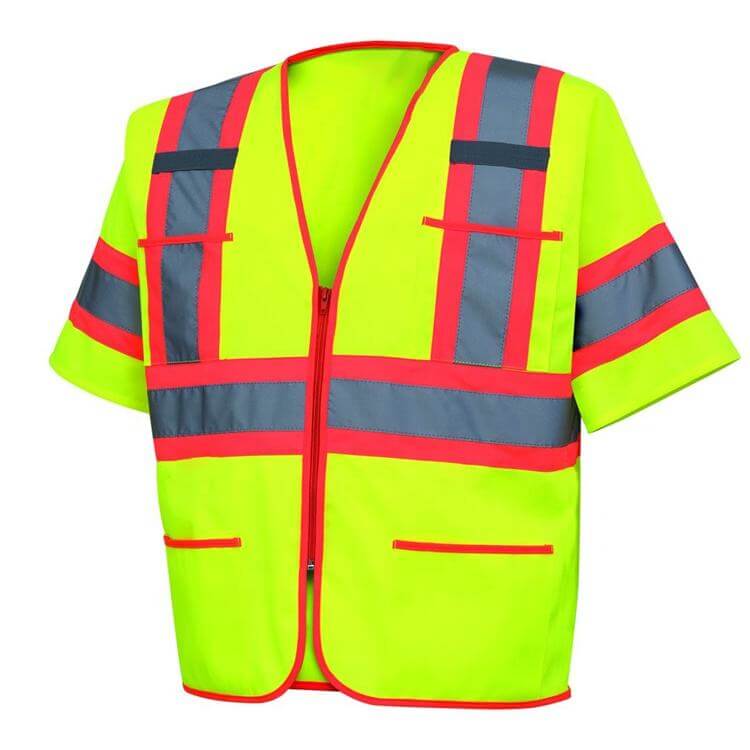
Get a Custom Hi-Vis Vest Quote from VisonSafety
How Should Businesses Choose the Right Safety Vest for Their Industry?
Evaluate vests against operational demands, regulatory obligations, and end-user ergonomics to select garments that meet performance and practical needs.
Industry Requirements : Match vests to the specific hazards and tasks of the sector.
Compliance with Safety Regulations : Verify conformity with relevant standards.
Material and Comfort Needs : Choose materials that balance comfort and durability.
A systematic assessment ensures chosen vests align with industry norms and operational priorities.
Which Materials and Reflectivity Levels Suit Different Work Environments?
Material and reflectivity should match the assigned class rating and site hazards. Higher classes increase background area and retroreflective coverage for elevated-risk settings. Any custom graphic or colour must not reduce certified visibility.
What Are Best Practices for Ordering and Ensuring Compliance?
When procuring vests, follow a compliance-focused process that confirms standards alignment, inspects product quality, and keeps traceable documentation.
Understand Industry Standards : Know which standards apply to your operations.
Engage with Manufacturers for Quality : Choose reputable suppliers to ensure consistent quality.
Maintain Documentation for Compliance : Keep records that demonstrate adherence to regulations.
These practices help ensure issued vests protect personnel, meet regulatory requirements, and withstand operational demands.
If you have any questions or require assistance, please contact usor professional support.
Frequently Asked Questions
What types of industries require safety vests?
Sectors such as construction, roadwork, law enforcement, and emergency services commonly require vests. Other applications include manufacturing, warehousing and event management where visibility and identification reduce incident risk.
How can businesses ensure the proper fit of safety vests for their employees?
Conduct size assessments, provide a range of sizes and adjustable cuts, and collect end-user feedback to refine fit and comfort across a diverse workforce.
What are the environmental considerations when choosing safety vests?
Consider material lifecycle, recycled or sustainably sourced fabrics, and durable constructions to reduce environmental impact and total cost by extending service life. Prefer suppliers with verifiable sustainability practices.
Can safety vests be used in extreme weather conditions?
Vests can be specified for climatic extremes: moisture-wicking, breathable fabrics for heat and insulated or layered options for cold. Maintain reflective elements to preserve visibility in low-light and inclement conditions.
What role does employee training play in the effectiveness of safety vests?
Training should cover correct donning, adjustment, compliance rationale, and routine maintenance. A trained workforce is more likely to wear PPE correctly and improve safety performance.
How often should safety vests be inspected and replaced?
Inspect vests on a schedule for fraying, fading or reflective degradation. Replace items that fail performance criteria; typical review intervals depend on usage but should be regular to preserve protection.
Conclusion
Procuring compliant, well‑fitted safety vests is a fundamental step to enhance worker protection and maintain corporate visibility in hazardous environments. When specified to applicable standards and customised without compromising visibility, vests reduce incident risk, support employee morale, and demonstrate organisational commitment to safety. Review our range of certified high-quality safety vests to equip your team with reliable, standards-compliant PPE.
 English
 Deutsch
 Français
 Polski
 Português do Brasil
 Español
 日本語
 Русский
 العربية
 Italiano
 Nederlands
 Türkçe
 한국어