
Black high-visibility (hi-vis) vests are safety garments designed to increase wearer conspicuity where ambient visibility is limited, such as construction zones, roadway operations, and large events. This article outlines the main sectors that specify black hi-vis vests, the standards that govern selection, and practical considerations for branding, fit, and procurement.
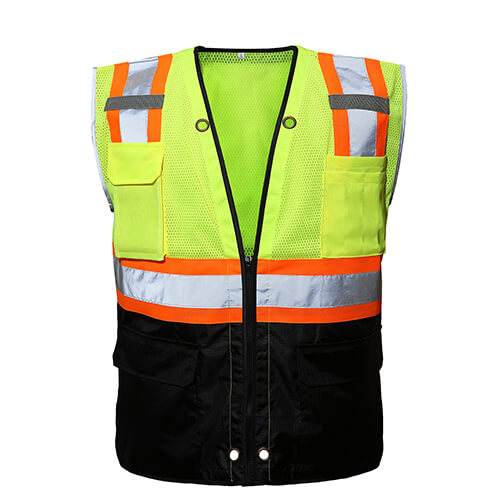
Get a Custom Hi-Vis Vest Quote from VisonSafety
Compliance Requirements and Safety Regulations
Compliance drives vest specification: garments must meet measurable photometric and retroreflective criteria. ANSI and ISO standards set minimum retroreflective area, photometric performance, and construction requirements so employers can reduce incident risk and regulatory exposure.
Understanding these standards helps employers specify compliant garments, protect personnel, and limit regulatory and civil liability.
Which Industries Rely on Black Hi Vis Vests for Worker Safety?
Many sectors include black hi-vis vests in PPE ensembles to preserve visibility and reduce operational risk. Common applications include:
Construction : Workers on sites operate heavy machinery and work near moving vehicles, so visibility is essential.
Logistics and Transportation : Delivery and warehouse staff use hi-vis vests to move safely in busy facilities.
Emergency Services : First responders, including police and paramedics, require conspicuity in urgent situations.
These examples show how black hi vis vests reduce collision risk and support safe task execution; see our resource on black hi-vis vests for product options.
Emergency response roles may use ANSI-classified or approved alternative garments to meet specific visibility needs.
ANSI/ISEA Standards for Emergency Responder Vests
The FHWA also provided garments complying with ANSI/ISEA 207-2006 will be acceptable as an alternative to ANSI/ISEA 107-2004 for law enforcement and emergency responders.
Evaluation of reflective vest options, 2006
How Do Construction and Industrial Sectors Utilize Black Reflective Safety Vests?
In these sectors, vests increase daytime and nighttime conspicuity and help separate personnel from mobile equipment. Manufacturers specify retroreflective tape, photometric classes, and background materials so vests return sufficient luminous intensity to drivers and operators, reducing struck-by incidents.
Regulatory conformity is required on many sites: contractors typically issue ANSI- or ISO-compliant hi-vis garments as part of safety plans. Proper fit and ergonomics preserve reflector placement and mobility, maintaining both safety and productivity.
High-Visibility Safety Vest Fit in Construction
As the construction industry transitions to reflect a more diverse population, it is essential that personal protective equipment (PPE) accommodates this shift in demographics. In particular, the “One size fits all” approach is no longer an appropriate metric of fit for the safety vest. Previous student research reflected an overwhelming consensus that construction workers do not have vests which appropriately fit them. This research will discuss the general demand for properly fitting high visibility safety vests.
Safely Covered or Dangerously Exposed: Analyzing the Safety Vest Code of Compliance, 2015
What Roles in Security and Event Management Require Black Hi Vis Vests?
Black hi-vis vests are common where rapid visual identification and crowd control are priorities. Typical roles include:
Security Personnel : Guards wear vests to be easily identified in crowds.
Event Staff : Staff at concerts and festivals use vests to manage crowds and assist attendees.
Traffic Control Officers : Officers directing traffic wear reflective vests to enhance visibility to drivers.
Standardized visibility solutions support safety, order, and timely incident response in public environments.
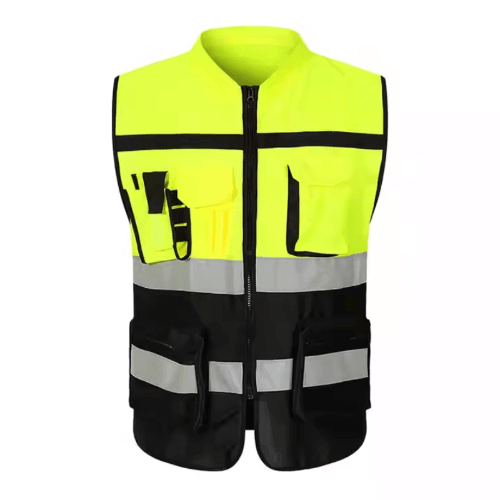
Get a Custom Hi-Vis Vest Quote from VisonSafety
What Are the ANSI and International Standards Governing Black Hi Vis Vests?
ANSI/ISEA 107 and EN ISO 20471 define the performance and design criteria for hi-vis garments, including classification by reflective area, required background and retroreflective materials, and test methods. Certification and testing give objective evidence a vest meets its claimed protection level.
Meeting these standards is essential for organisations that want to protect personnel and limit regulatory and civil exposure from inadequate PPE.
How Does ANSI 107 Standard Ensure Safety and Visibility?
ANSI/ISEA 107 specifies fluorescent background requirements, retroreflective tape placement, minimum reflective area, and garment design to preserve unobstructed reflective zones. Class-based minimums align garment performance with expected risk levels and roadway speeds to ensure visibility in daylight and low-light conditions.
Following ANSI/ISEA 107 reduces visibility-related incidents and is a core element of employer risk-control programs.
Which International Safety Regulations Apply to Black Hi Vis Vests?
EN ISO 20471 and related international specifications set photometric, material, and garment-class requirements outside the U.S., enabling consistent acceptance criteria across global supply chains and reinforcing demonstrable safety performance in multiple jurisdictions.
How Do Custom Hi Vis Vests Enhance Brand Visibility and Safety?
Custom hi-vis vests allow organisations to integrate corporate identification without degrading reflective placement or photometric performance. Well-designed branding maintains compliance while improving external identification and stakeholder recognition.
What Customization Options Are Available for Black Hi Vis Safety Vests?
Common customization options include:
Logo Embroidery : Company logos added without compromising reflective zones.
Color Variations : Alternative colours to meet specific visibility or branding needs.
Functional Features : Pockets, zippers, and other usability elements.
These options let organisations deliver compliant, functional apparel that aligns with operational needs.
How Do Custom Vests Improve Operational Efficiency and Risk Reduction?
Custom vests speed personnel identification, clarify onsite roles, and streamline communication, which shortens coordination time and supports faster incident response. They can also be specified to the required safety class to meet regulatory obligations.
What Should Wholesalers and Distributors Consider When Buying Black Hi Vis Vests?
Key procurement considerations:
Quality Standards : Verify ANSI and international compliance.
Market Demand : Match product choices to customer industry needs.
Supplier Reliability : Assess supplier reputation and delivery consistency.
These factors help wholesalers supply compliant, durable apparel that meets client expectations.
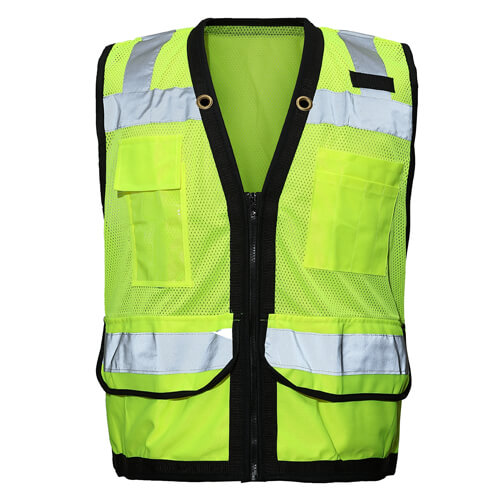
Get a Custom Hi-Vis Vest Quote from VisonSafety
Which Technical Specifications Are Critical for Bulk Purchases?
When buying at scale, prioritise:
Compliance Standards : Confirm ANSI/ISO class requirements.
Material Selection : Durable, appropriate background and reflective materials.
Performance Features : Reliable reflective performance and practical design.
Prioritising these specifications delivers cost-effective, standards-compliant apparel with lasting protective performance.
How to Evaluate Supplier Compliance and Product Quality?
Evaluate suppliers using objective compliance evidence and quality processes. Key checks include certification compliance, documented quality assurance, and testing/inspection records to reduce the risk of non-conforming product.
If you have any questions or need assistance, you can contact usfor more information.
Frequently Asked Questions
What are the benefits of using black hi vis vests in the workplace?
Black hi-vis vests increase conspicuity, reduce vehicle- and equipment-related incident risk, support regulatory compliance, and aid rapid personnel identification; they can also be branded to reinforce corporate identity.
How do I choose the right size for black hi vis vests?
Use manufacturer sizing charts (chest circumference) and allow for clothes worn underneath; correct fit preserves reflector placement and mobility.
Are there specific maintenance requirements for black hi vis vests?
Follow manufacturer wash instructions, avoid bleach and fabric softeners that can degrade reflective elements, inspect regularly, and replace vests with compromised reflectivity or structural damage.
Can black hi vis vests be used in all weather conditions?
Vests are available in breathable, moisture-wicking fabrics for warm climates and insulated variants for cold conditions; in extreme weather, supplement with appropriate protective garments.
What are the differences between Class 2 and Class 3 hi vis vests?
Class 2 suits moderate-risk tasks and lower-speed environments; Class 3 provides the highest visibility (greater reflective and background surface) for high-risk, high-traffic or complex operations. Choose based on task risk assessment and regulation.
How can businesses ensure compliance with safety regulations when using hi vis vests?
Select certified vests (ANSI/ISEA 107, EN ISO 20471), train staff on correct wear and care, conduct inspections, and specify required classes and test reports in procurement documents.
Conclusion
Black hi-vis vests are an effective control for improving visibility and meeting safety requirements across industries. Specifying certified, well-fitted garments and sourcing from reliable suppliers helps protect personnel, reduce liability, and maintain operational resilience.
 English
 Deutsch
 Français
 Polski
 Português do Brasil
 Español
 日本語
日本語 Русский
 العربية
 Italiano
 Nederlands
 Türkçe
 한국어
한국어