
Welding jackets are required any time open-arc processes generate sparks, spatter. Radiant heat — which covers stick, MIG, and TIG welding. Leather and flame-resistant FR cotton are the two primary material categories, each suited to distinct task demands. Without certified protection, workers face ignition, burns, and serious injury.
Key Takeaways
Welding jackets protect against sparks and heat, making them essential personal protective equipment in welding shops.
Leather and flame-resistant cotton materials prevent ignition, unlike synthetic fabrics that catch sparks and melt.
Cotton clothing resists catching sparks better than synthetic materials, reducing burn injury risk during welding operations.
Professional welders require reliable protective gear in heat and spark-intensive environments to prevent serious workplace injuries.
When Does a Welding Jacket Become Non-Negotiable?
A welding jacket becomes non-negotiable the moment sparks enter the equation. Flame-resistant clothing is not optional gear. Unprotected skin and the wrong fabrics turn a routine weld into a medical emergency.
The single most dangerous mistake welders make is reaching for synthetic clothing. Synthetic fabrics catch sparks and either ignite or melt directly onto skin, turning a minor exposure into a serious burn injury. That outcome is entirely preventable with the right garment construction.
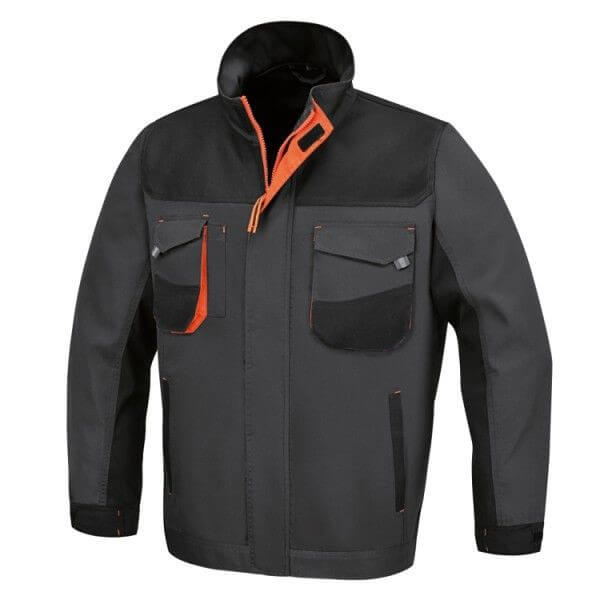
Get a Custom FR Welding Jacket Quote from VisonSafety
What Makes a Fabric Dangerous in a Welding Environment?
Synthetic materials — polyester, nylon, and similar blends — have no place in a welding environment. When a spark contacts synthetic fabric, the material does not simply char and stop. It melts, adheres to skin, and dramatically worsens the injury. FR-rated materials are engineered specifically to resist ignition and self-extinguish, stopping the burn cycle before it starts.
Which Industries Require FR Welding Protection?
Welding is not limited to fabrication shops. Heavy industry, utilities, and general contracting all expose workers to the same ignition risks.
VisonSafety engineers garments for these hazardous settings, producing garments that meet strict global compliance standards across welding, heavy industry, and utility applications. The protection requirements do not change based on job title — the spark does not care.
Key situations where a welding jacket is non-negotiable:
Any process producing sparks or spatter, including MIG, TIG, and stick welding
Environments with flammable materials nearby, where ignition risk compounds
Roles in heavy industry or utilities where arc flash and heat exposure are routine
Skipping proper FR protection does not reduce cost. It transfers risk directly onto the worker.
What Materials Define a Reliable Welding Jacket?
Leather and flame-resistant (FR) cotton are the two primary materials that define a reliable welding jacket. Each material delivers distinct protective properties, and the right choice depends on the specific task, environment, and duration of wear.
Leather stands at the top of the protection hierarchy. Leather provides the strongest defense against sparks, making it the preferred choice for high-intensity welding processes where spatter volume is significant. The tradeoff is weight and heat retention — leather jackets become uncomfortable in warm conditions or during extended shifts.
FR cotton occupies a different but equally legitimate position. FR cotton offers meaningful spark resistance with greater breathability, making it better suited for moderate-heat environments or warmer climates where a heavy leather jacket would compromise worker endurance. Neither material is universally superior. Each serves a specific operational context.
How Do Meta-Aramid Blends Improve FR Jacket Performance?
Meta-aramid and cotton blends combine the thermal stability of synthetic aramid fibers with the comfort and breathability of natural cotton. VisonSafety engineers FR garments using these blended fabrics, reinforced with strong seam construction and anti-static properties. The result is a garment that resists both flame propagation and the static discharge risks present in many industrial environments.
What Certifications Should a Welding Jacket Carry?
Certification is not optional — it is the measurable proof that a garment performs as claimed. VisonSafety FR clothing meets UL, NFPA, and EN compliance standards, providing verified protection for welding and heavy-industry applications. Distributors and safety managers sourcing jackets for regulated worksites should confirm that garments carry documented compliance against these specific standards before committing to a production order.
Which Welding Processes Demand the Most Protection?
Stick welding ranks among the most hazardous processes for clothing exposure, generating heavy spatter. Sparks that can ignite or destroy inadequately protected garments. Not all welding processes carry equal risk. And matching the right welding jacket to the specific process is a decision that directly affects worker safety and operational continuity.
Stick welding, also called shielded metal arc welding, produces a particularly aggressive spark profile. Cotton shirts worn without proper outerwear during stick welding face a real risk of being ruined or catching fire. That level of exposure demands purpose-built FR outerwear, not improvised layering.
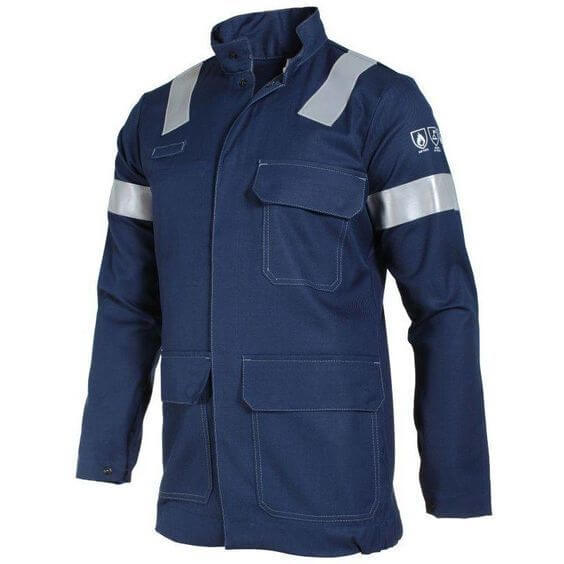
Get a Custom FR Welding Jacket Quote from VisonSafety
Does the Welding Process Change What Protection Workers Need?
The short answer is yes. Processes that generate more spatter, higher arc temperatures, or prolonged radiant heat exposure require heavier, more comprehensive garment coverage. A process with minimal spatter may allow lighter FR options, while stick welding demands full-sleeve, high-coverage protection as a baseline.
How Does a Quality Welding Coat Affect Productivity?
Protection and productivity are not competing priorities. A well-constructed welding coat shields workers from extreme heat. Sparks while simultaneously improving comfort and efficiency across long working shifts. Garments that fit poorly or trap excessive heat cause fatigue — and fatigued workers make mistakes.
VisonSafety engineers FR garments specifically for the hazard profiles found in heavy industry. Welding environments, building protection into every construction detail. Key performance priorities for FR welding garments include:
Flame resistance rated to relevant NFPA and EN standards
Seam strength sufficient to withstand repeated heat and mechanical stress
Breathability to sustain comfort during extended wear
Anti-static properties for environments with combined ignition risks
Can You Wear a Welding Jacket Safely in Summer Heat?
Yes, welders can stay protected in summer — but the material choice determines whether protection is practical or punishing. Heavy leather jackets become genuinely dangerous to productivity when ambient temperatures climb, pushing demand toward lighter, breathable FR alternatives that maintain certified protection without the thermal burden.
Why Do Traditional Leather Jackets Fail in Hot Weather?
Leather excels at spark resistance. In warm climates, however, wearing a heavy leather jacket when the sun is blazing becomes physically unsustainable. Welders working through summer heat report severe discomfort with traditional leather. Some abandon the jacket entirely, only to suffer spark burns on exposed arms and legs. That trade-off — protection versus endurance — is a real and common problem for welders working in warm climates.
What Makes FR Fabric a Better Summer Option?
FR garments engineered with breathability as a core fabric property allow welders to maintain full coverage without overheating. The key performance properties to look for include:
Thermal resistance — fabric resists ignition and limits heat transfer
Breathability — construction allows air circulation to reduce core temperature buildup
Comfort — lighter weight reduces fatigue during extended shifts
Durability — seam integrity and fabric strength hold up across repeated wash cycles
VisonSafety engineers FR clothing with all four properties built into the fabric specification, not added as afterthoughts. Meta-aramid and cotton blends deliver certified flame resistance while keeping garment weight manageable for warm-environment work.
The practical conclusion is straightforward. Welders who abandon protection because of heat face real injury risk. Breathable, certified FR jackets eliminate that false choice — keeping workers covered, compliant, and functional through the full shift.
How Should B2B Buyers Source Compliant Welding Jackets?
B2B buyers sourcing compliant welding jackets should prioritize manufacturers that combine documented quality systems with flexible production capacity. Skipping that due diligence exposes distributors to failed audits, rejected shipments, and costly product recalls.
VisonSafety anchors sourcing confidence in an ISO 9001 quality environment. Every fabric batch undergoes a notable share testing before production begins. Traceability records are maintained for more than three years. A critical safeguard when regulatory bodies request documentation after the fact.
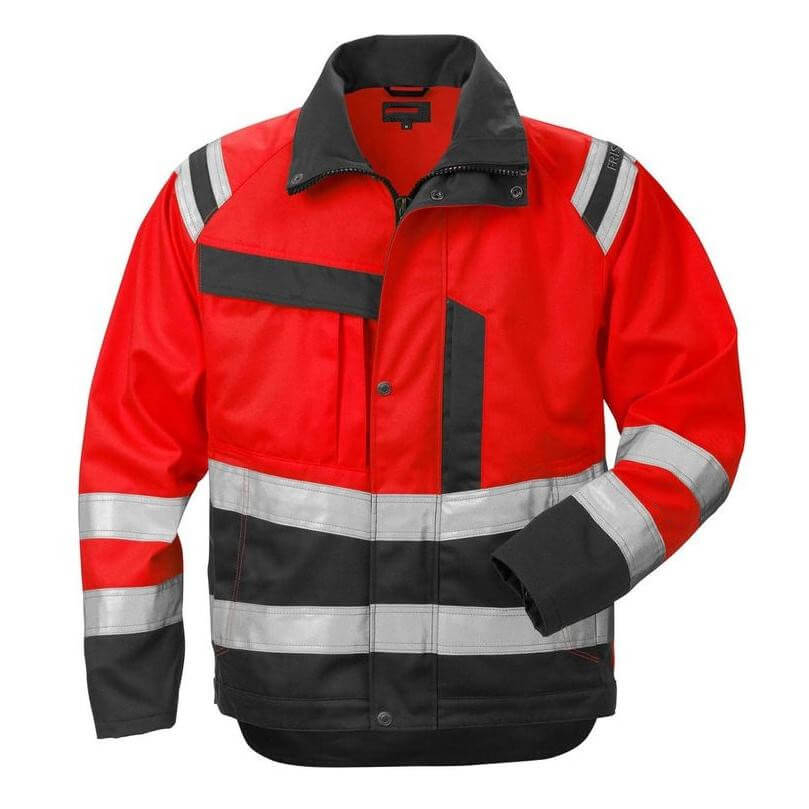
Get a Custom FR Welding Jacket Quote from VisonSafety
What Certifications Should a Welding Jacket Supplier Provide?
Buyers operating across North American and European markets need more than a single certificate. VisonSafety supplies OEKO-TEX, CE. UL documentation as required, supporting compliance across multiple regulatory frameworks without forcing distributors to manage separate supplier relationships for each market.
Guaranteed alignment with global standards — including EN ISO, ANSI, and UL. Means buyers receive garments that are regulation-ready from the moment they arrive.
How Can Distributors Manage Order Risk When Scaling a New Product Line?
Committing to large production volumes before validating market demand is a common and expensive mistake. VisonSafety offers order sizes that range from small pilot runs through to large-scale production, allowing distributors. Private-label brands to test market reception before scaling.
Key sourcing advantages buyers gain through this model:
ISO 9001-governed production with full fabric batch testing
OEKO-TEX, CE, and UL documentation available across markets
Traceability records retained for more than three years
Flexible minimum order quantities supporting both pilots and full rollouts
Streamlined supply chain services including quality checks, branded packaging, and logistics coordination
Welding jackets represent an essential investment in workplace safety, protecting workers from the intense thermal hazards inherent to welding operations. By selecting a certified flame-retardant jacket engineered to meet rigorous industry standards, employers demonstrate their commitment to regulatory compliance and worker protection. VisonSafety’s specialized FR garments deliver the durability. Thermal resistance required across diverse welding environments, ensuring your workforce remains safeguarded while maintaining operational efficiency and reducing liability exposure.
FAQ
When do you need a welding jacket?
A welding jacket becomes non-negotiable the moment sparks enter the equation, covering stick, MIG. TIG welding processes that generate sparks, spatter, or radiant heat.
Why are synthetic fabrics dangerous for welding?
Synthetic fabrics like polyester and nylon melt onto skin when contacted by sparks, turning minor exposure into a serious burn injury that FR-rated materials prevent.
What materials make a reliable welding jacket?
Leather and flame-resistant FR cotton are the two primary materials, with leather offering the strongest defense against heavy spatter. FR cotton providing greater breathability for moderate conditions.
 English
 Deutsch
 Français
 Polski
 Português do Brasil
 Español
 日本語
日本語 Русский
 العربية
 Italiano
 Nederlands
 Türkçe
 한국어
한국어