
High-visibility vests, commonly known as hi-vis vests, are a fundamental component of workplace safety systems. These garments are engineered to increase wearer conspicuity in low-light and high-risk conditions, reducing the probability of collisions and other incidents. The development of hi-visibility apparel has paralleled the establishment and refinement of regulatory standards that define performance criteria. This article outlines the timeline of the vest’s development, the principal safety standards that govern design and performance, and the operational advantages that customised hi-visibility vests deliver to businesses.
Get a Custom Hi-Vis Vest Quote from VisonSafety
What Is the Historical Timeline of Hi-Vis Vest Invention?
The introduction of hi-visibility vests represents a pivotal advancement in safety apparel engineering. They were developed to mitigate visibility-related hazards encountered by personnel working near vehicular traffic, heavy equipment, and other workplace dangers, with primary application across construction, road maintenance, and emergency response sectors.
Who Invented the High Visibility Vest and When?
The high-visibility vest originated in the late 1960s and was developed by a British designer. The design addressed an operational need for enhanced conspicuity and informed subsequent regulatory guidance for visibility apparel.
What are the key safety standards for hi-vis vests?
Hi-visibility vests are subject to region-specific performance standards that establish minimum requirements for colour, retroreflectivity, and garment design. Notable examples include EN 471 in Europe and ANSI/ISEA 107 in the United States. Adherence to these standards ensures garments meet quantifiable visibility benchmarks and are suitable for use in regulated work environments.
How do hi-vis vests enhance worker safety?
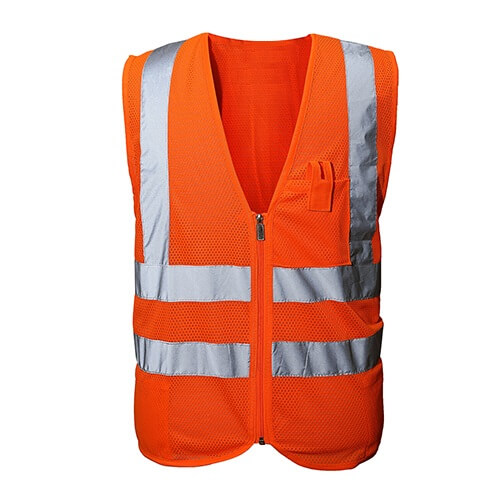
Hi-visibility vests increase worker safety by maximising visual detection by drivers and equipment operators through high-contrast background colours and engineered reflective elements. This enhanced conspicuity reduces incident exposure time and contributes to lower accident frequency in environments such as construction sites, roadways, and emergency operations.
Can hi-vis vests be customized for businesses?
Hi-visibility vests can be customised to satisfy corporate identification and operational requirements. Common modifications include applying company logos, employee identifiers, and specific colour schemes that remain compliant with applicable standards. Such customisation supports brand recognition, improves workforce cohesion, and facilitates rapid personnel identification on site.
Are there different types of hi-vis vests for various industries?
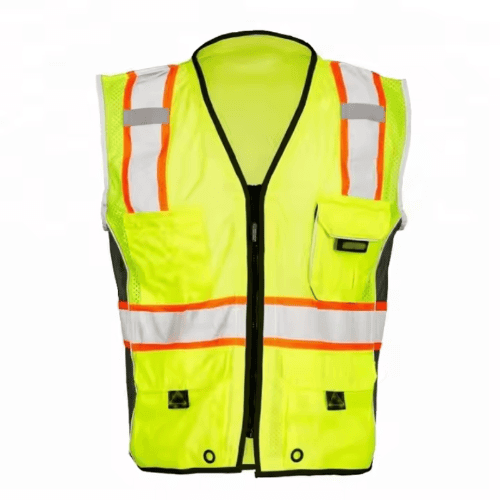
Multiple vest configurations exist to address industry-specific functional requirements. Variants may incorporate tool pockets, additional reflective banding for enhanced conspicuity, or weather-resistant materials for outdoor operations. Selecting the appropriate vest type requires assessment of task demands, environmental conditions, and applicable regulatory criteria.
Get a Custom Hi-Vis Vest Quote from VisonSafety
What materials are commonly used in hi-vis vests?
Hi-visibility vests are commonly fabricated from lightweight, breathable polymers such as polyester and nylon that provide durability and wearer comfort. Reflective components typically utilise glass bead or microprismatic technologies to optimise retroreflection in low-light scenarios. Material selection balances optical performance, abrasion resistance, and long-term serviceability.
How should hi-vis vests be maintained for longevity?
Proper maintenance preserves the optical and structural integrity of hi-visibility vests. Follow the manufacturer’s laundering instructions to maintain colour fastness and reflective performance, and avoid bleach or aggressive solvents that degrade materials. Conduct routine inspections for damage or degradation and replace garments that no longer meet performance or safety requirements.
Conclusion
A clear understanding of the history and governing standards for hi-visibility vests underscores their central role in occupational risk control. These garments enhance worker conspicuity while aligning with established regulatory criteria, delivering measurable safety benefits across multiple industries. Investment in compliant, customised hi-visibility vests supports organisational safety objectives and reinforces corporate identity. Discover our range of high-quality hi-vis vests tailored to meet your specific needs today.
 English
 Deutsch
 Français
 Polski
 Português do Brasil
 Español
 日本語
 Русский
 العربية
 Italiano
 Nederlands
 Türkçe
 한국어