
Hi‑vis vests are engineered personal protective garments that increase worker conspicuity in hazardous settings. Used across construction, logistics and emergency services, they combine fluorescent backgrounds and retroreflective elements to improve detection, reduce collisions and support compliant procurement.
Purpose
The primary purpose of a hi‑vis vest is to make personnel more visible to operators, especially in low‑light, high‑traffic, or visually complex environments. Fluorescent fabrics and retroreflective tape clarify presence and position around vehicles and machinery.
Compliance Standards
Hi‑vis vests must meet recognised standards (for example ANSI/ISEA 107 and EN 20471) that define minimum background and retroreflective areas, retroreflectivity performance and garment design. Employers should specify apparel that aligns with the applicable standard for their tasks and exposure.
Key Features of Hi-Vis Vests
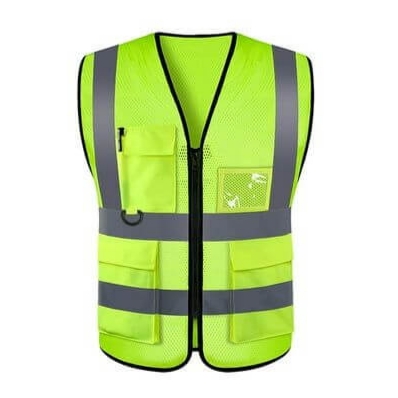
Vests combine fluorescent fabrics, retroreflective tape and robust construction. Design choices (fabric, tape pattern, seams) affect daytime luminance, nighttime return and overall durability while allowing authorised branding.
- Materials Used : Fluorescent base fabrics provide daytime conspicuity; reflective assemblies improve night‑time detection.
- Reflective Properties : Properly positioned retroreflective tape ensures the wearer is detected by vehicle headlights and other light sources.
- Customization Options : Logos and minor custom features can be integrated so long as mandated background and reflective areas remain compliant.
Get a Custom Hi-Vis Vest Quote from VisonSafety
Key Features:
Fabric choice and tape configuration determine performance: fluorescence for daylight visibility and retroreflection to return light to the source in low light. Placement and material specs drive standard conformance.
Visibility Standards:
Standards such as ANSI/ISEA 107 and EN 20471 set the minimum background and retroreflective areas and specify tests to verify conspicuity for defined task exposures.
Materials Used:
Typical construction pairs durable fluorescent substrates with retroreflective tape systems selected for longevity and consistent optical performance in expected environmental conditions.
Enhancing Worker Safety and Brand Visibility
Hi‑vis vests deliver mandated conspicuity and a controlled surface for corporate identification. Properly applied branding preserves compliance while improving site recognition and coordination.
VisonSafety is a safety clothing provider focused on delivering customized hi vis vests that meet international standards. They supply compliant vests with logo application and site‑specific safety features for brands, wholesalers and distributors.
What Defines a High Visibility Safety Vest?
A hi‑vis vest is defined by a fluorescent background, retroreflective elements and construction that supports movement and wearability. These features combine to sustain conspicuity across common work tasks.
Key Features:
Core elements are fluorescent fabric and correctly placed retroreflective tape to meet specified coverage and placement requirements for the intended work environment.
Visibility Standards:
Manufacturers design vests to meet standards like ANSI/ISEA 107 and EN 20471, which prescribe performance levels and test methods for visibility apparel.
Materials Used:
Hi‑vis materials typically pair fluorescent substrates with retroreflective assemblies chosen for durability and reliable optical return over the garment’s expected lifespan.
Key Features of Reflective Safety Vests
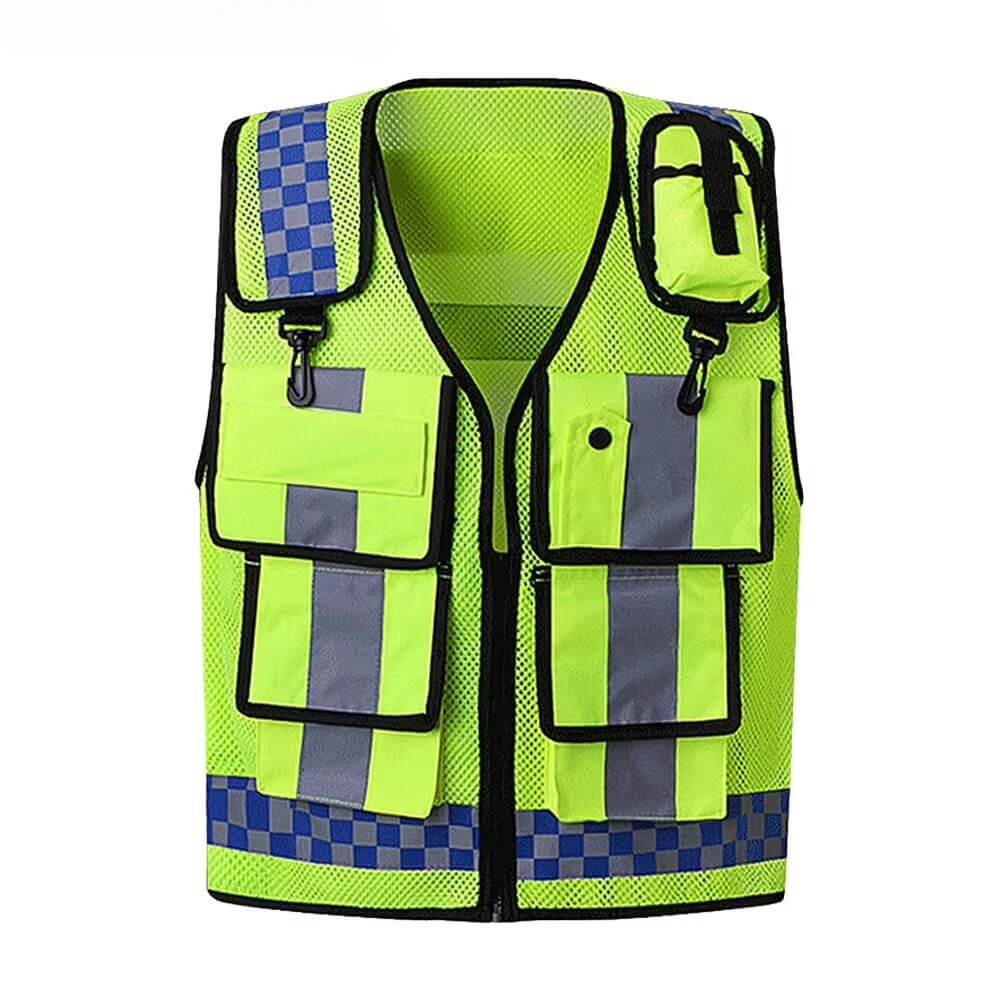
Reflective vests rely on high‑quality retroreflective tape and secure attachment to withstand wear. Priority areas include tape adhesion, seam strength and fit to balance durability and mobility.
Get a Custom Hi-Vis Vest Quote from VisonSafety
Materials and Construction Standards for Hi Vis Vests
Materials and construction must meet laboratory specifications and standardised tests so garments maintain visibility and performance through routine use and environmental exposure.
Further research examines the specific material properties and their conformity to international compliance benchmarks.
Hi-Vis Material Compliance & International Standards
The purpose of this study is to compare and analyze physical properties of different fluorescent fabrics and retroreflective materials to determine their compliance to international standard for high-visibility warning clothing. Four fluorescent fabrics were selected for the study: a PET 71%/Cotton 23%/PU 6% fabric used in public road cleaner uniforms in Korea (S1), an ISO-compliant Japan-made PET 65%/Cotton 35% + conductive fabric (S2), and a randomly selected Korean-made PET 100% fabric for adults (S3) and children (S4). Selected samples were evaluated on their seven criteria in ISO 20471.
An evaluation of the suitability of fluorescent fabrics and retroreflective materials for road traffic warning clothing in compliance with international standards, 2019
Which Safety Standards Govern Hi Vis Vests?
Governance is provided by national and international standards (for example ANSI/ISEA 107, EN 20471 and related ISO guidance). These documents set thresholds and test methods that underpin legal and procurement requirements.
Understanding ANSI Safety Vest Standards
ANSI classifications group garments by background and retroreflective area and by intended work task, helping employers select the appropriate class for hazard exposure and visibility needs.
International Compliance: ISO and EN Standards Explained
ISO and EN standards provide prescriptive guidance for design, testing and performance. Compliance demonstrates that a vest meets recognised benchmarks for visibility and durability across jurisdictions.
How Can Custom Hi Vis Vests Enhance Worker Safety and Brand Visibility?
Custom hi‑vis vests let organisations combine safety and identification. When customization is planned to preserve mandated background and reflective areas, it supports site recognition without compromising protection.
Customization Options: Logos and Reflective Strip Placement
Customisation typically includes logo application and optional reflective strip patterns. Specify placement to avoid obscuring required tape positions or background coverage defined by standards.
Business Benefits of Tailored Safety Apparel
Tailored vests improve on‑site identification, support safety programs and reinforce a professional image. Investing in compliant, customised garments signals commitment to worker protection and brand consistency.
What Are the Primary Industry Applications for Safety Vests?
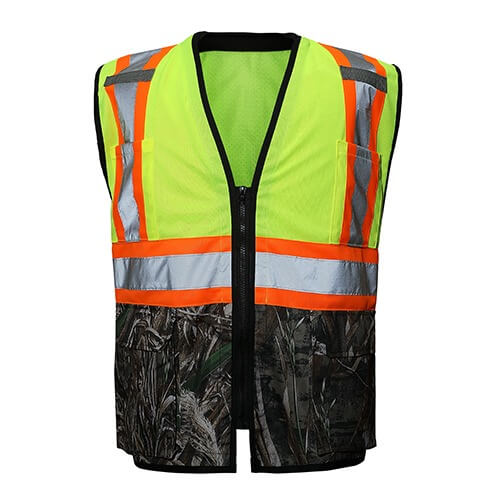
Hi‑vis vests are used in construction, logistics, public works and emergency services to reduce visibility‑related risks where personnel operate near vehicles or in low‑visibility conditions.
Get a Custom Hi-Vis Vest Quote from VisonSafety
Safety Vests for Construction and Logistics Sectors
In these sectors, correctly specified and consistently used vests reduce struck‑by incidents. Employers should prioritise fit, visibility class and task‑appropriate features.
Beyond conspicuity, correct sizing and accommodation for a diverse workforce are critical aspects of safety compliance in construction.
Safety Vest Fit & Compliance in Construction
As the construction industry transitions to reflect a more diverse population, it is essential that personal protective equipment (PPE) accommodates this shift in demographics. In particular, the “One size fits all” approach is no longer an appropriate metric of fit for the safety vest. Previous student research reflected an overwhelming consensus that construction workers do not have vests which appropriately fit them. In response, the Cal Poly Construction Management Department hosted the first ever Verifying Everyone’s Safety Together (VEST) Hackathon. This two-day event fostered a space for industry members, students, and faculty to discuss and develop several prototypes which better accommodate a diverse population of people.
Safely Covered or Dangerously Exposed: Analyzing the Safety Vest Code of Compliance, 2015
Specialized Use Cases: Events and Emergency Services
Event staff and emergency responders use hi‑vis vests to make personnel easily identifiable in chaotic or crowded scenes; garments support command, control and public safety when visibility is essential.
Studies underscore the role of high‑visibility apparel in reducing traffic‑related fatalities among law enforcement, reinforcing its critical importance in emergency services.
HVSA for Law Enforcement Safety & Compliance
Traffic related fatalities are one of the most common workplace hazards in the law enforcement community. They accounted for approximately 44% of all fatalities within the law enforcement occupational field between 2002 and 2011. Although many law enforcement officers’ deaths are due to being struck by vehicles, these could be prevented with the use of High-Visibility Safety Apparel (HVSA). The importance of raising traffic protective behavior compliance is largely overlooked by misperceptions in the workplace. Relatively few studies have examined HVSA wearing behaviors associated with social psychological human elements. It has still remained unclear as subjective or objective experiences. Proper assessment of law enforcement officers’ attitudes and safety behaviors are imperative in efforts to reduce traffic-related fatalities; and to improve the overall health and workplace safety in the law enforcement community.
Personal Protective Clothing: Law Enforcement Officers’ Attitudes and Safety Behavior Assessments Toward High-Visibility Safety Apparel, 2010
Frequently Asked Questions
What are the different types of hi vis vests available?
Vests are commonly Class 1, 2 or 3 (increasing conspicuity and coverage). Choose the class that matches site risk and exposure; industry variants add pockets or reinforcements for specific tasks.
How do I choose the right size for a hi vis vest?
Use the manufacturer’s sizing chart and allow for layering. A correctly sized vest permits motion without excessive looseness and ensures reflective tape remains visible.
Can hi vis vests be used in all weather conditions?
Yes—select weather‑resistant, breathable or insulated constructions suited to rain, wind or thermal needs so visibility and comfort are maintained.
How often should hi vis vests be replaced?
Inspect vests regularly for fading, fraying or tape degradation. Replace items that no longer meet visibility requirements; many employers replace vests every 6–12 months depending on use.
Are there specific cleaning instructions for hi vis vests?
Follow manufacturer guidance: typically cold‑water wash with mild detergent, avoid bleach and fabric softeners, and air dry to protect retroreflective performance.
What are the benefits of using customized hi vis vests?
Customised vests enhance brand recognition while preserving safety performance. When applied correctly, logos and task features integrate without compromising standard conformance.
Conclusion
Hi‑vis vests are essential for mandated conspicuity and can support controlled branding. Choosing standards‑compliant materials, correct classes and proper fit helps organisations reduce incident risk while maintaining operational identity. Select high‑quality, compliant vests tailored to your site needs to maximise both safety and visibility.
 English
 Deutsch
 Français
 Polski
 Português do Brasil
 Español
 日本語
日本語 Русский
 العربية
 Italiano
 Nederlands
 Türkçe
 한국어
한국어