
Welding jackets must meet NFPA 2112 for flame-resistant performance and ANSI/ISEA standards for general protective clothing. EN ISO 11611 governs European compliance, covering arc flash and spatter resistance. Certified garments undergo rigorous fabric testing to verify thermal protection. VisonSafety produces welding jackets engineered to these standards, with a notable share fabric batch testing and full documentation.
Key Takeaways
- Welding jackets protect against extreme heat, sparks, molten metal, and electrical hazards in industrial work environments.
- Leather and flame-resistant cotton materials each offer unique strengths for different welding job requirements and conditions.
- Fire-retardant jackets reduce serious injury risk by serving as the welder’s first line of thermal defense.
- Proper jacket selection requires evaluating materials, comfort features, and compliance with established safety standards simultaneously.
Why Do Welding Jacket Standards Matter for Safety?
Welding jacket standards exist because welding exposes workers to extreme heat, sparks, molten metal, and electrical hazards simultaneously. Certified protective clothing is not optional equipment — gaps in compliance leave workers directly vulnerable to burns, arc flash, and ignition injuries that standard workwear cannot prevent.
The stakes are straightforward. A jacket that fails under heat does not give a second warning. That reality is why regulatory bodies developed structured performance benchmarks that manufacturers must meet before a garment reaches the job site.
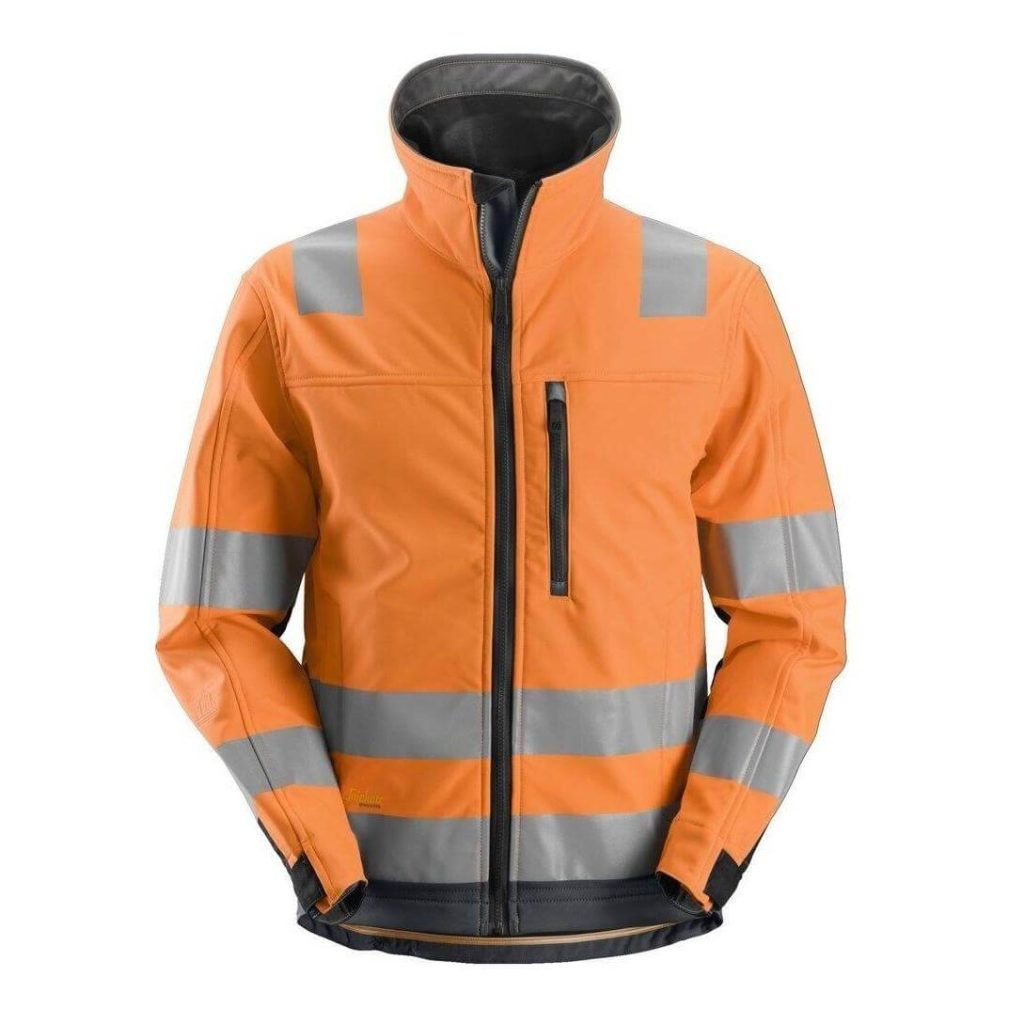
Get a Custom FR Welding Jacket Quote from VisonSafety
What Happens When a Welding Jacket Lacks Proper Certification?
Uncertified jackets may use fabrics that ignite, melt, or degrade after repeated laundering. Flame-resistant fabrics must maintain their protective characteristics through continued use and washing — not just on the day of purchase. A jacket that loses FR performance after a few wash cycles offers false protection. Is arguably more dangerous than no jacket at all.
Which Standards Apply to FR Welding Jackets?
Welding jacket certifications are issued against specific global frameworks that define minimum performance thresholds. Key standards include:
- NFPA 2112 — governs flash fire protection for industrial garments
- UL certification — validates flame-resistance performance through independent laboratory testing
- EN standards — cover European market requirements for protective clothing in welding and allied processes
VisonSafety engineers FR clothing to meet UL, NFPA, and EN requirements for welding and heavy industry applications. Garments incorporate meta-aramid and cotton blends with reinforced seams. Anti-static construction, ensuring that compliance is built into the fabric and structure. Not applied as an afterthought.
Which Global Certifications Apply to Welding Jackets?
Welding jacket certifications span both North American and European frameworks, and a jacket without the right documentation exposes workers — and the businesses that outfit them — to serious compliance gaps. The core standards that govern flame-retardant and welding-specific garments include ANSI, EN ISO, NFPA, UL, CE, and OEKO-TEX.
A welding jacket is engineered to resist high heat. Open flames, deflect sparks and molten spatter. Reduce the risk of burn injuries during sustained welding operations. Meeting that performance bar requires third-party verification, not just a manufacturer’s claim.
What do ANSI, NFPA, and EN ISO actually cover?
Each standard addresses a distinct layer of protection:
- ANSI — governs performance requirements for industrial protective clothing in North American markets
- NFPA — sets flame-resistance benchmarks widely adopted in heavy industry, welding, and utilities sectors
- EN ISO — covers European protective clothing requirements, including thermal and flame-resistant performance
- UL — provides independent product testing and listing, adding a recognized verification layer for North American compliance
Distributors supplying multiple regions need garments that satisfy both North American and European frameworks simultaneously. VisonSafety produces FR garments certified across EN ISO, ANSI, NFPA. UL standards, addressing that dual-market requirement within a single supply relationship.
What documentation should clients request from a welding jacket manufacturer?
Compliance paperwork matters as much as the garment itself. VisonSafety provides OEKO-TEX, CE. UL documentation on request, giving distributors and private-label brands the records needed to satisfy procurement audits, retailer requirements, and end-user safety programs. Traceability records support after-sale accountability. Clients sourcing certified welding jackets should confirm that documentation is available before production begins, not after shipment arrives.
What Materials Meet Welding Jacket Compliance Requirements?
Treated cotton, leather, and aramid fibers are the three primary materials recognized for meeting welding jacket standards in certified protective apparel. Selecting the wrong material does not just create discomfort — it leaves welders exposed to burns, arc flash. Molten metal spatter that compliant fabrics are specifically engineered to stop.
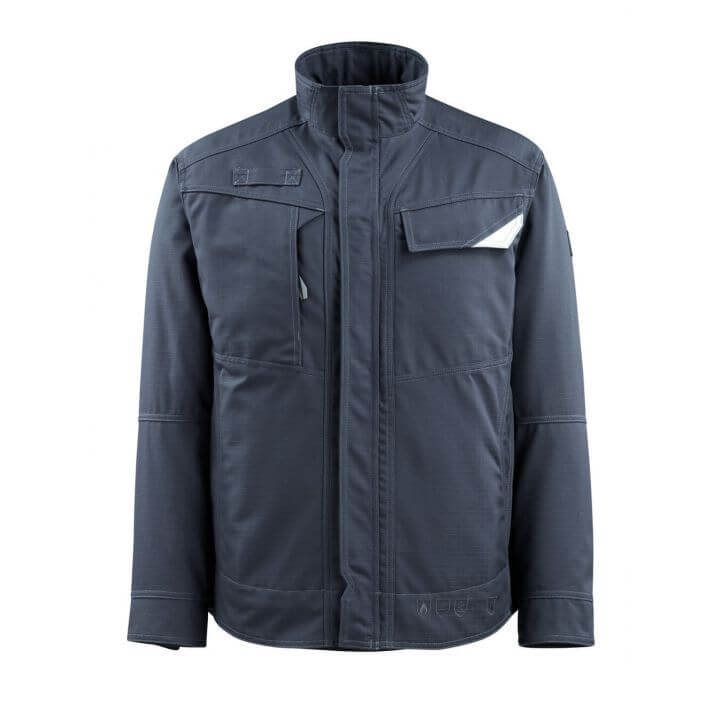
Get a Custom FR Welding Jacket Quote from VisonSafety
Which Fabric Type Is Right for a Specific Welding Task?
Leather and flame-resistant (FR) cotton each bring distinct strengths to different welding environments. Leather excels in heavy-duty applications where spatter resistance and abrasion durability are the priority. FR cotton performs better in tasks requiring extended wear comfort and breathability. Both materials adhere to recognized industry standards when properly constructed and tested.
Meta-aramid and cotton blends represent a third category — one that VisonSafety uses across its FR clothing line. These blends combine the thermal resistance of aramid fiber with the comfort and breathability of cotton, making them well-suited for welding and heavy industrial environments where compliance cannot be compromised.
Do Construction Details Affect Welding Jacket Certifications?
Material choice alone does not determine whether a garment earns welding jacket certifications. Construction quality matters equally. VisonSafety builds FR garments with reinforced seams and anti-static construction — both critical requirements for certified welding apparel. A jacket built from compliant fabric. Assembled with weak seams fails at the point of stress, exactly when protection is needed most.
How Does Quality Control Underpin Certification Integrity?
Rigorous quality control is the operational backbone that keeps welding jacket certifications meaningful after a garment leaves the factory floor. Without systematic testing and documentation, a certified label reflects a single moment in time — not consistent, production-wide performance.
What Quality Management Practices Keep Certified Garments Compliant?
VisonSafety operates within an ISO 9001 quality management environment and batch-tests a notable share of fabrics across every production run. That means no roll of FR fabric enters a finished garment without verified performance data behind it. The founding commitment at VisonSafety is zero defects across batches. A standard that directly supports the reliability clients depend on when sourcing garments built to welding jacket standards such as NFPA 2112 or EN ISO 11612.
How Do Traceability Records Protect Clients During Audits?
VisonSafety maintains traceability records for more than three years, giving distributors. Brands a verifiable paper trail at any point in the supply chain. Regulatory audits, customer inspections, and insurance reviews all demand documentation. Gaps in that record cost businesses time, credibility, and sometimes contracts.
The quality infrastructure extends beyond the production floor itself:
- a notable share fabric batch testing before cutting and sewing begins
- ISO 9001 environment governing process consistency at every stage
- Traceability records retained for more than three years per order
- Quality checks, branded packaging, and logistics coordination integrated into supply chain services
Each element reinforces the others. Batch testing catches non-conforming material early. Traceability records prove that tested material made it into the finished garment. And integrated supply chain services — covering quality checks through secure delivery. Ensure certified performance reaches the end user intact.
How Should Distributors Source Certified Welding Jackets Efficiently?
Distributors source certified welding jackets most efficiently by partnering with a manufacturer that combines compliance documentation, flexible production. Streamlined logistics under one roof. Delays in any of those three areas erode margins and stall product launches. A costly outcome in competitive safety markets.
VisonSafety addresses all three. The company supports OEM and ODM production of FR jackets, including welding jacket certifications documentation. Custom fire-proof trim and logo options for private-label programs. Distributors building a branded line get both the compliance paperwork and the finished aesthetic in a single production run.
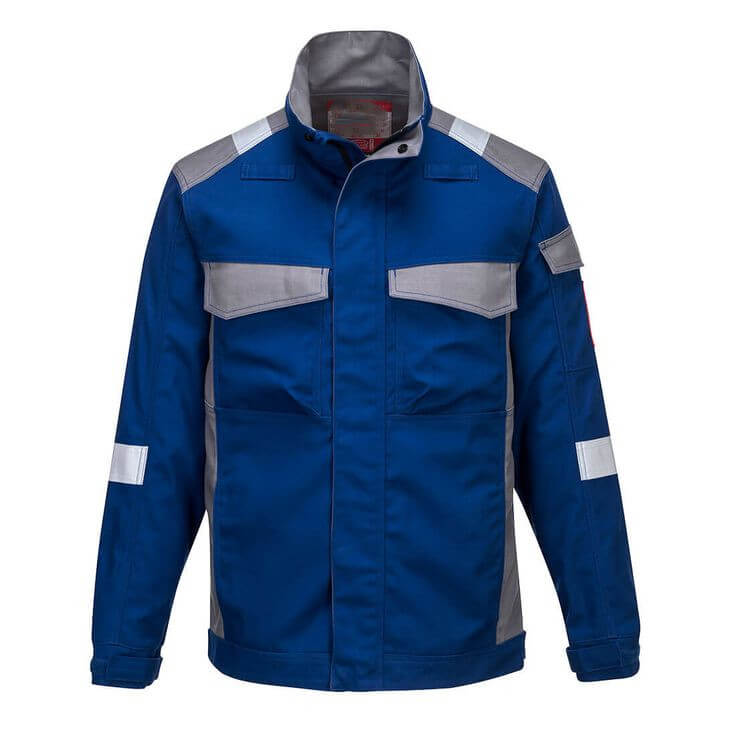
Get a Custom FR Welding Jacket Quote from VisonSafety
What Production Flexibility Do Distributors Need Before Scaling?
Small-batch production lets distributors validate a certified welding jacket line before committing to large inventory. VisonSafety offers flexible pilot runs designed specifically for market tests and launches. That approach reduces financial exposure when entering a new product category or regional market.
How Do Logistics Options Affect Total Sourcing Cost?
Logistics costs quietly consume sourcing budgets. VisonSafety’s DDP shipping options transfer customs clearance and import duties to the manufacturer’s side, simplifying cross-border fulfillment for international distributors. The result is a more predictable landed cost.
Key sourcing advantages VisonSafety provides:
- Welding jacket standards compliance with UL, NFPA, and EN requirements
- Custom fire-proof trim and private-label logo integration
- Small-batch pilot runs for market validation before full-scale orders
- Fast sampling and bulk order delivery to support tight launch schedules
- DDP shipping to reduce logistics complexity across international markets
Selecting a welding jacket that meets recognized safety standards represents a critical investment in worker protection and regulatory compliance. The certifications and performance requirements outlined above establish a clear framework for evaluating garment quality and suitability across welding operations. By prioritizing jackets engineered to these established standards, organizations demonstrate their commitment to workplace safety while reducing liability exposure. Ensuring their workforce remains protected against thermal hazards in demanding industrial environments.
FAQ
What standards must a welding jacket meet to be certified?
Welding jackets must meet NFPA 2112 for flame-resistant performance, UL certification for independent flame-resistance validation. EN ISO 11611 for European compliance covering arc flash and spatter resistance.
What happens to an uncertified welding jacket after repeated washing?
Uncertified jackets use fabrics that lose FR performance after a few wash cycles, creating false protection that is arguably more dangerous than wearing no jacket at all.
What materials does VisonSafety use to meet welding jacket safety standards?
VisonSafety builds FR welding jackets with meta-aramid and cotton blends, reinforced seams. Anti-static construction, with a notable share fabric batch testing and full documentation to meet UL, NFPA, and EN requirements.
 English
 Deutsch
 Français
 Polski
 Português do Brasil
 Español
 日本語
日本語 Русский
 العربية
 Italiano
 Nederlands
 Türkçe
 한국어
한국어