
Selecting the appropriate safety vest colour is essential for driver recognition in high-traffic and high-risk environments. This article summarises which colours deliver the greatest conspicuity, the visual principles behind colour selection, and the standards that govern high-visibility apparel, with practical guidance on choosing colours and reflective treatments to support ANSI/ISEA 107 compliance.
What Are the Most Visible Safety Vest Colors for Drivers?
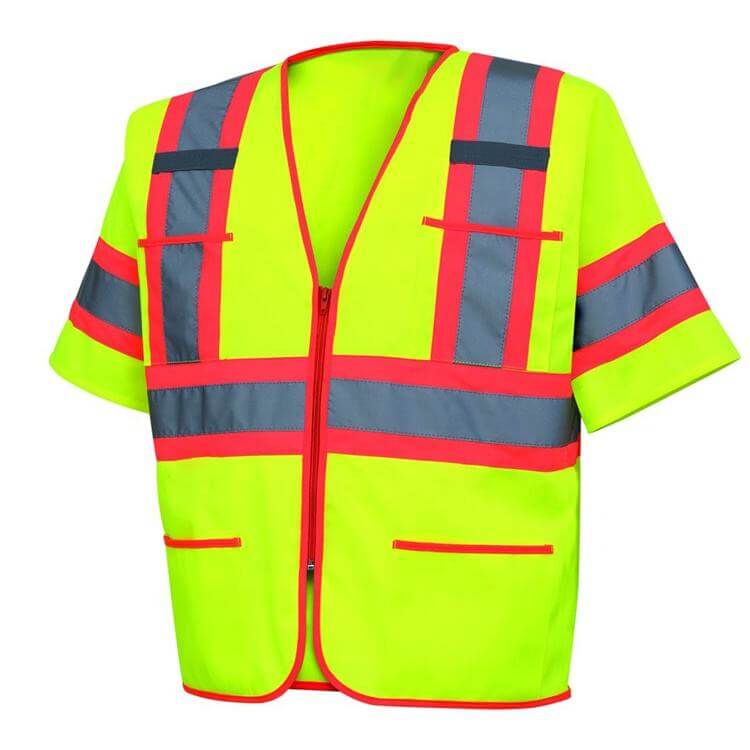
Colour strongly determines a vest’s conspicuity: fluorescent yellow‑green and fluorescent orange‑red are widely used because they contrast well with common backgrounds and remain effective in daylight and reduced-light conditions, reducing detection times in construction, road maintenance and similar work zones.
VisonSafety supplies high-visibility garments engineered to meet applicable standards and to improve visual detection while supporting organisational compliance.
Get a Custom Hi-Vis Vest Quote from VisonSafety
Factors Affecting Visibility
Visibility depends on three interacting factors: colour contrast with the background, fabric and reflective material properties, and the environmental lighting and context in which the garment is used. Assessing all three supports objective selection of high-visibility apparel.
Considering these variables together determines effective detection distance and informs operational specifications.
How Do Fluorescent Yellow and Orange Compare in Driver Visibility?
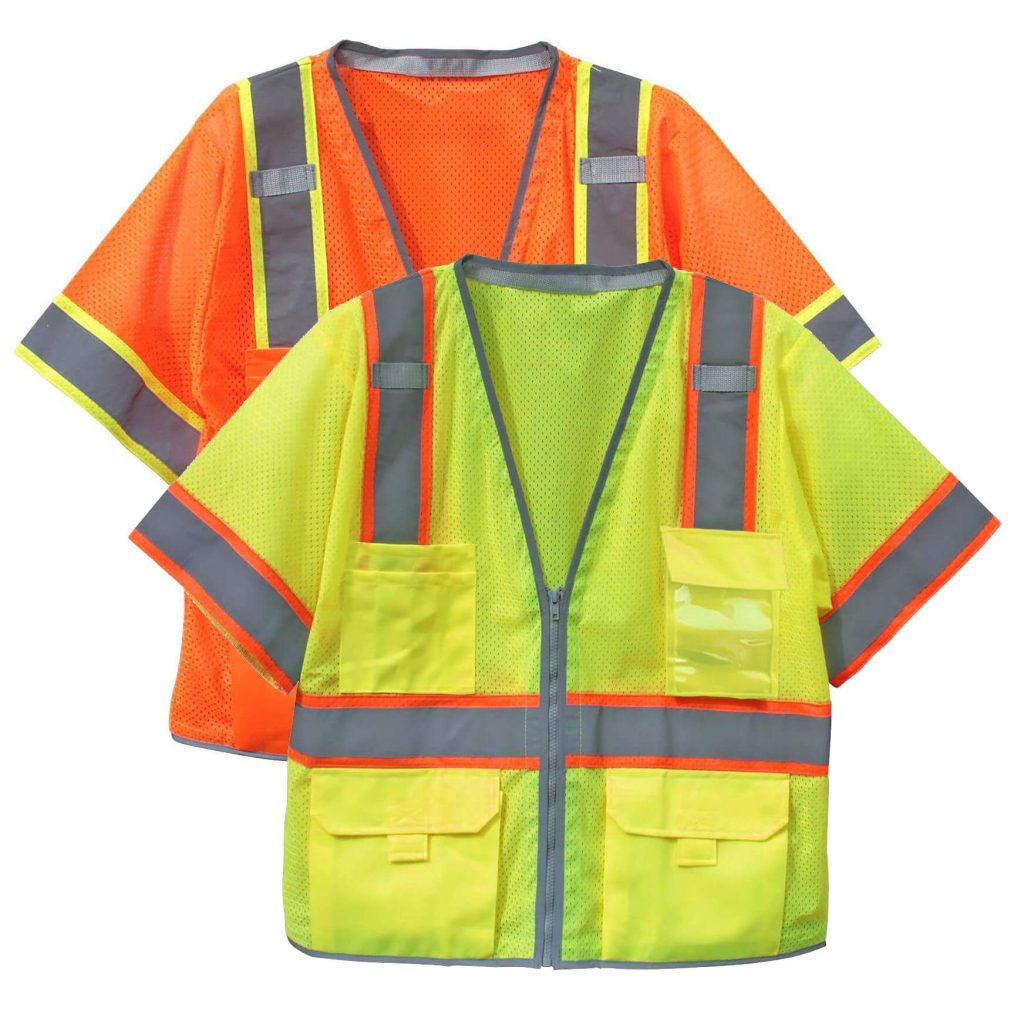
Both fluorescent yellow and fluorescent orange increase conspicuity but differ by context: yellow performs consistently across mixed urban and infrastructure settings, while orange offers stronger contrast against vegetated or rural backgrounds and is often preferred for roadside operations.
Why Fluorescent Yellow-Green Offers Superior Daytime Visibility
Fluorescent yellow‑green is often identified as the most conspicuous daytime colour because of its spectral response and high luminance, maintaining contrast against urban structures and rural landscapes to improve driver detection at operational distances.
Comparisons Between Colors
Colour choice should reflect the primary work environment: fluorescent yellow for urban or artificial backdrops, fluorescent orange for vegetated or rural areas. Organisations should standardise vest colours based on their typical operational contexts.
Get a Custom Hi-Vis Vest Quote from VisonSafety
Recommendations for Optimal Choices
Prioritise recognised standards and the visual environment when specifying vests. The following recommendations support effective, standards-compliant procurement:
- Ensure Compliance with ANSI Standards : Always select colors that meet ANSI/ISEA 107 requirements for high-visibility safety apparel.
- Consider the Specific Work Environment : Choose colors that provide the best contrast against the typical background of the work area.
- Customization Options Should Not Compromise Visibility : While branding is important, it should not detract from the vest’s visibility.
What Customization Options Enhance Vest Visibility and Compliance?
Customisation can include company identification and reflective components; all additions must preserve the approved background colour and reflectivity so ANSI/ISEA 107 compliance is maintained.
How Do Customized Vests Benefit Businesses in Safety and Branding?
Properly specified customised vests combine safety performance with clear corporate identification, supporting regulatory compliance, improving detectability and reinforcing brand presence in the field.
How Do ANSI Safety Vest Color Standards Influence Color Selection?
ANSI standards set minimum thresholds for fluorescent background hues and retroreflectivity, guiding procurement by defining which colours and reflective treatments achieve required detection performance under specified conditions.
What Are the ANSI/ISEA 107 Requirements for Safety Vest Colors?
ANSI/ISEA 107 prescribes approved fluorescent background colours and minimum reflectivity specifications; accepted fluorescent options include yellow, orange and pink variants, and vests must use reflective materials to meet low-light detection requirements.
How Compliance with ANSI Standards Enhances Driver Recognition
Conforming to ANSI/ISEA 107 ensures garments meet measurable colour and reflectivity metrics, increasing the probability of driver detection, reducing incident exposure and supporting organisational risk management.
What Role Does Reflective Material Play in Vest Visibility to Drivers?
Retroreflective materials are essential for low-light performance because they return incident light toward its source, improving visibility to motorists at night or in adverse weather and extending the garment’s detection range.
Get a Custom Hi-Vis Vest Quote from VisonSafety
How Does Reflective Tape Placement Affect Nighttime Driver Visibility?
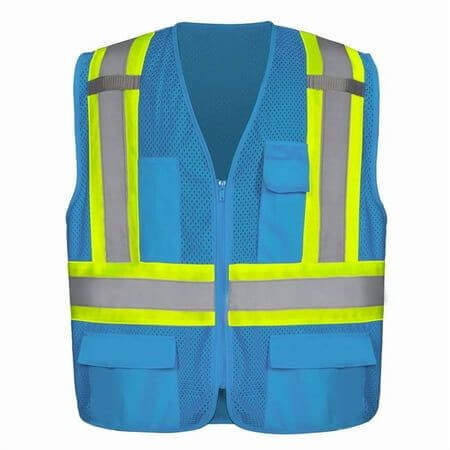
Tape layout matters: bands across the shoulders and encircling the torso create a recognisable silhouette from multiple approach angles and should be specified to optimise night-time detection.
Which Reflective Materials Are Most Effective for Safety Vests?
Glass bead materials provide reliable general-purpose retroreflectivity; microprismatic constructions typically deliver higher retroreflective performance and better low-light visibility—select the technology to match operational lighting needs.
How Can Custom Safety Vests Improve Brand Visibility and Driver Safety?
Custom safety vests that preserve high-visibility colours and required reflectivity meet safety objectives while providing clear corporate identification, improving on-site detectability and strengthening brand exposure.
What Customization Options Enhance Vest Visibility and Compliance?
Acceptable options include reflective strips, discrete logos and identification panels provided these are applied without degrading the approved background colour or required reflectivity; careful placement preserves both visibility and brand recognition.
How Do Customized Vests Benefit Businesses in Safety and Branding?
Procuring standards-compliant, customised vests yields business benefits: better worker safety through improved detectability, regulatory alignment and extended brand visibility during field operations.
To review available configurations and technical specifications, please visit Vison Safety’s vest collection , which details styles and customisation options.
For procurement inquiries or specification assistance, please contact us for personalised support.
Frequently Asked Questions
What are the benefits of using fluorescent colors in safety vests?
Fluorescent colours such as yellow‑green and orange‑red increase apparent luminance by absorbing ultraviolet radiation and re‑emitting it within the visible spectrum, producing greater apparent brightness; this optical behaviour extends detection distances and supports accident risk reduction.
How does weather affect the visibility of safety vests?
Adverse weather (rain, fog, snow) reduces ambient contrast and can shorten detection distances; in these conditions, high-contrast fluorescent backgrounds combined with certified retroreflective materials are critical because retroreflection from vehicle headlights sustains visibility.
Are there specific industries that require high-visibility safety vests?
Yes—industries with outdoor work or proximity to moving vehicles (construction, road maintenance, emergency services, warehousing) commonly require high-visibility garments and often mandate standards such as ANSI/ISEA 107.
Can safety vests be used in low-light conditions?
Yes—vests with certified retroreflective materials and fluorescent backgrounds remain effective in low light; choose reflective technology and tape layout appropriate for night-time and poor-weather operations.
What should I consider when selecting safety vests for my team?
Evaluate ANSI/ISEA 107 compliance, the prevailing work environment and typical backgrounds, required reflective performance, and ensure branding or customisation does not reduce the approved colour field or reflectivity; also consider fit and ergonomics for sustained wear.
How often should safety vests be replaced?
Inspect vests regularly for mechanical damage, fading or degraded reflective components; replace items when colour saturation or retroreflectivity diminish—commonly at least every 1–2 years or sooner if inspections indicate reduced performance.
Conclusion
Choosing the optimal safety vest colour requires balancing colour performance, material properties and standards compliance. Selecting ANSI/ISEA‑compliant garments and appropriate reflective technologies reduces detection risk and delivers operational benefits, including improved safety metrics and clearer brand presence.
 English
 Deutsch
 Français
 Polski
 Português do Brasil
 Español
 日本語
日本語 Русский
 العربية
 Italiano
 Nederlands
 Türkçe
 한국어
한국어