
Safety vests improve worker visibility and help meet regulatory requirements. This article summarizes key considerations for selection, fit, and care so organisations can support safety and compliance. Topics include vest classes, fitting guidance, maintenance, and ANSI recommendations for wearing vests correctly.
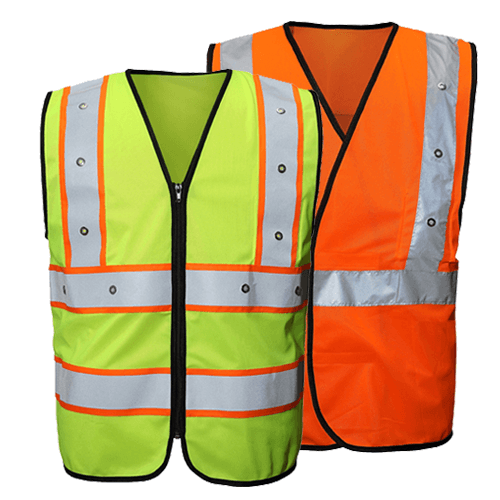
Get a Custom Hi-Vis Vest Quote from VisonSafety
Compliance with Safety Regulations
Follow applicable standards when specifying vests. ANSI/ISEA 107 sets minimum design and performance requirements for high-visibility apparel and classifies garments by risk: Class 1 for low-risk tasks, Class 2 and Class 3 for work with greater exposure to traffic or moving equipment. Choose the class that matches the operational hazard and location.
Standards such as ANSI/ISEA 207-2006 further clarify role-specific alternatives and reinforce the need for specification-based selection.
ANSI/ISEA Standards for Safety Vest Compliance
Compliance with ANSI/ISEA 207-2006 is presented as an acceptable alternative to ANSI/ISEA 107-2004 for law enforcement and emergency responders. The revision took effect January 15. Evaluation of reflective vest options, 2006
Achieving a Proper Fit
A correctly sized vest preserves mobility and keeps fluorescent and retroreflective panels in the intended positions. Use the manufacturer’s sizing chart (chest circumference and height) and any built-in adjustments to secure a stable fit over typical work clothing.
The difficulty of achieving correct fit is amplified by workforce diversity; a “one size fits all” strategy is no longer adequate.
Addressing Safety Vest Fit for Diverse Workforces
As the construction workforce becomes more diverse, personal protective equipment must accommodate a wider range of body dimensions. The “one size fits all” metric is not an appropriate measure of fit for modern safety vests. Prior research indicates a substantial proportion of construction workers lack access to vests that fit them properly. Safely Covered or Dangerously Exposed: Analyzing the Safety Vest Code of Compliance, 2015
Enhancing Visibility
Visibility depends on conspicuity features and their placement. Reflective tape, fluorescent substrates, and durable materials together determine how readily a worker is seen in varying light and weather.
Reflective Strip Placement : Ensure reflective strips cross the chest and back and are visible from multiple angles.
Fluorescent Colors : Select bright fluorescent materials that contrast with common worksite backgrounds.
Material Quality : Choose durable textiles and long-lasting retroreflective tape to preserve visibility over time.
VisonSafety specializes in customized safety clothing solutions, focusing on high visibility safety vests that meet international standards. Their products are designed to support compliance and to enhance worker conspicuity in operational settings.
Types of Reflective Safety Vests
Knowing vest classes helps with procurement. The class reflects the intended exposure and required coverage of fluorescent and retroreflective material.
Class 1 suits low-exposure duties; Class 2 and 3 provide greater conspicuity for higher risk tasks. Custom logos are acceptable if they do not cover required fluorescent or reflective zones.
Maintenance and Inspection
Regular inspection and proper care preserve vest performance. Establish simple routines to check condition and follow laundering and storage guidance.
Regular Inspections : Look for fraying, faded tape, or other damage that reduces conspicuity.
Laundering Instructions : Follow manufacturer washing instructions to protect reflective properties.
Storage : Keep vests dry and clean to avoid material degradation.
What Are the ANSI Safety Vest Guidelines for Proper Wearing?
ANSI guidance specifies visibility, fit, and design parameters to ensure garments meet intended conspicuity levels for different work situations.
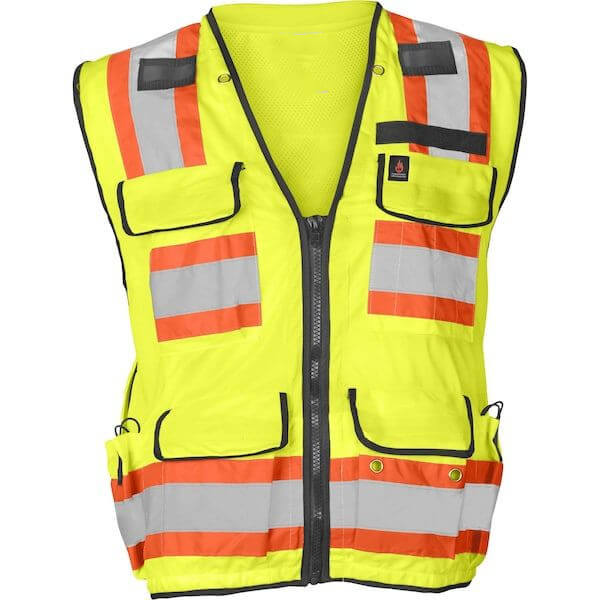
Get a Custom Hi-Vis Vest Quote from VisonSafety
How Does ANSI 107 Standard Define Safety Vest Requirements?
ANSI 107 sets minimum quantities and placement of fluorescent and retroreflective materials, panel configuration, and design features by class; higher classes require more coverage.
What Reflective Strip Placement Ensures Maximum Worker Visibility?
Place reflective strips to provide consistent visibility from the front, back, and sides, emphasizing shoulders and torso to aid detection in low-light conditions.
How to Choose the Right Safety Vest Size Using a Sizing Chart?
Measure chest circumference and compare with the manufacturer’s sizing chart. Allow room for expected clothing layers and full range of motion.
Why Is Accurate Sizing Critical for Safety and Comfort?
Correct sizing preserves the visibility envelope and prevents the vest from shifting or restricting movement, both of which can reduce safety and comfort.
How to Use a Safety Vest Sizing Chart Effectively?
Use precise chest and height measurements, match them to the chart, and factor in typical work garments so the vest performs during real tasks.
What Are the Different Reflective Safety Vest Types and Their Uses?
Vest types map to exposure risk: Class 1 for low exposure; Class 2 and 3 for increasing traffic or equipment hazards.
How Do Material Types Affect Vest Durability and Compliance?
Durable textiles and stable retroreflective materials extend service life and help maintain compliance throughout regular use.
Which Vest Types Suit Various Work Environments?
Select Class 2 or 3 for construction and roadside operations; Class 1 may suffice for low-risk, stationary tasks.
How to Customize Safety Vests with Branding While Maintaining Compliance?
Apply branding only where it does not cover required fluorescent or reflective areas and follow placement guidance to retain conspicuity.
What Are the Best Practices for Custom Safety Vest Printing?
Use inks and processes that do not degrade reflective or fluorescent materials and keep prints outside critical conspicuity zones.
How Does Custom Branding Enhance Business Visibility and Safety?
Controlled branding aids identification and supports a safety culture when it preserves the vest’s visibility features.
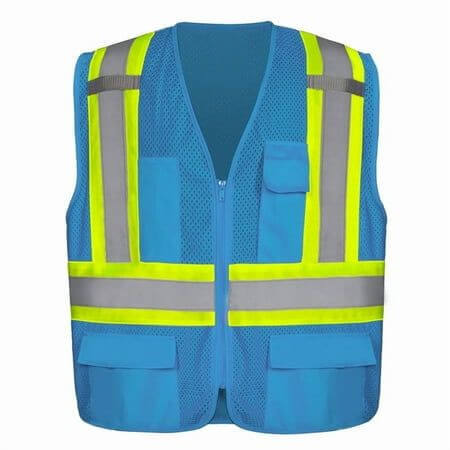
Get a Custom Hi-Vis Vest Quote from VisonSafety
Frequently Asked Questions
What should I consider when selecting a safety vest for different work environments?
Match the ANSI class to the operational exposure, and evaluate material durability, tape placement, and wearer comfort for practical suitability.
How often should safety vests be inspected for wear and tear?
Inspect vests regularly, ideally before each use period, and remove from service any garment that shows compromised reflective performance or damage.
Can safety vests be customized without compromising safety standards?
Yes—if logos and graphics avoid required conspicuity zones and follow manufacturer placement recommendations.
What are the best practices for laundering safety vests?
Follow manufacturer instructions: gentle cycles, mild detergent, and avoid bleach or softeners that can degrade visibility features; air dry when specified.
How do weather conditions affect the choice of safety vest?
Choose water-resistant constructions for wet conditions and breathable, lightweight fabrics for heat; consider moisture management for prolonged wear.
What are the implications of not wearing a safety vest in compliance with regulations?
Non-compliance increases visibility-related risk and may lead to enforcement actions, penalties, and greater organisational exposure; compliant apparel supports worker protection and risk management.
Conclusion
Specifying, fitting, and maintaining the correct safety vest class are practical steps to improve visibility and meet standards. Prioritise accurate sizing, correct conspicuity placement, routine inspection, and appropriate customization to keep workers visible and compliant.
 English
 Deutsch
 Français
 Polski
 Português do Brasil
 Español
 日本語
 Русский
 العربية
 Italiano
 Nederlands
 Türkçe
 한국어