
Highway work requires high-visibility apparel selected to meet ANSI 107 and local regulations. This article summarises the Class 1–3 system, the key technical distinctions, regulatory expectations, and practical benefits of custom, standards-compliant vests.
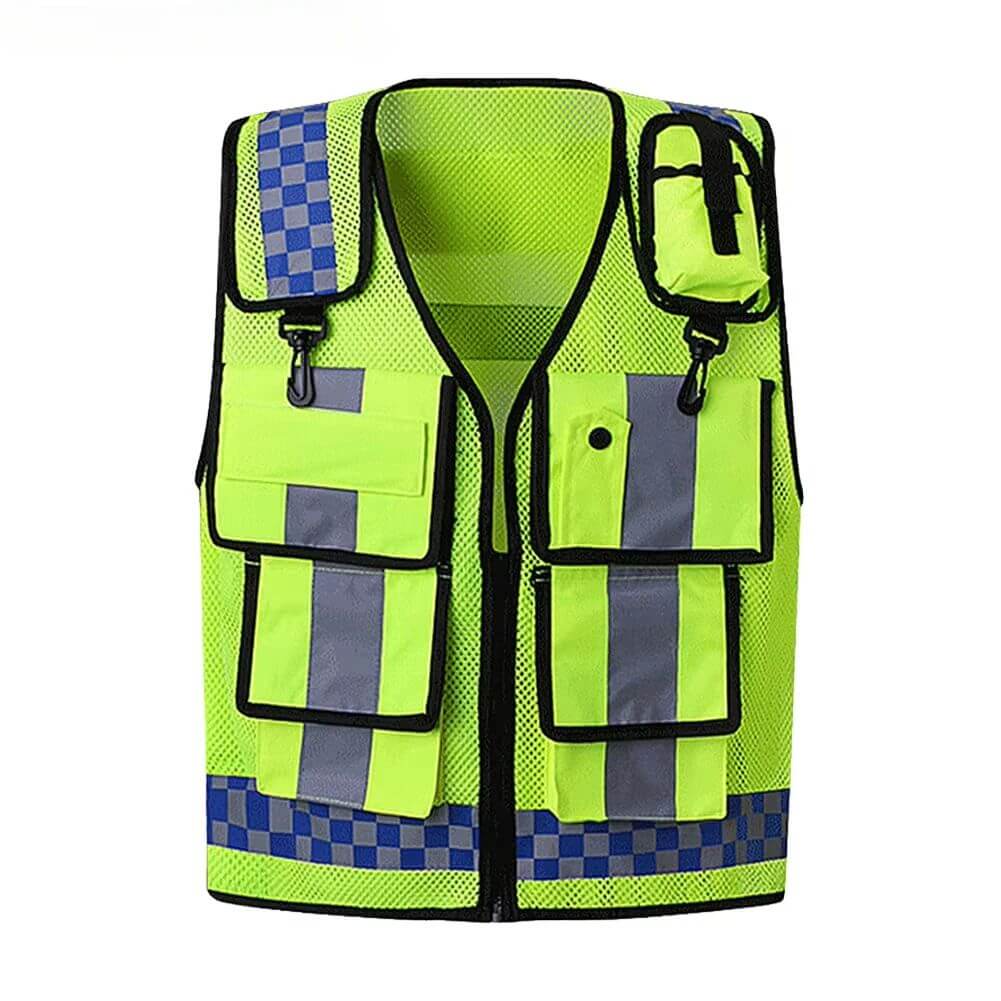
Get a Custom Hi-Vis Vest Quote from VisonSafety
Which Safety Vest Classes Are Defined for Highway Use?
ANSI/ISEA defines three classes by visibility performance and the operational risk where garments are used.
Class 1 Safety Vest: Intended for low-risk, low-speed areas (e.g., parking lots); lowest conspicuity.
Class 2 Safety Vest: Suited to moderate-risk tasks near traffic such as maintenance and road work; increased reflective area.
Class 3 Safety Vest: For high-risk, high-speed work zones and emergency response; maximum visibility.
Choosing the correct class is a primary control to reduce collision risk for workers near traffic.
What Are the Differences Between Class 1, Class 2, and Class 3 Safety Vests?
The classes differ mainly by background material, amount and placement of retroreflective tape, and the intended detection distance for an approaching driver.
Class 1: Basic daytime contrast with minimal reflective material, for low exposure tasks.
Class 2: Greater reflective area and patterning to improve detection in traffic-exposed roles.
Class 3: Extensive background and retroreflective coverage for early detection at speed and in low light.
Procurement and safety teams should match class selection to traffic speed, task proximity to vehicles and ambient lighting.
How Do Safety Vest Classes Align with ANSI 107 Standards?
ANSI 107 specifies minimum photometric and geometrical requirements (background and retroreflective area and configuration) for each class so garments provide predictable conspicuity.
Class 1 Vests: Minimum reflective area specified for low-risk uses (common threshold: 217 in²).
Class 2 Vests: Higher reflective area to support moderate traffic conditions (commonly cited minimum: 775 in²).
Class 3 Vests: Largest minimum reflective area for high-speed environments (commonly cited minimum: 1,240 in²).
Manufacturers and purchasers should verify photometric claims and label conformity to ANSI 107 when selecting garments.
Numerous jurisdictions have implemented national or international regulations for high-visibility warning clothing to address road traffic hazards; these regulatory frameworks support consistency in protective apparel across different markets.
ANSI/ISEA High-Visibility Regulations for Road Traffic Safety
For the prevention and management of road traffic hazards, developed countries have enacted regulations on wearing high visibility warning clothing (ANSI/ISEA2015; International Organization for Standardization [ISO 20471]2013; Japan Safety Appliances Association [JSAA]2017; Japan Traffic Safety Education Association [JATRAS]2016; JIS T 81272015; ORAFOL1999). Korea is also stri An evaluation of the suitability of fluorescent fabrics and retroreflective materials for road traffic warning clothing in compliance with international standards, 2019
What Are the Regulatory Requirements for Class 2 and Class 3 Safety Vests on Highways?
Regulations typically require a fluorescent background, a minimum retroreflective area and specific tape placement so workers are detected at the distances appropriate to traffic speed.
Class 2 Requirements: Minimum reflective area and fluorescent background for road maintenance, construction and traffic-control tasks.
Class 3 Requirements: Stricter reflective-area and coverage requirements for high-speed work zones and incident scenes.
Compliance with state and national rules reduces exposure-related risk and supports enforcement and liability management.
Empirical research underscores the importance of these standards for maintaining visibility under challenging conditions, including nighttime highway construction.
ANSI/ISEA Class Safety Vests for Highway Construction
All safety vests used in highway construction/maintenance must meet certain standards. But some safety vests perform better than others in actual field conditions. This study aims to design safety vests that qualify for an ANSI/ISEA class and that provide maximum visibility for workers.
Effectiveness of safety vests in nighttime highway construction, D Arditi, 2004
When Is a Class 2 Safety Vest Required for Roadwork?
Class 2 is typically specified where workers are close to traffic and need earlier detection than Class 1 provides.
Construction Sites: Short- and long-term road works where vehicle interaction is possible.
Road Maintenance: Crews working on or beside travelled lanes.
Traffic Control: Personnel directing or managing traffic within or adjacent to lanes.
Mandating Class 2 for these tasks helps reduce collisions and aligns employer practice with guidance.
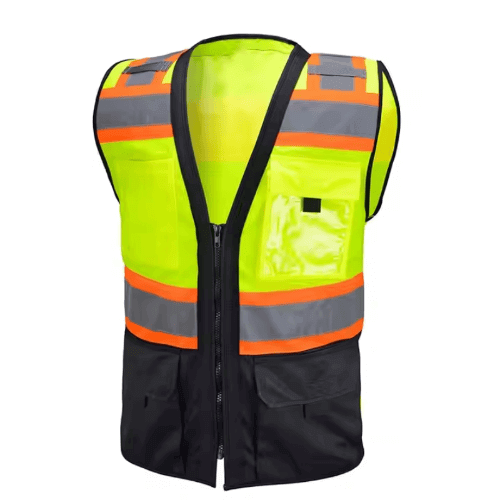
Get a Custom Class 2 Safety Vest Quote from VisonSafety
Why Is a Class 3 Safety Vest Mandated for Certain Highway Operations?
Class 3 is required where maximum conspicuity is essential to provide earlier detection and recognition at higher vehicle speeds or at complex incident scenes.
Maximum Visibility: Designed for detection at greater distances in varying light.
Emergency Responders: Required for responders on busy highways and incident scenes.
High-Speed Work Zones: Mandatory where traffic speed makes early detection critical.
Specifying Class 3 apparel is a critical control when detection time and distance determine safety margins.
How Do Reflective Materials and Safety Standards Enhance Highway Vest Performance?
Fluorescent backgrounds increase daytime contrast; retroreflective tape returns light to drivers at night. Together they determine detection distance, durability and lifecycle performance.
Visibility Improvement: Retroreflective elements increase detectability to drivers at night.
Compliance with Standards: ANSI 107 ensures minimum performance and repeatability.
Durability and Performance: Quality materials retain photometric properties in service conditions.
Proper tape configuration and substrate choice are necessary to meet nominal visibility targets.
What Reflective Fabric Types Meet ANSI 107 Compliance?
Compliant garments combine photometrically tested fluorescent substrates, retroreflective tapes and, where appropriate, breathable mesh variants for comfort.
Fluorescent Fabrics: Improve daytime conspicuity.
Retroreflective Materials: Provide nighttime and low-light detection.
High-Visibility Mesh: Balances breathability with required conspicuity in warm conditions.
Specify materials that meet the photometric criteria cited in ANSI 107 labels and manufacturer data sheets.
How Do Reflective Standards Improve Worker Visibility and Safety?
Standards set minimum measurable requirements for background and retroreflective elements, which helps purchasers evaluate garments and supports manufacturer quality control.
Accident Reduction: Greater visibility lowers incident likelihood by making workers more obvious to drivers.
Guidance for Manufacturers: Standards set design requirements and test methods.
Increased Awareness: Standardised high-visibility PPE signals caution to road users.
Standards-driven specification increases predictability of garment performance on site.
Standards-compliant requirements can, however, create design constraints that complicate fit and ergonomics, particularly when conforming to minimum material-area mandates while attempting to provide a tailored fit.
ANSI/ISEA Safety Vest Standards & Fit Challenges
Safety vests are an essential piece of protective equipment worn by individuals working in environments requiring high visibility for safety reasons. The American National Standards Institute (ANSI) and the International Safety Equipment Association (ISEA) develop safety vest standards to ensure 360-degree visibility of workers, but these standards create limitations in manufacturer’s abilities to create a well-fitted vest for women of smaller stature, particularly in the sizes between XXS and S, as the required square inches of material result in a baggy fit. Designing Safety Vests to Fit Women, 2023
What Are the Benefits of Custom Safety Vests for Highway Use?
Custom vests help organisations meet ANSI 107 while addressing fit, function and brand needs.
Enhanced Visibility: Tailored placement of colour and tape to maintain conspicuity.
Brand Identity: Logos and identifiers positioned to avoid obscuring required reflective areas.
Functional Design: Pockets, closures and adjustments that improve usability without compromising compliance.
Well-specified custom vests can lower lifecycle costs and improve acceptance among workers.
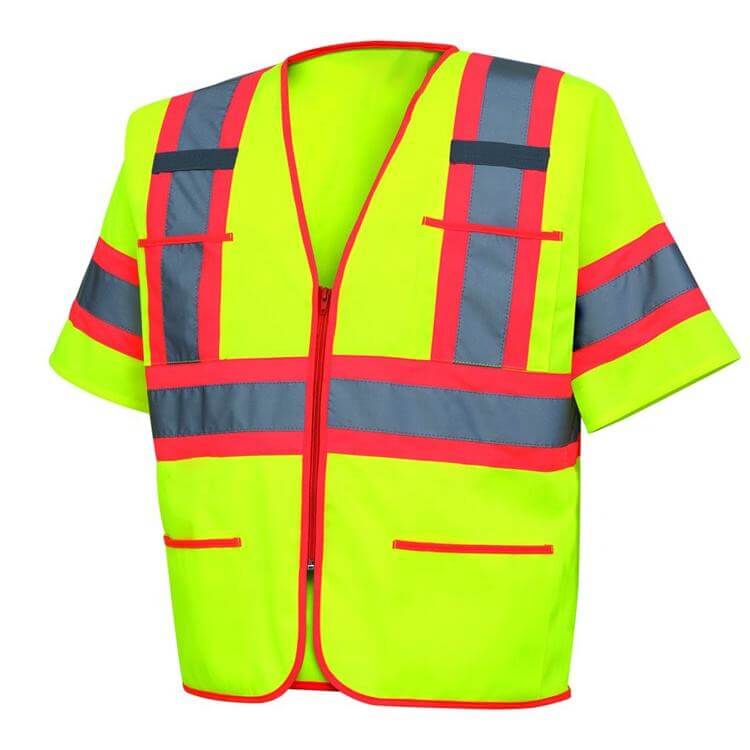
Get a Custom Class 3 Safety Vest Quote from VisonSafety
How Does Custom Branding Enhance Visibility and Corporate Identity?
Branding on high-visibility garments reinforces identity while preserving required conspicuity when applied thoughtfully.
Logo Visibility: Placement that preserves retroreflective coverage.
Professional Appearance: Uniform PPE communicates professionalism and safety commitment.
Team Cohesion: Consistent kit supports identity and on-site clarity.
Keep branding flat and away from mandated tape zones to maintain compliance.
What Operational Advantages Do Customized Safety Vests Provide to Businesses?
Customisation can improve comfort, durability and functionality, reducing replacement frequency and supporting productivity.
Durability: Higher-grade materials extend service life.
Comfort: Better fit increases wear time and compliance.
Functional Features: Tool pockets, ID windows and adjustable closures increase efficiency.
These choices lower total cost of ownership and improve PPE acceptance.
Frequently Asked Questions
What factors should be considered when choosing a safety vest for highway work?
Match class to traffic exposure, required detection distance and environmental conditions; verify materials meet ANSI 107 and choose a fit that workers will wear consistently.
Are there specific color requirements for safety vests used on highways?
Fluorescent backgrounds (commonly yellow, orange or green) are normally required to maximise daytime conspicuity; paired with retroreflective tape they provide night-time detection.
How often should safety vests be inspected for compliance and wear?
Inspect regularly (ideally before each use) for tape integrity, fabric degradation, tears or severe fading and replace garments that no longer meet photometric or structural expectations.
Can safety vests be customized for specific job roles or branding?
Yes. Use role-colouring, clear company identification and practical features, but ensure branding does not block required reflective areas or violate label claims.
What are the consequences of not complying with safety vest regulations?
Non-compliance increases incident risk and may lead to fines, penalties and increased liability; compliant PPE is a core element of roadwork risk management.
How do weather conditions affect the choice of safety vests?
Choose breathable mesh for heat, and insulated or water-resistant constructions for cold/wet conditions; confirm retroreflective performance across the expected environmental range.
Conclusion
Select the ANSI 107 class that matches traffic speed and exposure, specify compliant materials and tape configurations, and consider custom, standards-compliant vests to balance safety, fit and brand needs. Proper specification protects personnel, supports regulatory conformity and promotes professional on-site presentation.
 English
 Deutsch
 Français
 Polski
 Português do Brasil
 Español
 日本語
 Русский
 العربية
 Italiano
 Nederlands
 Türkçe
 한국어