
HRC stands for Hazard Risk Category — a shorthand used to match arc‑rated flame‑resistant (FR) clothing and personal protective equipment (PPE) to the potential incident energy of an arc flash. This guide shows how HRC ties to ATPV (arc thermal performance value), why standards moved toward PPE categories in NFPA 70E, and how buyers should read ratings when specifying garments for electrical work. Procurement and safety teams need clear, actionable steps to turn incident‑energy results into garment choices, layering strategies, and documentation for compliance. Below we define HRC, summarize HRC/PPE levels, match typical ATPV ranges to common FR apparel, explain NFPA 70E implications, and give practical selection steps for B2B buyers. We also explain how a manufacturer can support compliance through certified products and custom manufacturing, helping distributors and brands align technical requirements with supply capability.
What Is HRC in Flame Resistant Clothing?
HRC (Hazard Risk Category) links an evaluated arc‑flash hazard to the level of arc‑rated clothing and PPE recommended for the task. The category reflects the estimated incident energy (in cal/cm²) from an arc‑flash study and sets minimum arc ratings for fabrics and garments. Using HRC helps safety teams translate technical incident‑energy numbers into procurement actions — which garments, layers, and accessories to require on a job. Clear categories reduce under‑ or over‑specifying PPE, control cost, and protect workers.
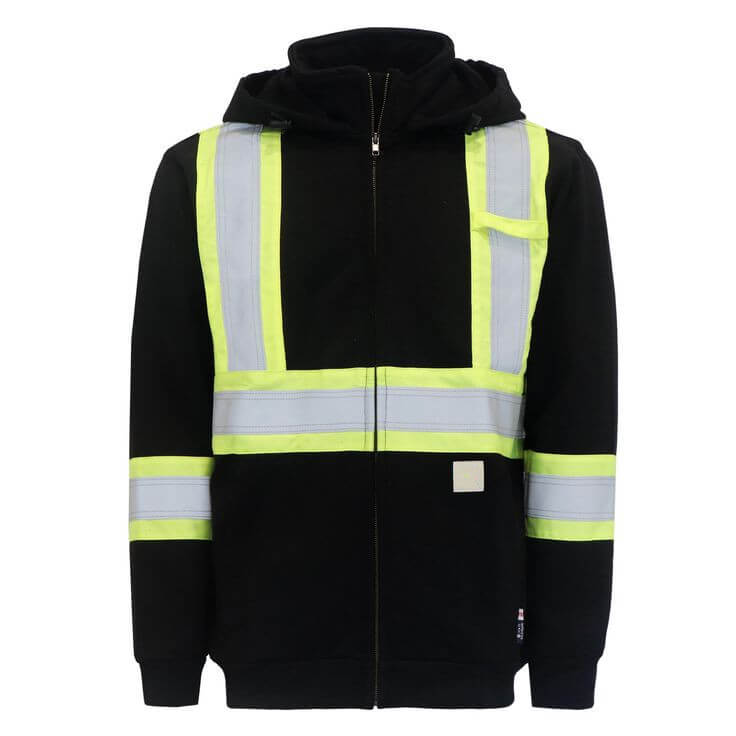
Get a Custom FR Clothing Quote from VisonSafety
HRC once served as a quick decision tool, but standards have shifted to PPE categories for greater clarity. Knowing that evolution helps buyers reconcile older HRC labels with current NFPA 70E PPE language and ensures procurement documents reference the correct rating metrics. Below is a quick list of why HRC matters for buyers and safety managers.
HRC matters because it:
- Standardizes selection of arc‑rated clothing against incident‑energy thresholds.
- Makes communication between engineers, safety teams, and procurement clearer.
- Encourages matching garment ATPV to the assessed exposure instead of guessing.
How Does HRC Classify Arc Flash Hazard Levels?
HRC assigns ranges of incident energy (cal/cm²) to protective clothing expectations, creating stepped guidance for PPE selection. Incident energy estimates the thermal energy a worker could receive at a given distance and task; that value determines the minimum ATPV or arc rating required. Each HRC/PPE level implies a fabric ATPV threshold and common garment combinations — for example, a single arc‑rated shirt for lower exposures versus layered coveralls or jackets for higher exposures. Translating incident energy into ATPV is the first step in building defensible PPE lists for contracts and bids.
Why Has HRC Transitioned to PPE Categories in NFPA 70E?
Standards bodies moved from HRC labels toward explicit PPE categories in NFPA 70E to eliminate ambiguity and link recommendations directly to task‑based hazard analysis. PPE categories specify required garments and accessories at defined incident energies, which simplifies procurement and compliance. That clarity helps inspectors, auditors, and purchasing teams by listing the types of clothing and minimum arc ratings for a task — not just a number. The change promotes a consistent, evidence‑based approach to selecting FR clothing and reduces mismatches between risk assessments and supplied PPE.
What Are the Different HRC Levels in FR Clothing? Overview of Protection Categories
HRC/PPE levels range from no arc‑rated clothing up to very high exposures that require multi‑layer arc‑rated systems; each level defines protective intent and typical garment choices. Below is a concise mapping of common HRC/PPE levels with representative ATPV guidance and typical use cases to help buyers and safety engineers align specifications with procurement.
- HRC/PPE 0: Minimal incident energy — standard (non‑melting) clothing recommended.
- HRC/PPE 1: Low incident energy — single‑layer arc‑rated shirts or base layers.
- HRC/PPE 2: Moderate energy — arc‑rated shirts plus FR pants or coveralls.
- HRC/PPE 3: High energy — arc‑rated coveralls or multi‑layer outerwear.
- HRC/PPE 4: Very high energy — specialized multi‑layer systems and insulated suits.
Intro to table: The table below is a practical, manufacturer‑oriented quick reference pairing protection levels with ATPV ranges and example product categories commonly specified by distributors and brands.
This table shows how safety criteria map to product categories and supports quick specification decisions for tenders and bulk orders. The next section explains the protection each level typically provides and gives task examples.
What Protection Does Each HRC Level Provide?
Each HRC/PPE level describes expected protective capability and common garment groupings that preserve mobility for the task. Lower levels rely on materials that resist ignition and limit burn severity, usually achieved with single‑layer arc‑rated shirts or base garments. Higher levels require garments with higher ATPV ratings or multiple layers that together meet the incident‑energy requirement. For example, HRC/PPE 2 commonly pairs an arc‑rated work shirt with FR pants or a coverall to protect exposed areas, while HRC/PPE 3 and 4 call for full‑coverage systems such as arc‑rated jackets over coveralls plus head, face, and hand protection. Match combinations to task exposure to ensure comfort and compliance.
How Do ATPV Values Relate to HRC Levels?
ATPV (Arc Thermal Performance Value) measures the energy at which a fabric has a 50% probability of preventing a second‑degree burn under test conditions and is reported in calories per square centimeter (cal/cm²). Buyers use ATPV to compare fabrics: a garment with an ATPV equal to or greater than the task incident energy provides a defined level of protection. Tests such as ASTM F1959/F1959M or ASTM F2621 establish ATPV protocols and are commonly cited on technical data sheets. Understanding ATPV lets procurement teams specify arc ratings and verify that garments meet or exceed the ATPV required by their hazard analyses.
Intro to fabric table: The table below clarifies how fabric‑level metrics translate into purchasing criteria so technical buyers can compare material options objectively.
This comparison highlights choosing fabrics whose tested ATPV/EBT properties match the incident‑energy profile of the work, simplifying specification and supplier evaluation.
How Does NFPA 70E Define HRC and PPE Categories for Electrical Safety?
NFPA 70E bases PPE selection on task‑specific arc‑flash hazard analysis and defines how to determine required PPE for energized tasks. The standard focuses on identifying shock and arc‑flash hazards, evaluating incident energy, and then specifying PPE with sufficient arc ratings to limit injury. Key requirements include documented hazard analyses, providing arc‑rated clothing that matches the evaluated energy, and maintaining labeling and training so workers understand PPE limits. NFPA 70E moves the industry from generic categories toward evaluated energy and task‑appropriate PPE, improving alignment between engineering controls and protective clothing.
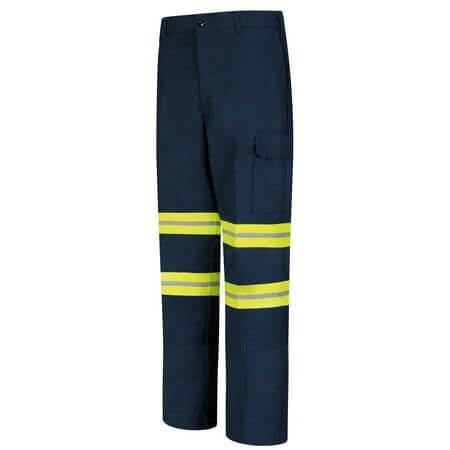
Get a Custom FR Clothing Quote from VisonSafety
To help purchasing and compliance teams, here are essential NFPA 70E considerations when specifying FR clothing:
- Complete and document an incident‑energy analysis for energized tasks.
- Require garments with ATPV equal to or greater than the assessed incident energy.
- Keep labeling and accessible documentation for PPE ratings and testing.
What Are the Key NFPA 70E Requirements for FR Clothing?
Important NFPA 70E requirements for FR clothing include performing an arc‑flash hazard analysis, creating PPE matrices for tasks, and verifying that clothing meets or exceeds the arc rating for the assessed incident energy. The standard also requires training on PPE use, inspection, and maintenance so garments retain protective performance. From a procurement perspective, NFPA 70E advises specifying tested ATPV values, retaining manufacturer test reports, and including replacement strategies and garment care instructions in contracts. These steps help ensure garments perform as expected across their service life.
How Does VisonSafety Ensure Compliance with NFPA 70E Standards?
VisonSafety supports B2B buyers by supplying certified FR products and embedding quality control and testing into manufacturing workflows to meet documentation needs. As a global manufacturer focused on flame‑retardant clothing, VisonSafety produces garments to recognized test standards and can provide certification documentation and batch‑level traceability on request. Our manufacturing capabilities include customizing shirts, coveralls, jackets, pants, vests, sweatshirts, rainwear, and headgear to meet specified ATPV requirements and support compliance programs for distributors, wholesalers, and brands. This manufacturer‑focused support helps procurement teams verify performance and keep audit‑ready records.
How to Choose the Right FR Clothing Based on HRC Levels? Practical Guidance for B2B Clients
Choosing the right FR clothing begins with a documented incident‑energy assessment, then moves through ATPV matching, garment selection, layering strategy, and supplier verification. Buyers should use a procurement checklist that ties evaluated incident energy to minimum ATPV, specifies garment combinations, and requires suppliers to provide test reports and compliance documentation. The steps below offer a straightforward decision flow for technical purchasers and procurement teams.
- Assess incident energy for each task and record cal/cm² values.
- Choose garments with ATPV equal to or greater than the assessed incident energy.
- Specify garment types (shirt, coverall, jacket) and any layering requirements for the task.
- Require supplier documentation (ATPV test reports, material specs) and sample approvals.
This checklist turns technical analysis into clear tender scopes and purchase orders that reduce ambiguity and protect workers. The next section maps representative product categories to typical HRC levels to help sourcing.
Which VisonSafety FR Products Match Each HRC Level?
VisonSafety makes a range of FR apparel that aligns with common HRC/PPE levels, helping B2B buyers specify appropriate items for bulk and custom orders. For lower HRC/PPE levels, FR shirts and pants provide single‑layer coverage with tested ATPV suitable for lower incident energies. For moderate to high levels, FR coveralls, jackets, and multi‑layer systems deliver higher ATPV and full‑body coverage. Our product line includes FR shirts, jackets, coveralls, pants, vests, sweatshirts, rainwear, and headgear — letting procurement match garment category to assessed exposure and operational needs.
This mapping helps buyers convert an HRC or PPE level into line‑item descriptions for purchase orders and enables suppliers to bid against clear technical criteria.
Why Consider Custom FR Clothing Solutions for Specific HRC Needs?
Custom FR solutions are valuable when standard stock items don’t meet operational, branding, or fit requirements while still needing to meet ATPV thresholds. Customization can address sizing, reflective trim placement, tool pockets, or color and hi‑vis integration without compromising arc ratings or compliance documentation. For distributors and brands, working with a manufacturer that offers certified custom production simplifies fulfilling specialized orders at scale. VisonSafety’s B2B manufacturing capabilities are useful when clients need specific modifications without sacrificing protective performance.
For teams managing FR clothing procurement, specifying custom options alongside required ATPV and documentation ensures suppliers can deliver compliant garments tailored to end‑user needs.
VisonSafety can provide certified products, custom manufacturing, and global production capacity to support B2B orders, helping distributors and brands secure compliant FR apparel with the documentation required for audits and safety programs.
What Does HRC Mean for FR Clothing | FAQs
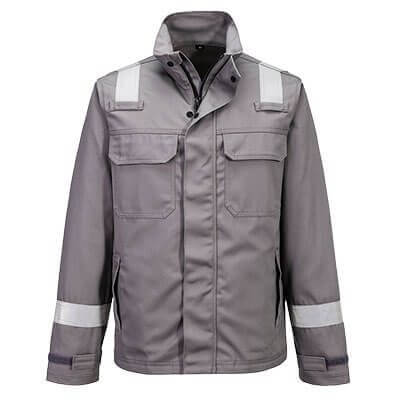
Get a Custom FR Clothing Quote from VisonSafety
What is the significance of ATPV in selecting FR clothing?
ATPV (Arc Thermal Performance Value) indicates the level of protection a fabric offers against an arc flash. Measured in calories per square centimeter (cal/cm²), ATPV represents the energy at which a fabric has a 50% chance of preventing a second‑degree burn under test conditions. Select garments with an ATPV that meets or exceeds the incident energy from your hazard analysis to ensure adequate protection.
How can organizations ensure compliance with NFPA 70E standards?
To meet NFPA 70E, conduct thorough arc‑flash hazard analyses, document incident energy levels, and specify FR clothing with ATPV ratings that match those values. Maintain proper labeling, train workers on PPE use and care, and perform regular inspections. Keep manufacturer test reports and procurement records to demonstrate compliance during audits.
What are the common misconceptions about HRC levels?
A common misconception is that HRC levels are interchangeable with PPE categories. HRC provided a quick reference, but NFPA 70E’s PPE categories are task‑based and more specific. Another misconception is that higher HRC always equals better protection — effectiveness also depends on proper layering, garment combinations, and correct use. Understanding these points is essential for informed FR clothing decisions.
How do environmental factors affect the choice of FR clothing?
Environmental conditions like temperature, humidity, and moisture affect FR clothing selection. In hot or humid environments, moisture‑wicking fabrics reduce heat stress. In wet conditions, water‑resistant over‑layers help preserve ATPV and overall system protection. Consider the work environment when specifying garments to balance safety and comfort.
What role does training play in the effectiveness of FR clothing?
Training ensures workers know how to use, inspect, and maintain FR clothing. Even high‑quality garments won’t perform if misused or damaged. Regular training reinforces PPE limits, how to spot wear or contamination, and the importance of following safety procedures — all critical to maintaining protection.
Can FR clothing be customized for specific job requirements?
Yes. FR clothing can be customized for fit, pockets, reflective trim, or color and hi‑vis integration, provided those changes do not compromise the garment’s ATPV or protective performance. Partnering with a manufacturer that offers certified custom solutions helps ensure compliance while meeting operational needs.
Conclusion
Understanding Hazard Risk Categories (HRC) helps procurement teams choose flame‑resistant clothing that properly protects workers in electrical environments. By aligning HRC levels with ATPV ratings and following NFPA 70E guidance, buyers can make defensible, compliant decisions. For tailored solutions that meet specific operational needs, explore VisonSafety’s certified FR apparel and custom manufacturing options. Contact us to see how we can support your safety program with compliant, auditable products.
 English
 Deutsch
 Français
 Polski
 Português do Brasil
 Español
 日本語
日本語 Русский
 العربية
 Italiano
 Nederlands
 Türkçe
 한국어
한국어