
Welding jackets fall into two primary categories: leather and flame-resistant (FR) cotton. Leather excels in heavy-duty applications, resisting sparks and spatter effectively. FR cotton suits lighter work, offering breathability and comfort. Style variations include full-length, split-leg, and sleeveless designs, each matched to specific welding tasks and heat exposure levels.
Key Takeaways
Leather and flame-resistant cotton represent the two primary material options for welding jacket construction.
Welding jackets serve as the first line of defense against sparks, heat, and temperature exposure.
Different welding job types—from heavy industrial to lightweight metal fabrication—require specific jacket styles.
Proper jacket selection prevents discomfort and serious injury during welding operations.
Why Does Your Welding Jacket Choice Matter?
Welding jacket selection directly determines whether a worker walks away from a shift unharmed or sustains a serious burn injury. The wrong material choice produces discomfort at minimum. And at worst, injuries that sideline workers and expose businesses to significant liability.
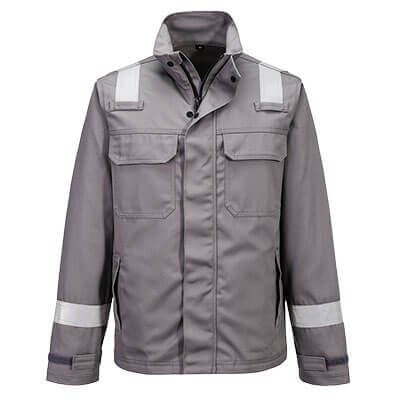
A welding jacket’s core job is straightforward. Proper garments shield the body from the neck to the waist and from the shoulder down through the arms, blocking burns from heat, sparks, weld splatter, and arc radiation. That coverage zone is non-negotiable on any active welding site.
Get a Custom FR Welding Jacket Quote from VisonSafety
What Happens When Welders Choose the Wrong Jacket Material?
Mismatched materials fail in predictable ways. A jacket that lacks adequate flame resistance ignites or melts under arc heat, turning a minor spark event into a burn injury. Discomfort from poor material selection also causes workers to remove protective garments mid-shift, eliminating protection entirely.
What Standards Should a Welding Jacket Meet?
Compliance with recognized global standards — including UL, NFPA, and EN requirements. Confirms that a garment has been independently tested for flame resistance and structural integrity. VisonSafety engineers premium welding jackets specifically for hazardous industrial environments, building each garment to satisfy these strict benchmarks.
The practical stakes for distributors and safety managers are clear:
Burn protection from heat, sparks, and weld splatter across the upper body
Arc radiation shielding against UV and IR exposure
Regulatory compliance through UL, NFPA, and EN certification
Selecting certified welding jacket types and welding jacket styles appropriate to the application is the baseline requirement — not an upgrade.
What Are the Main Welding Jacket Types?
Welding jacket types fall into two primary material categories: leather and flame-resistant (FR) cotton. Each material carries distinct strengths matched to specific welding tasks and work environments.
Leather jackets offer heavy-duty spark and spatter resistance. FR cotton jackets prioritize breathability and sustained protective performance through repeated wear and laundering. A critical distinction for welders working long shifts in warmer conditions. Choosing the wrong category does not just cause discomfort; it exposes workers to burn injuries that proper material selection prevents.
Which welding jacket style holds up best over time?
FR cotton jackets are engineered so that protective characteristics remain intact through repeated use and laundering cycles. Leather jackets resist degradation from heat and spatter but require different maintenance practices to preserve their integrity.
What construction details separate a reliable welding jacket from a poor one?
Material choice alone does not determine jacket quality. Strong seam construction and anti-static properties are essential engineering requirements, particularly for heavy industry and welding applications. VisonSafety builds welding jacket styles using meta-aramid and cotton blends. A fiber combination that delivers both thermal resistance and structural durability. Anti-static construction further reduces ignition risk in environments where flammable gases or dust may be present.
The practical takeaway for distributors and safety buyers is straightforward. Matching jacket type to the specific welding application — and verifying that construction standards meet the demands of that environment. Is what keeps workers protected and keeps compliance records clean.
What Welding Jacket Styles Suit Different Applications?
Welding jacket styles are not interchangeable — each welding jacket type is engineered for a specific range of tasks, from heavy industrial arc welding to light-duty metal fabrication. Matching the jacket to the application is a critical safety decision, not a preference.
Work demands vary widely. Heavy industrial welding exposes workers to intense heat, heavy spatter, and prolonged arc exposure. Lightweight metal fabrication produces far less thermal hazard. A jacket built for one environment performs poorly — and dangerously — in the other.
Get a Custom FR Welding Jacket Quote from VisonSafety
Which Welding Jacket Style Works Best for Heavy Industrial Applications?
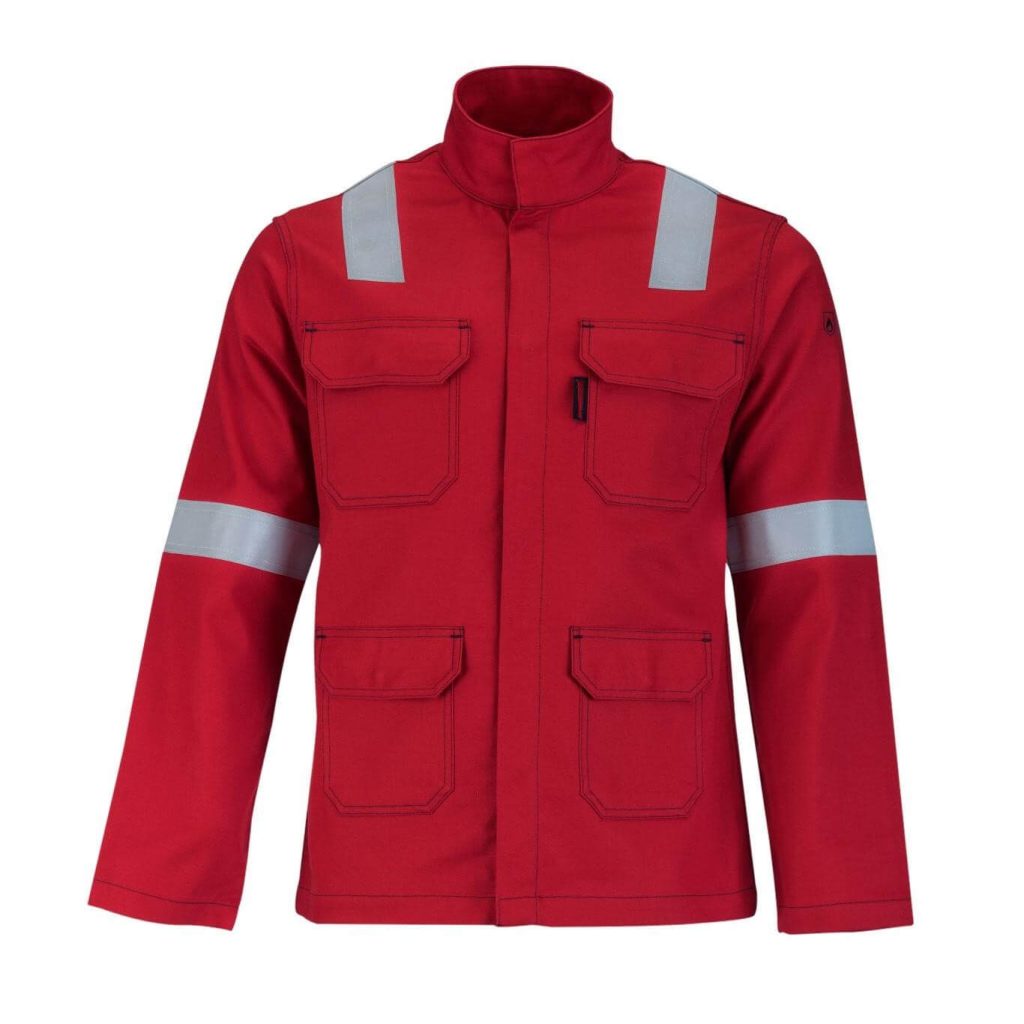
Heavy industrial roles demand maximum coverage and robust construction. Jackets for these environments prioritize thick FR-rated materials, full-length sleeves, and high collars that close off exposure points. Reinforced stitching at stress points prevents seam failure under repeated thermal stress. These jackets are heavier by design — protection takes priority over mobility.
What Features Matter Most for Light Fabrication and General Shop Work?
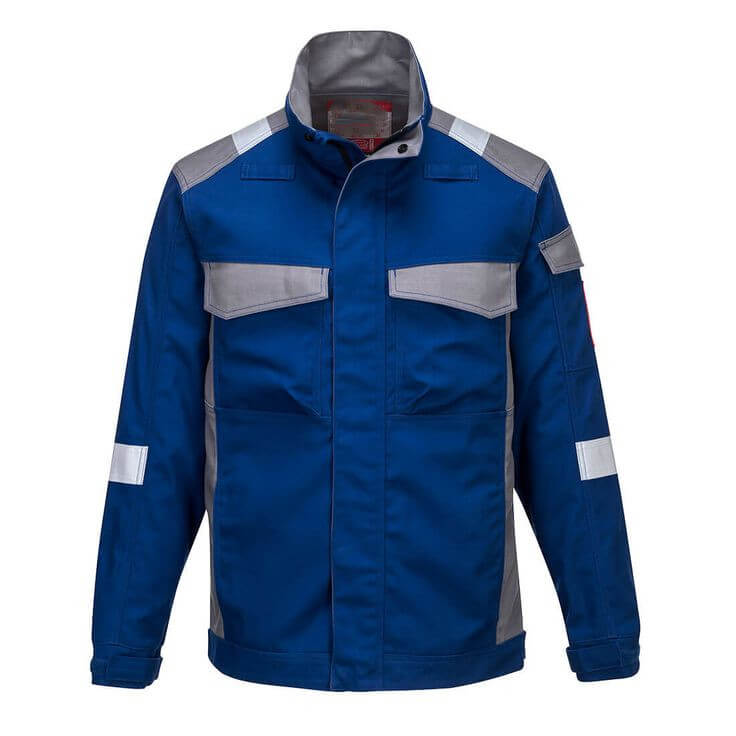
Lighter fabrication work calls for jackets that balance protection with freedom of movement. Adjustable cuffs, breathable fabric construction, and a less rigid cut allow welders to work efficiently without fatigue. Reinforced stitching remains essential even in lighter-duty styles. Spatter and heat exposure are still present — just at lower intensity.
The table below summarizes how jacket features align with application demands:
VisonSafety produces OEM and ODM FR jackets with custom fire-proof trim. Logo options, enabling distributors to build private-label lines precisely matched to the industrial roles their customers fill.
How Does Compliance Certification Protect Your Business?
Compliance certification shields distributors and brands from regulatory liability while opening access to markets that mandate documented safety standards. Without verified certification, a single non-compliant shipment can trigger product recalls, contract losses. Reputational damage that far outweigh the cost of getting documentation right from the start.
VisonSafety’s flame-retardant garments meet UL, NFPA, and EN standards. The three frameworks that govern FR workwear across North American and European markets. Clients receive the paperwork regulators and procurement teams actually ask for.
What certifications do welding jacket suppliers need to provide?
Distributors sourcing welding jacket types for industrial clients need documentation that covers both the product and the production process. VisonSafety operates within an ISO 9001 quality environment, batch-tests a notable share of fabrics. Maintains traceability records for more than three years. That traceability record is the difference between a defensible audit and a costly one.
How does certified documentation reduce supply chain risk?
VisonSafety provides OEKO-TEX, CE, and UL documentation as needed, supporting compliance requirements across both North American and European markets. Clients sourcing across multiple regions avoid the expense of re-qualifying garments for each jurisdiction. Supply chain services also include quality checks, branded packaging. Logistics coordination — reducing the number of vendors a distributor must manage.
The practical benefits of working with a certified manufacturer break down clearly:
UL/NFPA/EN compliance covers the core regulatory frameworks for FR workwear in target markets
ISO 9001 production environment ensures process consistency across every batch
A notable share fabric batch testing eliminates guesswork at the point of inspection
Multi-year traceability records support audits and warranty claims
For brands evaluating welding jacket styles for private-label programs, certified documentation is not a bonus feature. It is the foundation of a defensible product line.
How Should Distributors Source Welding Jackets at Scale?
Distributors sourcing welding jacket types and welding jacket styles at scale need a manufacturing partner that handles compliance, branding. Logistics under one roof. Choosing a fragmented supply chain costs time, increases error rates. Leaves compliance gaps that expose end customers to real risk.
VisonSafety serves clients across more than 30 countries, supporting both North American standards (ANSI/NFPA). European requirements (EN/UL) for welding and heavy industry applications. That dual-standard capability means distributors avoid the costly mistake of sourcing a product line that clears one market but fails another.
Get a Custom FR Welding Jacket Quote from VisonSafety
What Order Sizes Work for Testing a New Welding Jacket Line?
Small-batch production runs allow distributors to test new welding jacket styles before committing to large inventory positions. VisonSafety supports flexible order sizes — from pilot runs through full-scale production. So clients can validate market demand without overextending capital. Scaling up follows naturally once sell-through data confirms the right fit.
How Does Private-Label Branding Work for Welding Jackets?
Expert design support lets private-label brands differentiate their welding jacket product lines through custom reflective logos, branded trims, and tailored construction details. VisonSafety’s design team enhances brand visibility and impact at the garment level, not just the packaging level.
Key sourcing advantages distributors gain:
Compliance coverage across ANSI, NFPA, EN, and UL frameworks
Flexible minimums for market testing and phased launches
DDP shipping options that reduce logistics complexity and total landed cost
Custom branding integrated directly into garment construction
Reliable delivery schedules — for both samples and bulk orders — keep distributor timelines intact.
Selecting the appropriate welding jacket requires careful consideration of the specific hazards present in your work environment, the regulatory standards applicable to your industry. The performance characteristics that best serve your operational needs. Whether prioritizing flame resistance, thermal protection, visibility. Specialized features such as leather reinforcement or moisture management, VisonSafety’s engineered jackets deliver the compliance-ready protection. Durability that industrial workforces depend on. Investing in certified, purpose-built welding apparel reduces injury risk, extends worker productivity. Demonstrates organizational commitment to safety excellence across your operations.
FAQ
What are the two main types of welding jackets?
Welding jackets fall into two primary material categories: leather. Flame-resistant (FR) cotton, each matched to specific welding tasks and work environments.
When is a leather welding jacket the better choice?
Leather excels in heavy-duty applications, delivering excellent resistance to sparks. Spatter that FR cotton only matches at a good level.
What standards confirm a welding jacket meets safety requirements?
Compliance with UL, NFPA, and EN requirements confirms a garment has been independently tested for flame resistance and structural integrity.
What fabrics are used in FR welding jackets?
Understanding the materials behind certified FR garments helps buyers make informed sourcing decisions. For a detailed breakdown of fiber types and fabric construction, consult your FR garment supplier’s technical documentation.
How should welding jackets be maintained to preserve their protective properties?
Proper laundering and care are essential to sustaining FR performance across a garment’s service life. For practical guidance, consult the garment’s care label and manufacturer laundering instructions.
 English
 Deutsch
 Français
 Polski
 Português do Brasil
 Español
 日本語
日本語 Русский
 العربية
 Italiano
 Nederlands
 Türkçe
 한국어
한국어