
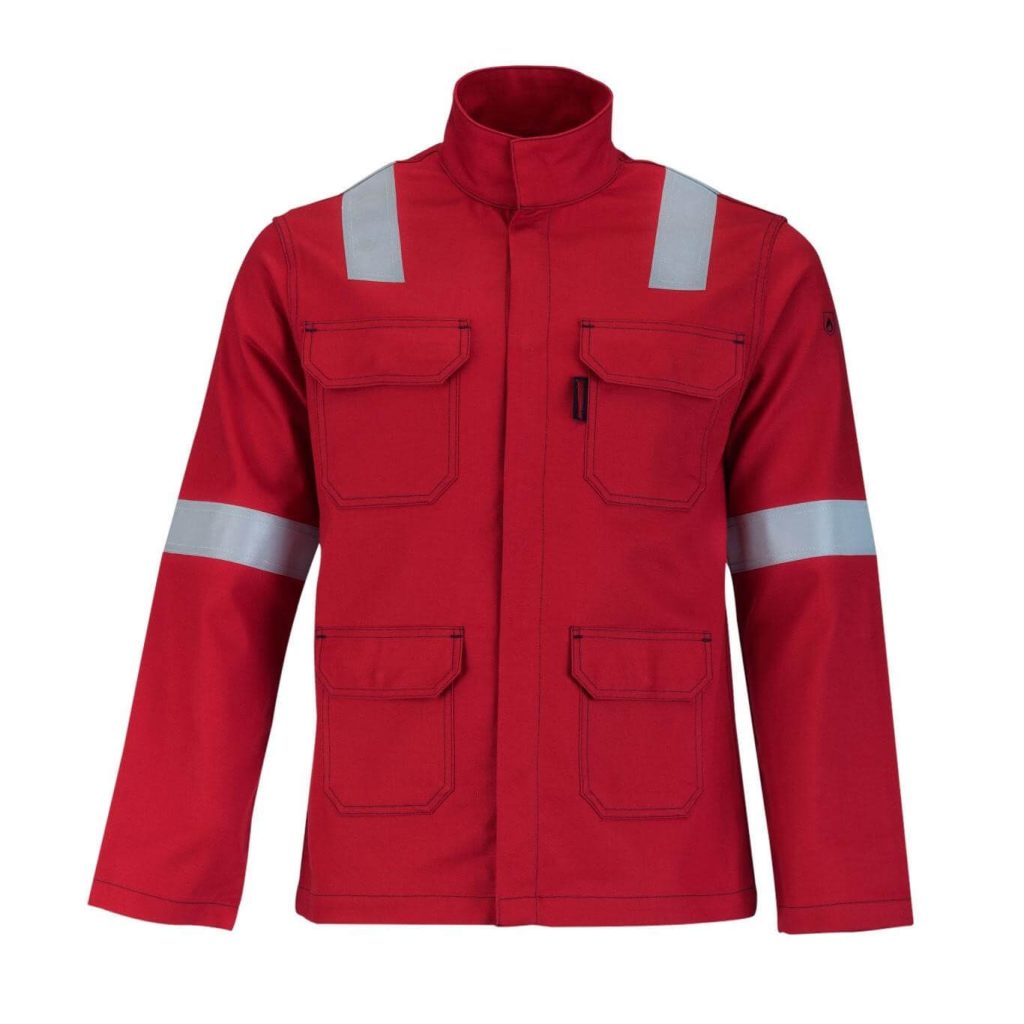
Welding jackets shield workers from sparks, radiant heat, and molten spatter during active welding operations. Constructed from flame-resistant materials such as leather or FR cotton, these garments resist ignition and self-extinguish quickly. Certified options meet NFPA 2112 and related standards, reducing burn injury risk and supporting regulatory compliance across construction, heavy industry, and fabrication environments.
Key Takeaways
- Welding jackets protect against sparks, heat, and molten metal, reducing burn injuries during welding operations.
- Leather and flame-resistant cotton materials offer different strengths for various welding job requirements and conditions.
- Welding jackets work as essential PPE alongside gloves, helmets, and other protective equipment for complete safety.
- Proper welding apparel selection directly prevents serious injuries when temperatures rise and sparks fly during work.
What Does a Welding Jacket Actually Protect Against?
A welding jacket shields welders from three primary hazards: sparks, intense heat, and molten metal spatter produced during welding operations. Without adequate protection, exposure to even brief contact with molten metal causes serious burns and lasting injury.
The core threats a welding jacket addresses include:
- Sparks — ejected during arc and MIG welding, capable of igniting standard clothing instantly
- Radiant and conducted heat — sustained exposure degrades unprotected skin and ordinary fabric
- Molten metal spatter — droplets that adhere to surfaces and transfer heat long after contact
Flame-resistant construction delivers maximum protection against all three hazards, directly reducing the frequency and severity of burns on the job. That distinction matters. A jacket that merely resists ignition performs differently than one engineered to self-extinguish. Maintain structural integrity under sustained thermal stress.
Get a Custom FR Welding Jacket Quote from VisonSafety
Why does the material choice affect protection levels?
Material determines how a jacket responds when heat and spatter make contact. FR fabrics are engineered to resist ignition, slow flame spread. Preserve a protective barrier even after the heat source is removed. Leather offers durability and spatter resistance but varies in breathability and flexibility depending on the welding environment.
Does a welding jacket protect against all welding hazards?
A welding jacket addresses thermal and spark hazards directly. Welders working in heavy industry, utilities, and construction face additional risks. Arc flash, chemical exposure, and electrical hazards — that require layered PPE beyond the jacket alone. VisonSafety engineers FR clothing to meet strict global standards across hazardous settings, including welding. Heavy industry applications, ensuring garments perform where the risk is highest.
Which Materials Are Used in Welding Jackets?
Welding jacket materials fall into four primary categories: wool, cotton, leather, and blends of natural and synthetic fibers. Each material category carries distinct protective properties, making material selection one of the most consequential decisions in welding PPE.
Leather and FR cotton represent the two dominant material families. Leather excels in spark and spatter resistance. FR cotton, by contrast, prioritizes breathability and comfort during extended wear. Neither material is universally superior. The right choice depends on the factors specific to the welding application and work environment.
What Is the Difference Between Leather and FR Cotton Welding Jackets?
Leather welding jackets offer robust physical protection against heavy spatter and radiant heat. FR cotton jackets are lighter and more comfortable in warmer conditions, making them better suited for lighter-duty or indoor welding tasks. Welders working in high-heat, high-spatter environments typically favor leather. Those in moderate conditions often prefer FR cotton for its wearability.
What Advanced Fabric Blends Are Used in Professional FR Welding Jackets?
Beyond single-material construction, professional-grade FR garments increasingly rely on engineered fabric blends. Meta-aramid and cotton blends, for example, combine the inherent flame resistance of aramid fibers with the comfort and breathability of cotton. VisonSafety engineers FR clothing using precisely these meta-aramid. Cotton blends, reinforced with strong seam construction and anti-static properties for demanding industrial environments.
Key material options at a glance:
- Leather — maximum spatter and spark resistance
- FR cotton — lightweight, breathable, suited for moderate heat exposure
- Wool — natural flame resistance with good insulating properties
- Meta-aramid/cotton blends — engineered thermal resistance combined with everyday wearability
What Standards Must a Welding Jacket Meet?
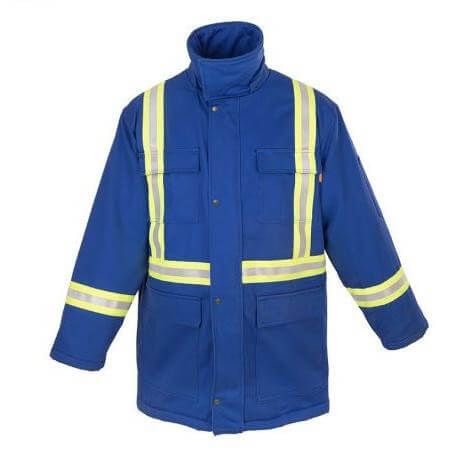
A welding jacket must meet recognized international flame-resistance standards to provide reliable protection in hazardous work environments. Compliance with frameworks such as NFPA, UL, EN ISO, and ANSI is the baseline — not a bonus.
The core requirement is straightforward: FR fabrics must maintain their protective characteristics through repeated use and laundering. A jacket that loses its flame resistance after a few wash cycles is not a compliant garment. It is a liability.
Get a Custom FR Welding Jacket Quote from VisonSafety
Which Certifications Should a Welding Jacket Carry?
Welding jackets intended for professional use should carry certifications aligned with the relevant regional market. Key frameworks include:
- NFPA 2112 — the North American standard for flame-resistant garments in flash-fire environments
- UL certification — independent verification of flame-resistance performance
- EN ISO standards — the European benchmark for protective clothing against heat and flame
- ANSI compliance — applicable across broader occupational safety apparel categories
VisonSafety FR clothing is UL, NFPA, and EN compliant, meeting the international requirements that construction, welding. Heavy-industry clients depend on across global markets.
How Does a Manufacturer Prove Consistent Compliance?
Certification on paper means little without production-level verification. VisonSafety operates within an ISO 9001 quality environment and batch-tests a notable share of fabrics before production proceeds. Traceability records are maintained for more than three years, giving distributors. Private-label brands documented proof of compliance for every order.
Guaranteed compliance with EN ISO, ANSI, and UL standards applies across all production batches — not just sample runs. For buyers supplying regulated industries, that consistency eliminates the audit risk that comes with inconsistent sourcing.
How Do You Choose the Right Welding Jacket?
Choosing the right welding jacket starts with matching the garment to the specific welding application and work environment. No two welding tasks impose identical hazards, so the selection process demands a deliberate review of material, construction. Compliance requirements before any order is placed.
The welding type drives nearly every other decision. A welder running high-amperage processes faces different thermal exposure than one performing light-duty tack welding. Getting that match wrong does not just cause discomfort — it leaves workers exposed to burns, sparks. Molten metal spatter that proper protection would have stopped.
What Factors Should Welders Consider When Selecting a Jacket?
Key selection criteria include:
- Welding process — the intensity and duration of heat exposure
- Material type — leather for heavy spatter resistance, FR cotton blends for breathability and extended wear
- Fit and mobility — restricted movement increases fatigue and error rates on the job
- Compliance requirements — relevant standards such as NFPA 2112 or EN ISO 11612 for FR performance
Matching each factor to the actual job conditions produces a jacket that protects without slowing workers down.
How Can Distributors Evaluate Welding Jacket Options Before Committing to Large Orders?
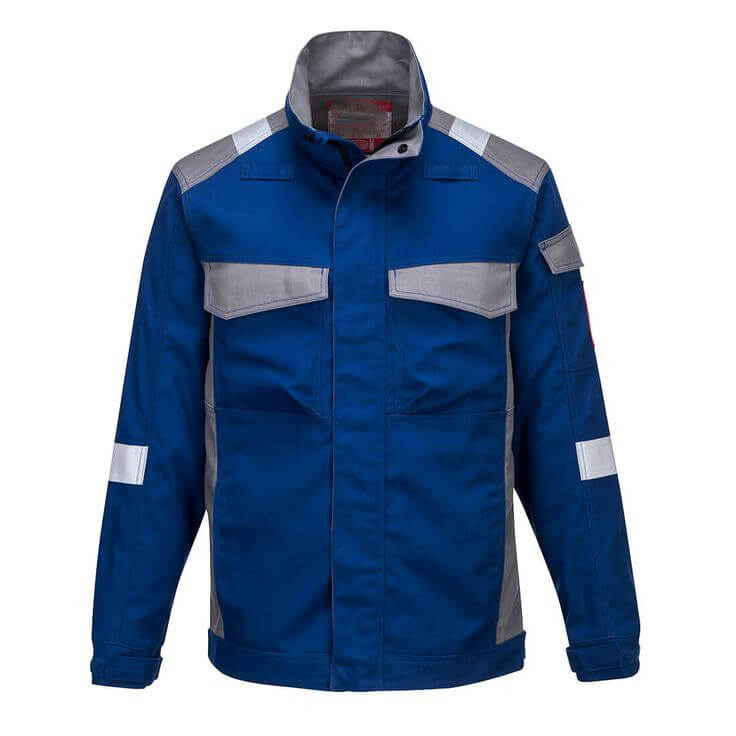
Distributors benefit from working with manufacturers that offer flexible small-batch production. Allows market testing before scaling to full production runs. VisonSafety supports this approach directly, enabling clients to assess fit, fabric performance, and end-user feedback on a limited quantity first.
VisonSafety also provides expert design support alongside custom fire-proof trim. Logo options, giving brands a practical path to differentiate their welding jacket lines without sacrificing certified protection.
Why Should Distributors Source Welding Jackets From VisonSafety?
VisonSafety delivers zero-defect batch consistency and end-to-end supply chain support. Two requirements that directly protect distributor reputation when supplying welding jackets to industrial clients. Distributors who source from unreliable manufacturers absorb the cost of returns, compliance failures, and lost accounts.
VisonSafety operates as both an OEM. ODM partner, meaning distributors can bring an existing design or build one from scratch. Fast sampling and on-time bulk delivery keep distributor inventory cycles predictable.
Get a Custom FR Welding Jacket Quote from VisonSafety
What Makes VisonSafety’s Quality Control Reliable for Welding PPE?
VisonSafety maintains zero-defect consistency across every production batch — not just select runs. For distributors supplying welding PPE to construction, utilities. Heavy industry clients, a single non-conforming shipment can trigger contract penalties or safety incidents. Consistent batch quality removes that risk before product ever reaches the end user.
How Does VisonSafety Support Distributor Margins and Logistics?
Cost-effective premium garments balance protection performance with pricing that supports healthy distributor margins. VisonSafety also handles the operational complexity that erodes profitability:
- Quality checks conducted before shipment to catch defects at the source
- Branded packaging that reinforces distributor or private-label identity at point of sale
- Logistics coordination and secure delivery to streamline cross-border fulfillment
- OEM and ODM production flexibility for both established lines and new product launches
Distributors serving 30-plus countries rely on this kind of integrated support. Sourcing from a manufacturer that handles compliance documentation, packaging. Delivery under one roof reduces overhead and accelerates time to market. That operational efficiency compounds over time.
A welding jacket serves as an essential barrier between workers and the intense thermal hazards inherent to welding operations. By combining flame-retardant materials with durable construction, these garments protect against sparks, molten spatter. Radiant heat while maintaining the mobility and comfort necessary for sustained productivity. Selecting a welding jacket engineered to recognized safety standards ensures your workforce remains protected, compliant. Equipped to perform demanding tasks safely across industrial environments.
FAQ
What does a welding jacket protect against?
A welding jacket shields welders from sparks, radiant and conducted heat, and molten metal spatter produced during welding operations.
What materials are welding jackets made from?
Welding jackets use leather, FR cotton, wool. Blends of natural and synthetic fibers, with leather excelling in spatter resistance and FR cotton prioritizing breathability.
Does a welding jacket provide complete protection on its own?
A welding jacket addresses thermal and spark hazards directly, but welders facing arc flash, chemical exposure. Electrical hazards require layered PPE beyond the jacket alone.
 English
 Deutsch
 Français
 Polski
 Português do Brasil
 Español
 日本語
日本語 Русский
 العربية
 Italiano
 Nederlands
 Türkçe
 한국어
한국어