
Hi‑visibility (hi‑vis) shirts are common across many industries because they increase worker conspicuity and lower risk. Bright fluorescent fabrics and reflective elements make people easier to see in low light and crowded worksites. This article summarizes the main benefits of high‑visibility clothing, the key regulations that affect its use, and how hi‑vis shirts are manufactured to meet safety standards. Use the guidance here to choose compliant hi‑vis shirts for your team and operations:
hi‑vis shirts.
What Are the Key Benefits of High Visibility Clothing?
High‑visibility clothing—especially hi‑vis shirts—provides three primary benefits that matter on the job:
- Improved Visibility: Fluorescent fabrics and retroreflective materials help wearers stand out in daylight, twilight, and at night.
- Enhanced Safety: Greater conspicuity gives drivers and equipment operators more time to see and avoid workers, reducing collisions and injuries.
- Regulatory Compliance: Wearing garments that meet standards reduces liability and helps organizations satisfy workplace-safety rules.
For safety-focused teams, compliant hi‑vis shirts are a straightforward way to improve on‑the‑job visibility.
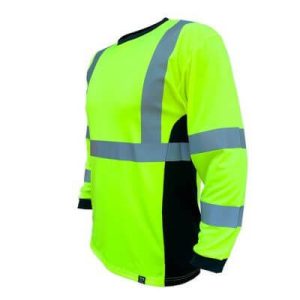
Get a Custom Hi-Vis Shirt Quote from VisonSafety
How Do Hi Vis Shirts Improve Workplace Safety?
Hi‑vis shirts make workers easier to detect in hazardous environments. Studies have linked high‑visibility clothing to lower accident and injury rates in construction, roadwork, logistics, and similar settings. When drivers and machine operators can spot personnel earlier, the chance of serious collisions falls.
High‑visibility safety apparel also plays a vital role in preventing traffic‑related fatalities among professions exposed to vehicle hazards, including law enforcement.
HVSA: Preventing Law Enforcement Traffic Fatalities
Traffic‑related deaths are a leading workplace hazard for law enforcement; between 2002 and 2011 they represented roughly 44% of fatalities in the field. Many of these deaths result from officers being struck by vehicles — incidents that could often be reduced through broader use of High‑Visibility Safety Apparel (HVSA). The literature suggests that misconceptions and social‑psychological factors influence whether officers wear HVSA, and relatively few studies have examined those behavioral drivers in depth. Understanding officers’ attitudes and safety practices is essential to lowering traffic‑related fatalities and improving occupational health in the law enforcement community. This study contributes to that research.
Approach to performance rating of retroreflective textile material considering production technology and reflector size, 2022
What Materials and Reflective Technologies Are Used in Hi Vis Shirts?
Most hi‑vis shirts combine a fluorescent background with retroreflective tapes or films. These components are selected to balance daytime conspicuity, nighttime reflectivity, comfort, and durability.
- High‑Visibility Fabric: Neon yellow, orange, or green fabrics attract attention in daylight and twilight.
- Reflective Tape: Retroreflective strips reflect headlights back to the driver, improving night visibility.
- Durable Fabrics: Breathable, hard‑wearing textiles preserve visibility and wearer comfort over time.
Combined correctly, these materials provide reliable conspicuity while keeping wearers comfortable.
Additional research explores how production methods and reflector coverage affect retroreflective performance, comfort, and durability.
Retroreflective Fabric Performance & Production for Hi‑Vis
One study evaluated retroreflective patterns made with different production techniques (transfer films versus screen printing) and two reflector coverage sizes (25% and 85%). Using a TOPSIS decision method, researchers compared visibility, thermo‑physiological comfort, and physical‑mechanical durability to identify the best overall solution. The findings showed that identical patterns produced by transfer film delivered higher retroreflection than those produced by screen printing, while comfort and mechanical properties varied by method and coverage — highlighting trade‑offs manufacturers must manage.
Personal Protective Clothing: Law Enforcement Officers’ Attitudes and Safety Behavior Assessments Toward High-Visibility Safety Apparel, 2013
Which Safety Apparel Regulations Require Hi Vis Shirts?
Understanding applicable standards helps organizations choose the right garments. The most relevant standards are:
- ANSI/ISEA: U.S. guidance that classifies garments by visibility class and intended use.
- EN ISO: European/ISO standards that define minimum fluorescent and retroreflective areas.
Meeting these standards supports worker safety and reduces legal and financial risk.
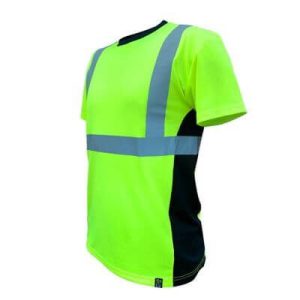
Get a Custom Hi-Vis Shirt Quote from VisonSafety
What Are the ANSI and EN ISO Standards for Hi Vis Shirts?
ANSI/ISEA 107‑2020 groups garments into three classes:
- Class 1: For low‑traffic, predictable movement settings.
- Class 2: For higher‑traffic or visually complex environments.
- Class 3: The highest visibility level for high‑risk tasks (e.g., roadwork, emergency response).
EN ISO 20471 uses similar criteria, specifying minimum areas of fluorescent background and retroreflective material to ensure adequate conspicuity.
How Do Regional Laws Affect Hi Vis Shirt Compliance?
Enforcement and legal expectations vary by region. In the U.S., OSHA often references ANSI/ISEA guidance. In the EU, EN ISO 20471 is commonly required for high‑risk roles. Noncompliance can lead to fines, greater liability after incidents, and increased worker risk. Businesses should monitor national and industry rules to choose the correct class of hi‑vis apparel for each site.
How Are Hi Vis Shirts Manufactured to Meet Safety Standards?
Producing compliant hi‑vis shirts involves controlled steps that ensure performance and traceability. Typical stages include material selection, testing, and certification documentation.
- Material Selection: Choose fluorescent fabrics and retroreflective materials that meet visibility benchmarks.
- Quality Control: Test brightness and retroreflection after wear and laundering.
- Certification Compliance: Use accredited labs and keep records that verify conformance.
These practices help deliver garments that are safe and comfortable for workers.
What Customization Options Are Available for Safety Shirts?
Organizations can add logos, choose sizes for proper fit, and include practical features (pockets, zippers, breathable panels) as long as customization does not reduce required fluorescent or reflective areas.
How Do Manufacturing Processes Ensure Certification Compliance?
Typical controls include ongoing inspections, routine lab testing, and detailed documentation of test results and certifications. Together these steps provide traceability and confirm that garments meet ANSI/ISEA and EN ISO requirements.
Why Do Different Industries Require Hi Vis Shirts?
Different sectors face distinct visibility challenges: construction has heavy equipment and materials; logistics has vehicle movements in tight spaces; emergency services and law enforcement operate around traffic and chaotic scenes. Hi‑vis shirts address these varied risks by improving early detection of personnel.
How Are Hi Vis Shirts Used in Construction and Logistics?
On construction sites, hi‑vis shirts help operators and drivers spot workers amid equipment and materials. In logistics hubs and warehouses, bright garments increase visibility around forklifts and delivery vehicles. In both settings, the right hi‑vis apparel reduces accidents and near misses.
What Case Studies Demonstrate the Effectiveness of Hi Vis Apparel?
Multiple real‑world examples show measurable safety gains after adopting hi‑vis apparel. Organizations typically report fewer accidents and near misses after implementing compliant high‑visibility clothing policies.
Why More People Choose Hi Vis Shirts for Visibility | FAQs
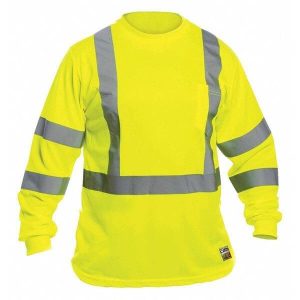
Get a Custom Hi-Vis Shirt Quote from VisonSafety
What are the different types of high visibility clothing available?
Hi‑vis options include vests, jackets, shirts, pants, and coveralls. Each type suits different risk levels and environments; all are classified under ANSI/ISEA or EN ISO rules to meet required visibility thresholds.
How can businesses ensure their employees wear hi vis shirts consistently?
Combine clear policies, practical training, comfortable properly fitted garments, and routine inspections. Positive reinforcement or recognition for safe behavior can improve compliance.
Are there any specific care instructions for hi vis shirts?
To preserve visibility, wash in cold water with mild detergent, avoid bleach and harsh chemicals, and air‑dry when possible. Inspect garments and retire items that show significant fading or damage.
What role do hi vis shirts play in emergency response situations?
Hi‑vis shirts make responders easier to find and identify during traffic control, rescues, and multi‑agency operations, improving safety for responders and the public.
Can hi vis shirts be customized for specific industries?
Yes—logos, colors, and functional features can be added so long as required fluorescent and reflective areas remain intact to preserve compliance.
What are the environmental impacts of manufacturing hi vis shirts?
Production has environmental impacts from materials, dyes, and processes. Many suppliers now offer lower‑impact options (recycled fabrics, eco‑friendly dyes, energy‑efficient production). Choosing sustainable suppliers reduces overall footprint.
Conclusion
Hi‑vis shirts are an evidence‑based, practical tool for improving safety across many work environments. Knowing the benefits, relevant standards, and manufacturing controls helps organizations select compliant garments and maintain worker protection. Investing in quality high‑visibility apparel supports a safer workplace and stronger safety culture.
 English
 Deutsch
 Français
 Polski
 Português do Brasil
 Español
 日本語
日本語 Русский
 العربية
 Italiano
 Nederlands
 Türkçe
 한국어
한국어