
FR coveralls provide continuous, gap-free coverage ideal for crawling or contamination-prone tasks, while two-piece sets allow separate temperature regulation and easier bathroom breaks. Both configurations carry identical certifications, neither is inherently safer. VisonSafety customizes either option to meet NFPA 2112 or ANSI 107 standards, matching specific job demands without compromising compliance.
Get a Custom FR Coverall Quote from VisonSafety
What defines the FR coveralls vs two-piece decision?
The fr coveralls vs two piece decision hinges on task demands, not on protection levels. Both configurations carry identical certifications. A safety manager choosing between them weighs coverage continuity against operational flexibility.
How do coverage gaps affect real-world protection?
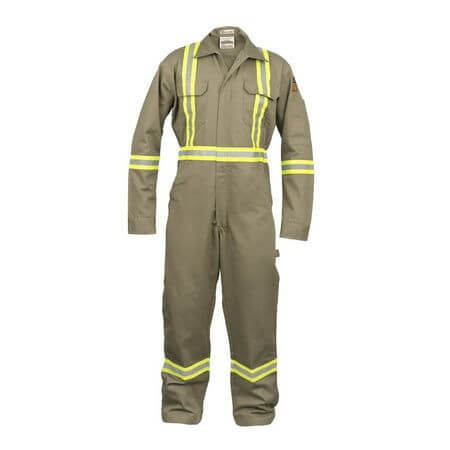
Coveralls eliminate the waist gap entirely. A single garment provides uninterrupted shielding from the neck down. This design matters most for tasks involving bending, reaching, or crawling, where a two-piece shirt can ride up and expose skin. For crews working near arc flash hazards or combustible dust, that continuous barrier reduces burn injury risk. The trade-off is straightforward: coveralls prioritize seamless coverage, while two-piece sets introduce a potential break in the protective envelope.
What operational factors favor a two-piece setup?
Two-piece FR clothing offers advantages that coveralls cannot match. Workers gain easier temperature regulation by shedding or adding layers. Bathroom breaks require removing only one garment. Mixed indoor/outdoor shifts become more manageable. These practical considerations affect compliance: a crew that finds gear cumbersome may wear it incorrectly. The certification remains identical, so the choice reflects workflow, not a compromise on safety ratings.
VisonSafety manufactures both configurations to meet NFPA 2112, NFPA 70E, and EN ISO 11612 standards. The company operates within an ISO 9001 environment and batch-tests 100 percent of fabrics. This quality framework ensures that whichever style a procurement team selects, the garment performs consistently. For operations where thermal hazards are a daily reality, understanding who needs FR clothing clarifies the hazard profile before the garment style is even considered. The coveralls versus two-piece question becomes secondary to confirming the hazard class, then matching the configuration to how crews actually move through their shifts.
When should safety managers choose FR coveralls?
Safety managers select fr coveralls vs two piece configurations when the job demands uninterrupted, full-body protection. Coveralls eliminate the gap at the waist that a shirt-and-pant combination leaves exposed. That single design difference matters in environments where a flash fire or arc flash lasts less than a second but causes catastrophic injury to unprotected skin.
The garment acts as a continuous barrier. FR Coveralls vs Two-Piece FR Clothing: Which to Choose? notes that coveralls provide gap-free coverage in a single garment, suiting tasks with crawling, climbing, or contamination risk. A worker twisting under a drilling rig or kneeling in a confined space stays shielded. A two-piece setup shifts and separates during that same motion.
Get a Custom FR Coverall Quote from VisonSafety
What hazards do FR coveralls protect against?
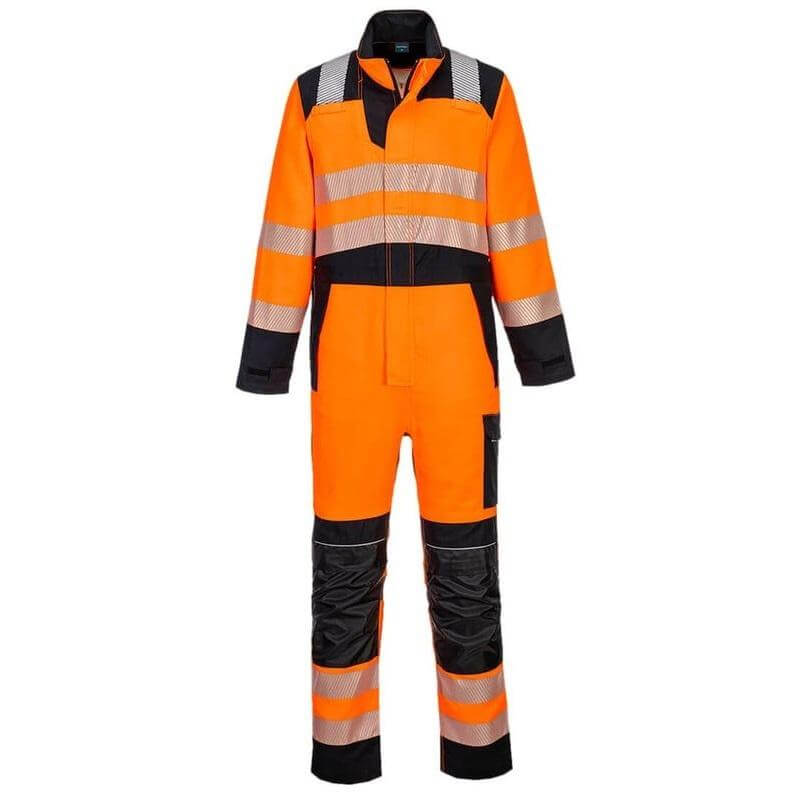
Flame-resistant coveralls shield workers from flash fire, electric arcs, and combustible dust. These hazards appear daily in oil and gas extraction, electrical maintenance, and heavy machinery operation. The single-piece construction leaves no entry point for heat or sparks at the midsection.
How does visibility factor into coverall selection?
VisonSafety engineers custom hi-vis coveralls with bright fluorescent fabrics and strategically placed reflective tape. The configuration enhances visibility in both daylight and nighttime conditions. Roadside crews and warehouse teams gain protection from fire hazards and from struck-by incidents in a single garment. No separate vest complicates the layering.
Procurement teams serving oilfield and utility clients find that coveralls simplify inventory. One garment replaces a shirt, pant, and sometimes a separate visibility vest. The reduction in SKU count streamlines laundering programs and replacement cycles.
What advantages do two-piece FR sets offer?
Two-piece FR sets deliver operational flexibility that a single coverall cannot match. The configuration separates shirt and pant, which changes how workers manage heat, hygiene, and fit across a shift. A two-piece setup offers more flexibility for temperature regulation, bathroom breaks, and mixed indoor/outdoor shifts, without sacrificing certification. That practical difference matters when crews move between air-conditioned control rooms and sun-exposed well pads.
How does a two-piece FR set improve fit and compliance?
Fit customization across differing top and bottom body sizes keeps workers comfortable and compliant. A safety manager can issue a medium shirt with a large pant, eliminating the compromise built into a one-size-fits-all coverall. Better fit reduces snag hazards and keeps reflective striping aligned correctly. Workers who feel comfortable in their gear wear it properly, which directly supports site safety protocols.
What protection standards do VisonSafety two-piece FR garments meet?
VisonSafety manufactures FR shirts using inherently flame-resistant fibers or durable chemical treatments for permanent protection. Each fabric undergoes resin finishing, thermal curing, and peroxide oxidation to guarantee wash-durable safety. The company builds all FR shirts to exceed safety benchmarks such as NFPA 70E, ASTM F1506, and EN ISO 11612. Arc ratings meeting CAT 2 through CAT 4 deliver reliable protection against electric arc flashes. Procurement teams receive full documentation packages with every order, simplifying audit readiness.
The two-piece approach does not lower the protection ceiling. It simply removes the operational friction that coveralls introduce during long shifts, hot environments, and multi-zone work sites.
How do coverage and thermal risk compare?
Coverage determines thermal risk in flame-resistant workwear. A single gap in protection exposes skin directly to flash fire, arc flash, or molten metal splash.
FR coveralls vs two piece configurations differ on one critical point. Coveralls cover the whole body, arms included, in one continuous piece. Two-piece sets leave a potential gap at the waist. That gap matters. When a worker bends, reaches, or crawls, a shirt can ride up and separate from the pant. The resulting exposure creates a direct path for thermal energy to reach unprotected skin. Forge FR notes that coveralls win the protection argument for exactly this reason: full-body coverage without interruption.
VisonSafety engineers its FR coveralls to eliminate that vulnerability. Each fabric undergoes resin finishing, thermal curing, and peroxide oxidation. These processes guarantee wash-durable safety across dozens of industrial laundry cycles. The company maintains traceability records for more than three years, so safety managers receive consistent documentation for every audit.
Get a Custom FR Coverall Quote from VisonSafety
Which option minimizes burn injury risk in high-hazard environments?
Coveralls minimize burn injury risks while maximizing mobility. FR Depot confirms that durable full-body coverage reduces injury potential in oilfield, refinery, and electrical utility settings. A single garment moves with the body. No waist gap opens during overhead work or confined-space entry.
When does a two-piece FR setup make more sense?
Two-piece setups offer practical advantages for mixed indoor/outdoor shifts. Workers gain easier temperature regulation and faster bathroom breaks. The protection level stays identical when both pieces carry the same certification. The tradeoff is coverage continuity, not compliance.
Procurement teams weighing these options should match the garment to the hazard, not the preference. Continuous coverage protects against continuous risk.
Which configuration fits your workforce best?
The right configuration depends on the hazard profile and the work environment. FR coveralls vs two piece clothing is not a question of protection level, since both can carry identical certifications. The decision turns on coverage needs, temperature control, and operational practicality.
Coveralls are preferred in upstream oil and gas, petrochemical refining, and plant turnarounds where full-body coverage is non-negotiable. FR Depot notes that high-performance FR coveralls suit the rigors of oilfield, refinery, and electrical utility sectors. A single garment eliminates gaps at the waist and provides continuous protection during crawling, climbing, or work in confined spaces.
Two-piece FR sets suit general industrial manufacturing and logistics where temperature regulation and mobility are priorities. Fireball Workwear reports that a two-piece setup offers more flexibility for temperature regulation, bathroom breaks, and mixed indoor/outdoor shifts, without sacrificing certification.
Which option is better for hot environments?
Two-piece FR clothing allows workers to remove the jacket during indoor tasks or low-risk moments. This flexibility matters in facilities with mixed temperature zones. Coveralls with ventilation features can also manage heat, but the two-piece design offers simpler adjustment.
How does procurement flexibility affect the choice?
VisonSafety provides flexible order sizes from small pilot runs to large-scale production. This enables clients to test both configurations in the field before committing to volume. The company also offers DDP shipping options to reduce total logistics costs and simplify cross-border fulfillment for global clients.
Safety managers evaluating mixed workforces often stock both configurations. VisonSafety supports that approach through pilot runs and scalable production.
Najczęściej zadawane pytania
Do FR coveralls provide better protection than two-piece FR sets?
The choice depends on task demands, not protection levels.
What is the main advantage of FR coveralls over a two-piece set?
Coveralls eliminate the waist gap entirely, providing uninterrupted shielding from the neck down. This matters most for tasks involving bending, reaching, or crawling.
Why would a worker prefer a two-piece FR set?
Two-piece sets allow easier temperature regulation by shedding or adding layers and simpler bathroom breaks. These practical considerations affect compliance.
Wnioski
The decision between FR coveralls and a two-piece set reduces to a single question: does the work environment create a waist-gap exposure risk during movement? If yes, coveralls deliver uninterrupted coverage. If temperature regulation and operational convenience drive compliance, a two-piece set removes friction without lowering certification. Match the garment to the hazard, not the preference.
 English
 Deutsch
 Français
 Polski
 Português do Brasil
 Español
 日本語
 Русский
 العربية
 Italiano
 Nederlands
 Türkçe
 한국어