
No. Flame‑resistant (FR) clothing with holes, tears, or other significant physical damage cannot be relied on to offer the same protection as an intact garment. The primary protective mechanism of FR apparel is fabric continuity: continuous fibers and sealed seams block heat, flame and molten material. Any opening creates a direct path for thermal energy and oxygen to reach the skin, raising the risk of burns. This article breaks down how different kinds of damage change FR performance, presents a clear repair‑versus‑replace decision framework, summarizes relevant points from standards such as NFPA 2112 and EN 11611, and gives practical inspection and care guidance to extend garment life. Safety managers, procurement teams, and supervisors will find checklists, decision tables, and manufacturer-aware recommendations that align with industrial safety programs and terms like FR garment damage assessment, PPE integrity checks, and arc flash clothing inspection.
How Does Damage Affect FR Clothing Integrity and Fire Resistance?
Fabric integrity is the core protective feature of flame‑resistant clothing: intact fibers and seams form a continuous barrier that resists ignition and slows heat transfer. When that barrier is interrupted by holes, rips, abrasion or contamination, the garment’s capacity to self‑extinguish and insulate decreases, and its arc/flash rating or thermal protective performance can be reduced. Recognizing how specific damage types affect protection helps safety teams prioritize removals from service and take appropriate corrective action.
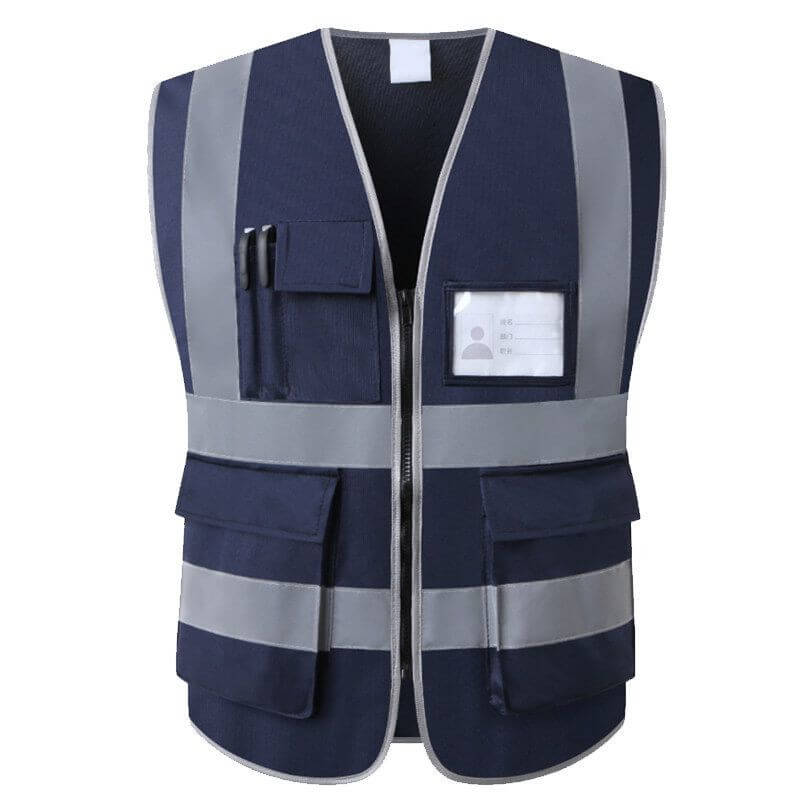
Get a Custom FR Clothing Quote from VisonSafety
The table below compares common damage types and the direct effect each has on protection, so inspectors can translate observations into risk ratings quickly.
Damage type impacts on FR garment protection:
This comparison highlights that holes are among the most critical failures because they bypass the fabric barrier entirely. Inspection programs should flag them for immediate action.
What Types of Damage Compromise Flame Resistant Clothing?
FR garments are exposed to mechanical and chemical threats that degrade protection in predictable ways. Mechanical damage — holes, cuts, seam failures — creates openings that let flame or hot gases reach skin. Repeated abrasion and thinning reduce thermal insulation and can lower arc flash ratings. Burn marks and charring indicate prior thermal stress and weakened fibers. Chemical contamination from oils, solvents, or corrosives can change how a fabric burns or weaken fibers, producing hidden failure modes.
- Holes, rips, and seam failures: direct exposure points that invalidate the barrier.
- Abrasion and thinning: gradual loss of insulating mass and reduced thermal performance.
- Burn marks and prior exposure: visible evidence the fabric may no longer meet original test conditions.
- Chemical contamination: can permanently alter flammability or embrittle fibers.
Inspectors should record both damage type and location, since a repair acceptable on a sleeve may not be acceptable on the torso where exposure and consequence are greater.
Why Do Holes Reduce the Protective Barrier of FR Garments?
A hole breaks fabric continuity and undermines two key protection mechanisms: limiting oxygen/flame contact and keeping insulating material between the heat source and skin. Heat transfers much faster through an opening than through intact cloth, and hole edges often char — which can increase local ignition and let flames propagate into the garment. Even a one‑inch hole can concentrate energy and cause deeper injury than the same exposure through intact fabric. For arc flash and flash fire hazards, missing fabric also lowers the system‑level arc rating and can permit molten metal or hot gases to reach skin.
Because of these physical effects, safety teams should treat holes as critical defects and use a conservative removal and assessment protocol before returning garments to service.
For transparency on testing and manufacturing controls backing these statements, VisonSafety operates quality processes that include 100% fabric batch testing, material traceability, and an FR product range covering shirts, jackets, coveralls, pants, vests, rainwear and headgear.
When Should Damaged FR Clothing Be Repaired or Replaced?
Repair versus replacement depends on damage type, size, location, and exposure history (for example, post‑flash fire). Small, localized holes or seam breaks in low‑exposure areas can be repaired if work uses certified FR thread and approved FR patches and if repairs restore continuity and are documented. Large holes, extensive abrasion, chemical contamination, or post‑flash exposure typically require full replacement because the garment can no longer be assumed to meet its original tested performance. Safety programs should adopt clear thresholds and a documented inspection‑to‑action flow to reduce ambiguity.
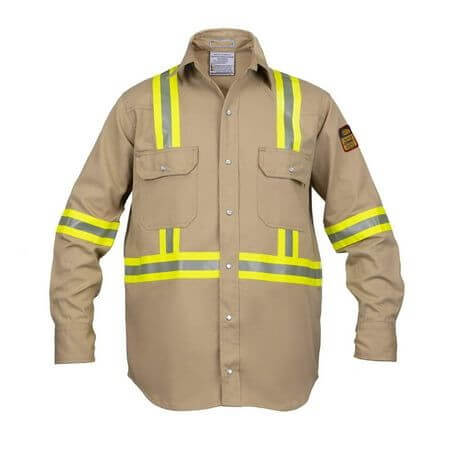
Get a Custom FR Clothing Quote from VisonSafety
Repair‑versus‑replace decision matrix:
Practical repair guidance: use only certified FR materials for fixes, keep detailed repair records, and check fit and closure integrity after work. Procurement teams looking to reduce future damage through better fit or more durable construction can contact VisonSafety for OEM/ODM options, fabric selection advice, flexible MOQs, rapid sampling and DDP shipping to improve lifecycle performance and streamline logistics.
Can Small Holes and Tears in FR Clothing Be Safely Repaired?
Yes — but only under strict conditions. Small tears below a conservative size threshold can be repaired when the repair restores fabric continuity and seam strength using certified FR thread and patches from the same or an equivalent FR fabric. Stitching should mirror original seam patterns to retain tear resistance. Every repair must be documented, the garment re‑inspected for fit and closures, and returned to service only when the repair area shows no residual thinning or contamination. Keep in mind that repairs in high‑exposure zones, such as the front torso, may still reduce overall protective performance even when executed correctly.
What Are the Signs That FR Clothing Requires Full Replacement?
Replace a garment when damage is widespread or a single defect compromises high‑risk coverage. Triggers for replacement include multiple or large holes, extensive threadbare or abraded areas that reduce fabric weight, irreversible chemical staining or contamination, and signs of flash‑fire exposure such as heavy charring or melted fibers. Replacement is also required when closures or fit are compromised so the garment no longer covers intended body zones. Treat these signs as firm retirement criteria to protect workers.
What Do NFPA 2112 and Other Safety Standards Say About Holes in FR Clothing?
Standards such as NFPA 2112 and EN 11611 emphasize performance and garment integrity over cosmetic appearance; if a damaged garment no longer meets performance criteria it must be retired. NFPA guidance notes that garments exposed to thermal events or showing degradation that affects protective performance should not be returned to service without evaluation. EN standards, commonly applied to welding, specify material classes and test categories tied to workplace hazards. UL and ASTM provide the lab test methods used to quantify thermal and arc performance for new garments. Translating these standards into everyday practice means using them as a baseline and applying conservative inspection and retirement rules for damaged items.
VisonSafety manufactures garments intended to meet international standards including NFPA, EN, UL and ANSI, and emphasizes material traceability and batch testing to help B2B buyers procure certified products that align with regulatory requirements.
Firefighter Turnout Gear: Post-Use Evaluation of NFPA 1971 and 1851 Standards
Visual assessments of used turnout gear included checking closures, light evaluation, leakage checks and a flashlight inspection. Composite performance testing covered thermal protective performance (TPP), total heat loss (THL), flammability, tear strength, seam strength, breaking strength, and water penetration. Results from visual inspection and laboratory testing were used to evaluate the appropriateness of the recommended 10‑year service life. While TPP, THL and flammability supported a service life of at least 10 years, factors such as tear resistance, seam strength and water penetration suggested limits to long‑term serviceability. Most garments tested met NFPA 1971 flammability requirements. A post-use evaluation of turnout gear using NFPA 1971 standard on protective ensembles for structural firefighting and NFPA 1851 on selection, care and …, M McQuerry, 1971
Regulatory implications mapped to practice:
How Does NFPA 2112 Define Garment Integrity and Damage Limits?
NFPA 2112 is performance‑based: it sets minimum thermal protective performance for garments used in flash fire hazards and requires that materials and assemblies meet those levels in standardized tests. The standard implies that compromised integrity — holes, burns, contamination — can prevent a garment from meeting test criteria and therefore void its expected protection. Practically, NFPA guidance means any damage that could affect performance should prompt removal and evaluation; if inspection or testing cannot restore confidence, the garment must be replaced.
How Do Global Standards Like EN 11611 and UL Address FR Clothing Damage?
Global standards connect material and design classes to specific hazards and laboratory test methods, requiring that selected garments are appropriate for the workplace hazard and that materials hold their rated performance. EN 11611, often used for welding, defines protection classes and assumes intact material behavior under test. UL and ASTM describe the test procedures that produce the performance figures used in procurement. Multinational buyers should choose garments certified to the standard most relevant to their hazard profile and implement inspection and retirement rules that reflect those test‑based expectations.
How Can Proper Care and Inspection Extend the Lifespan of FR Clothing?
Routine care and a consistent inspection cadence preserve FR properties by preventing fabric degradation from laundering, contamination or storage. Correct washing removes soils that can promote thermal decomposition, while appropriate drying and storage avoid UV and heat damage. Regular visual inspections catch small defects before they become unrepairable. Documented care protocols and training frontline personnel to do daily checks help maximize garment life while keeping safety performance intact.
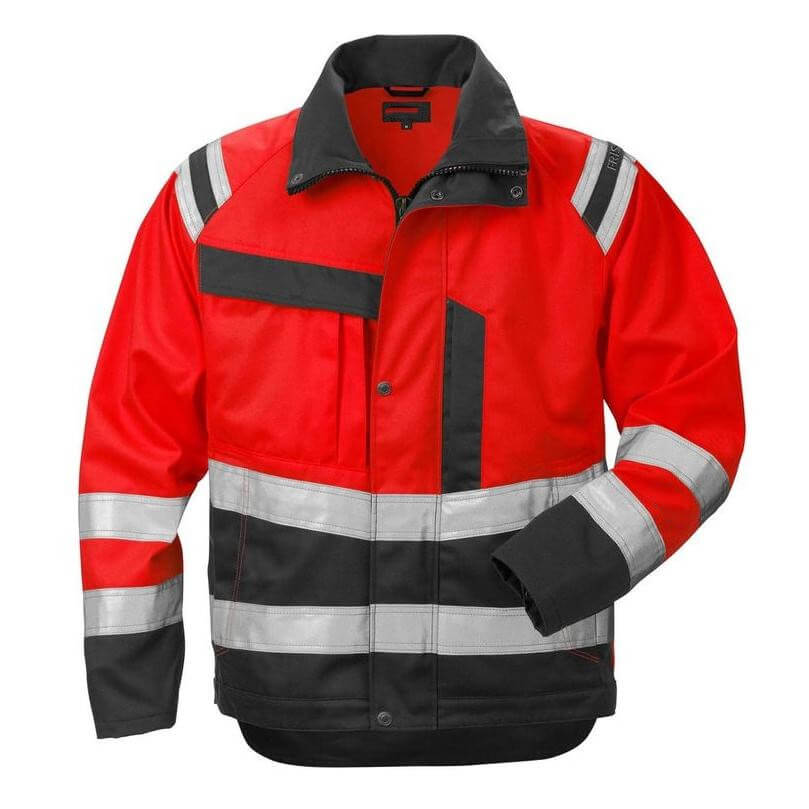
Get a Custom FR Clothing Quote from VisonSafety
What to do when laundering and storing FR apparel:
- Use mild detergents and follow manufacturer‑recommended wash cycles to avoid chemical damage.
- Avoid bleach, fabric softeners and strong solvents that can degrade FR properties.
- Separate heavily soiled or contaminated garments and launder them under contamination‑handling procedures.
Following these laundry practices lowers the risk of chemical contamination and fiber weakening, which supports longer service life and consistent protective performance.
What Are Best Practices for Washing and Storing FR Apparel?
Washing and storage routines should be part of your PPE program and enforced consistently. Follow manufacturer instructions for water temperature and detergent types, remove gross contaminants before laundering, and never use chlorine bleach or fabric softeners on FR fabrics. Store clean garments in a cool, dry place out of direct sunlight and away from chemicals, and rotate stock so older garments are inspected and retired on schedule. Proper care reduces repair and replacement needs and helps preserve certification‑backed performance.
How Often Should Industrial Personnel Inspect FR Clothing for Damage?
A practical inspection cadence balances day‑to‑day operations with safety: perform a quick visual check before every shift and a documented, more thorough inspection monthly or whenever garments are heavily soiled or suspected of exposure. Use a five‑point quick‑check to catch obvious defects:
- Coverage: Confirm the garment covers the intended body zones.
- Holes & Tears: Inspect for punctures, seam gaps and fabric holes.
- Contamination: Look for oil, solvent or chemical stains.
- Closures & Seams: Verify snaps, zippers and seams function and are intact.
- Signs of Exposure: Note charring, melting or heavy discoloration.
Record findings, remove compromised garments immediately, and route borderline items to a qualified evaluator. For replacement or extensive repair needs, VisonSafety can provide custom manufacturing options — adjusting fit, fabric weight or reinforcement zones — to reduce future damage and lower lifecycle costs; contact us for OEM/ODM solutions and expert guidance.
Is FR Clothing with Holes Still Fire Resistant | FAQs
What should I do if my FR clothing has been exposed to chemicals?
Chemical exposure can change a fabric’s flammability and structural integrity. First, follow your organization’s contamination and PPE handling procedures. In many cases, chemically contaminated garments should be removed from service and replaced, since repairs rarely restore original protective properties. Consult your safety manager and the garment manufacturer for specific disposal and replacement guidance.
How can I tell if my FR clothing is still effective after washing?
Perform a visual inspection after washing: look for fading, thinning, stiffness or fabric texture changes. Check seams, closures, and for any new holes or weak spots. Confirm that the garment still meets the manufacturer’s care instructions — improper washing can compromise protection. When in doubt, escalate to a safety professional or arrange testing to verify effectiveness.
Are there specific storage conditions for FR clothing to maintain its integrity?
Yes. Store FR garments clean in a cool, dry area out of direct sunlight and away from chemicals or excessive heat. Avoid damp storage to prevent mold and do not store near solvents or corrosive substances. Keeping garments clean before storage prevents residues from degrading fibers over time.
What are the consequences of using damaged FR clothing?
Wearing damaged FR clothing increases the risk of injury in hazardous environments because compromised garments may fail to protect against flames, heat and electrical hazards. Using compromised PPE can also lead to non‑compliance with safety regulations and create legal exposure for employers. Regular inspections and immediate removal of damaged items are essential to protect personnel.
How often should FR clothing be replaced?
Replacement frequency depends on work environment, usage intensity and inspection results. While a rough guideline is every 1 to 5 years, actual replacement should be driven by documented inspections, exposure events and manufacturer recommendations. Replace garments that show significant damage, contamination, or signs of thermal exposure.
Can FR clothing be altered for a better fit?
Alterations are possible but must preserve protective performance. Any modification should use certified FR materials and industry‑accepted techniques to maintain seam strength and fabric continuity. Work with a professional familiar with FR apparel alterations to ensure compliance with safety standards and avoid reducing protection.
What role do manufacturers play in ensuring FR clothing safety?
Manufacturers are responsible for selecting compliant materials, performing testing and maintaining quality control. They provide care instructions, inspection guidance and certification details that help users keep garments safe. Choosing reputable manufacturers with traceable quality systems — like batch testing and material traceability — helps ensure the protective performance you count on in the field.
Conclusion
Damage to flame‑resistant clothing — especially holes — directly undermines protection. Regular inspections, clear repair‑versus‑replace rules, and correct laundering and storage will help keep garments safe and extend service life. When in doubt, remove the item from service and consult a qualified evaluator. For tailored solutions, manufacturing options or technical guidance on FR apparel, contact VisonSafety for expert support.
 English
 Deutsch
 Français
 Polski
 Português do Brasil
 Español
 日本語
日本語 Русский
 العربية
 Italiano
 Nederlands
 Türkçe
 한국어
한국어