
High-visibility vests are a primary control for worker protection and compliance with ANSI/ISEA 107. This article summarises the class definitions, key technical metrics, and practical compliance steps organisations should take when specifying and procuring visibility apparel for different operational risks.
ANSI Standards
ANSI/ISEA 107 sets minimums for background area, retroreflective performance, and configuration to ensure measurable conspicuity in low light and traffic environments. Meeting these criteria supports safer operations and provides objective supplier requirements for procurement.
Get a Custom Hi-Vis Vest Quote from VisonSafety
Compliance Requirements for Businesses
Businesses must select vests that meet class metrics and keep basic supporting records for audits and incident review. The table below summarises core thresholds and typical documentation.
VisonSafety supplies apparel engineered to ANSI/ISEA 107 to help organisations maintain compliant programmes and consistent on-site branding.
Implications for Workplace Safety
Choosing the correct class affects conspicuity and exposure. Class 2 suits moderate-risk settings (e.g., parking, deliveries); Class 3 is for high-risk work near high-speed traffic, complex sites, or emergency responses. Proper selection reduces incidents and supports duty-of-care obligations.
Summary
Class 2 and Class 3 garments differ primarily by mandated background and reflective area. Businesses should match vest class to site hazard assessments to meet ANSI/ISEA 107 and operational needs.
What Are ANSI/ISEA 107 Safety Vest Classes and Their Compliance Requirements?
ANSI/ISEA 107 classifies apparel by background material area and retroreflective coverage. Class 2 is for roles needing enhanced visibility; Class 3 is for roles requiring maximum conspicuity. Compliance verifies garments meet quantitative visibility metrics for their use.
Class 2 Safety Vests
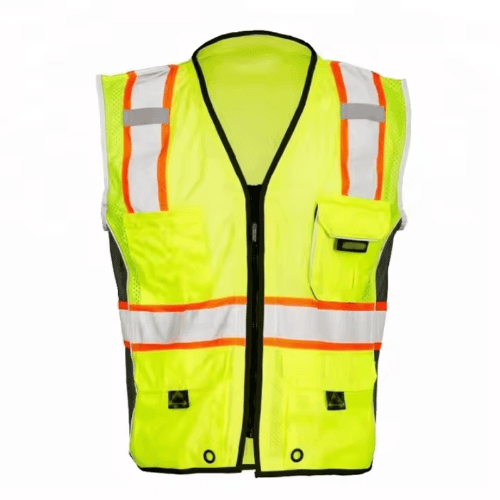
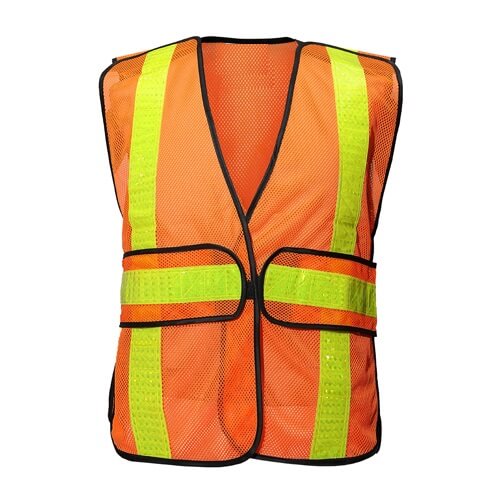
Class 2 vests require a minimum of 775 square inches of background material with retroreflective tape (commonly 2 inches wide) placed to meet coverage rules. They balance visibility with wearer mobility and cost for routine tasks near moving equipment.
Class 3 Safety Vests
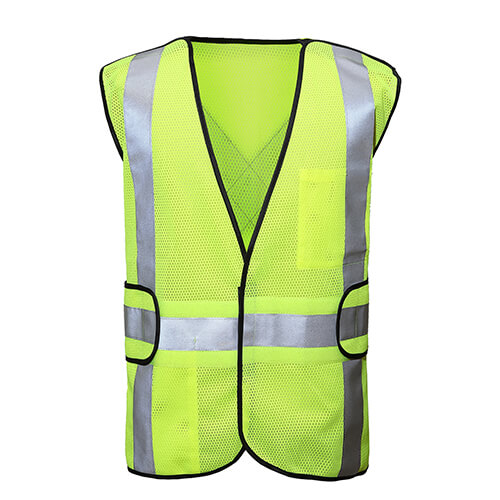
Class 3 vests increase background area to at least 1,240 square inches and use larger or higher-performance retroreflective elements. They are specified where detection distance and operator response time must be maximised.
How Do Class 2 and Class 3 Vests Differ in ANSI/ISEA 107 Standards?
The core distinction is quantified visibility: background area and retroreflective coverage tied to assessed risk. Select the class that aligns with site hazard assessments and operational scenarios.
Get a Custom Hi-Vis Vest Quote from VisonSafety
However, meeting these material and coverage requirements can create design constraints that complicate achieving an optimal fit across diverse body types.
ANSI/ISEA Standards & Safety Vest Fit for Women
This paper examines the design and construction challenges of safety vests for women, with emphasis on XS and XXL sizes. Safety vests are mandated in environments requiring high visibility to protect workers. The American National Standards Institute (ANSI) and the International Safety Equipment Association (ISEA) prescribe standards to ensure 360-degree visibility, but those area requirements limit manufacturers’ ability to produce a tailored fit for smaller statures. In particular, the mandated square-inch coverage can result in an excessively loose, baggy fit for sizes between XXS and S.
Designing Safety Vests to Fit Women, 2020
What Are the Reflective Material Types and Visibility Levels for Each Class?
Retroreflective materials are specified by photometric return and durability. Class 2 typically uses standard retroreflective tape; Class 3 uses higher-grade systems or more reflective area to extend detection ranges. Choose materials that meet ANSI/ISEA photometric requirements for certified performance.
When Should Businesses Choose Class 2 Safety Vests for Moderate Risk Environments?
Use Class 2 where hazard assessments show moderate interaction with vehicles or mobile equipment and where increased visibility sufficiently reduces exposure—examples include parking enforcement, deliveries, and roadside maintenance. Class 2 offers compliance with greater wearer mobility and lower procurement cost than Class 3.
What Are the Technical Specifications and Features of Class 2 Vests?
Class 2 vests are built to ANSI/ISEA 107 parameters and commonly include:
- Reflective Tape: Minimum 2 inches wide, placed to meet coverage requirements.
- Background Material: Fluorescent fabrics (typically yellow or orange) selected for chromaticity and durability.
- Design Features: Practical pockets, zippers, and adjustable closures for ergonomics and task use.
These features deliver required conspicuity while supporting worker tasks and comfort.
How Do Class 2 Vests Enhance Worker Safety and Brand Visibility?
Class 2 vests improve detection and reduce incident probability while providing a platform for logos and role identification—so long as customisation does not compromise mandated background or reflective areas.
Why Are Class 3 Safety Vests Essential for High-Risk Worksites?
Class 3 garments are specified for environments where traffic speeds or site complexity demand maximum conspicuity. The larger background and reflective area extend detection and response windows for vehicle operators, lowering severe injury risk.
What Construction and Industry Use Cases Require Class 3 Vests?
Class 3 is commonly required in high-speed traffic corridors, emergency response zones, and construction areas near active roadways where operator detection distance is critical. Typical examples include:
- High-Speed Traffic Areas: Personnel adjacent to roadways or traffic corridors.
- Emergency Services: Responders in dynamic, high-traffic incident zones.
- Construction Sites: Workers near heavy plant or active roadways.
These contexts demand the visibility margins Class 3 provides.
The critical role of high-visibility safety apparel for emergency responders is reinforced by statistical evidence on traffic-related occupational fatalities.
HVSA Compliance & Workplace Safety in Law Enforcement
Traffic-related fatalities represent a leading workplace hazard within law enforcement, accounting for approximately 44% of all fatalities in the occupational field between 2002 and 2011. A significant portion of officer deaths resulted from being struck by vehicles, incidents that can be mitigated through the use of High-Visibility Safety Apparel (HVSA). The literature indicates that improving compliance with traffic-protective behaviours is hampered by workplace misperceptions. Relatively few studies have addressed HVSA wearing behaviours in the context of social and psychological factors.
Personal Protective Clothing: Law Enforcement Officers’ Attitudes and Safety Behavior Assessments Toward High-Visibility Safety Apparel, 2013
How Do Customization Options Improve Compliance and Operational Efficiency?
Customization (logos, role IDs, colour coding) can aid recognition and incident management when applied without reducing required background or reflective areas. Task-focused features—pockets, attachment points, closures—improve efficiency by aligning apparel with job needs.
Get a Custom Hi-Vis Vest Quote from VisonSafety
Beyond visual branding, achieving a proper fit across employee populations is a fundamental compliance and safety consideration as workforces diversify.
Improving Safety Vest Fit & Compliance for Diverse Workforces
As the construction sector evolves toward greater demographic diversity, personal protective equipment must accommodate varied body dimensions. The “one size fits all” model is no longer acceptable for safety vests. Prior research identified a prevailing consensus that many construction workers lack access to appropriately fitting vests. To address this, the Cal Poly Construction Management Department convened the inaugural Verifying Everyone’s Safety Together (VEST) Hackathon. Over two days, industry stakeholders, students, and faculty collaborated to develop prototypes that better accommodate a diverse workforce.
Safely Covered or Dangerously Exposed: Analyzing the Safety Vest Code of Compliance, 2015
How Can Businesses Ensure Proper Selection and Compliance with Safety Vest Standards?
Adopt a structured selection process that ties hazard assessment to vest class. Recommended steps:
- Assess Risk Levels: Match environmental and operational hazards to the appropriate class.
- Review ANSI Standards: Confirm material and retroreflective requirements per ANSI/ISEA 107.
- Consult Experts: Work with trusted suppliers (e.g., VisonSafety) to procure compliant, fit-appropriate garments.
These measures help ensure apparel aligns with hazards, supports compliance, and integrates with safety systems.
What Are the High Visibility Vest Requirements and Risk Assessment Guidelines?
ANSI/ISEA 107 defines background and retroreflective area minima and photometric tests. Translate those requirements into operational choices by evaluating traffic speed, lighting, task proximity to hazards, and incident history so selection is evidence-based and defensible.
How Does VisonSafety Support Compliance Through Structured Data and Product Information?
VisonSafety supplies product specifications, photometric data, dimensional details, and compliance documentation to support purchaser due diligence and audit records.
Class 2 vs Class 3 Safety Vests | FAQs
What factors should businesses consider when choosing between Class 2 and Class 3 safety vests?
Base selection on a site-specific hazard assessment: traffic volume and speed, lighting, task proximity to equipment, required detection distance, and workforce fit needs.
Are there specific industries that require Class 3 safety vests more than others?
Yes—construction, emergency response, and traffic-control operations commonly require Class 3 due to higher exposure and traffic speeds.
How can businesses ensure that their safety vests fit all employees properly?
Offer a broad size range, conduct fit trials, and partner with manufacturers that provide graded sizing or adjustable features.
What are the potential consequences of non-compliance with ANSI standards for safety vests?
Non-compliance raises accident risk, legal liability, and potential contract or reputational consequences.
Can safety vests be customized for branding while still meeting safety standards?
Yes—provided branding does not reduce the required background area or retroreflective placement; suppliers should validate compliance.
What role does employee training play in the effective use of safety vests?
Training ensures correct wearing, inspection, and maintenance so garments perform as intended and compliance is sustained.
How often should safety vests be inspected for compliance and effectiveness?
Inspect regularly—monthly as a baseline—with increased frequency in high-use or high-exposure settings; retain inspection records.
Conclusion
Differentiating Class 2 and Class 3 vests is essential for risk control and regulatory compliance. Match vest class to hazard assessments, prioritise fit and certified materials, and maintain documentation to support safety programmes. Certified, well-specified apparel protects personnel and demonstrates organisational commitment to safety.
 English
 Deutsch
 Français
 Polski
 Português do Brasil
 Español
 日本語
日本語 Русский
 العربية
 Italiano
 Nederlands
 Türkçe
 한국어
한국어