
High-visibility vests are essential personal protective equipment designed to increase worker conspicuity in varied operational settings. A technical grasp of constituent materials helps ensure conformity with safety standards and optimises on-site protection. This article reviews the primary fabrics and reflective components used in hi-vis vests, summarises their practical advantages, explains how materials meet international regulatory requirements, and outlines permissible customisation options so organisations can reinforce brand identity without undermining compliance.
What Are the Primary Materials Used in Hi-Vis Vests?
Hi-vis vests combine fluorescent base fabrics and retroreflective elements. Fluorescent textiles boost daytime conspicuity by converting ultraviolet light into visible wavelengths, while retroreflective assemblies return incident light toward its source to aid detectability under artificial illumination. Material selection must meet relevant performance criteria to provide reliable visibility in low-light and night-time conditions.
Further research examines the specific physical properties and compliance performance of these high-visibility materials.
High-Visibility Fabric Compliance: Fluorescent & Retroreflective Materials
The study compares and analyses the physical properties of different fluorescent fabrics and retroreflective materials to determine their compliance with international standards for high-visibility warning clothing. Four fluorescent fabrics were selected: a PET 71%/Cotton 23%/PU 6% fabric used in public road cleaner uniforms in Korea (S1); an ISO-compliant Japan-made PET 65%/Cotton 35% plus conductive fabric (S2); and two Korean-made PET 100% fabrics, one intended for adults (S3) and one for children (S4). The selected specimens were evaluated against the seven criteria specified in ISO 20471 to assess suitability and conformity.
An evaluation of the suitability of fluorescent fabrics and retroreflective materials for road traffic warning clothing in compliance with international standards, 2019
VisonSafety supplies a range of hi-vis vests made from durable, high-visibility components engineered to protect personnel and preserve corporate visibility. Their core line includes customised hi-vis vests that meet international safety standards, allowing organisations to combine regulatory compliance with brand identification.
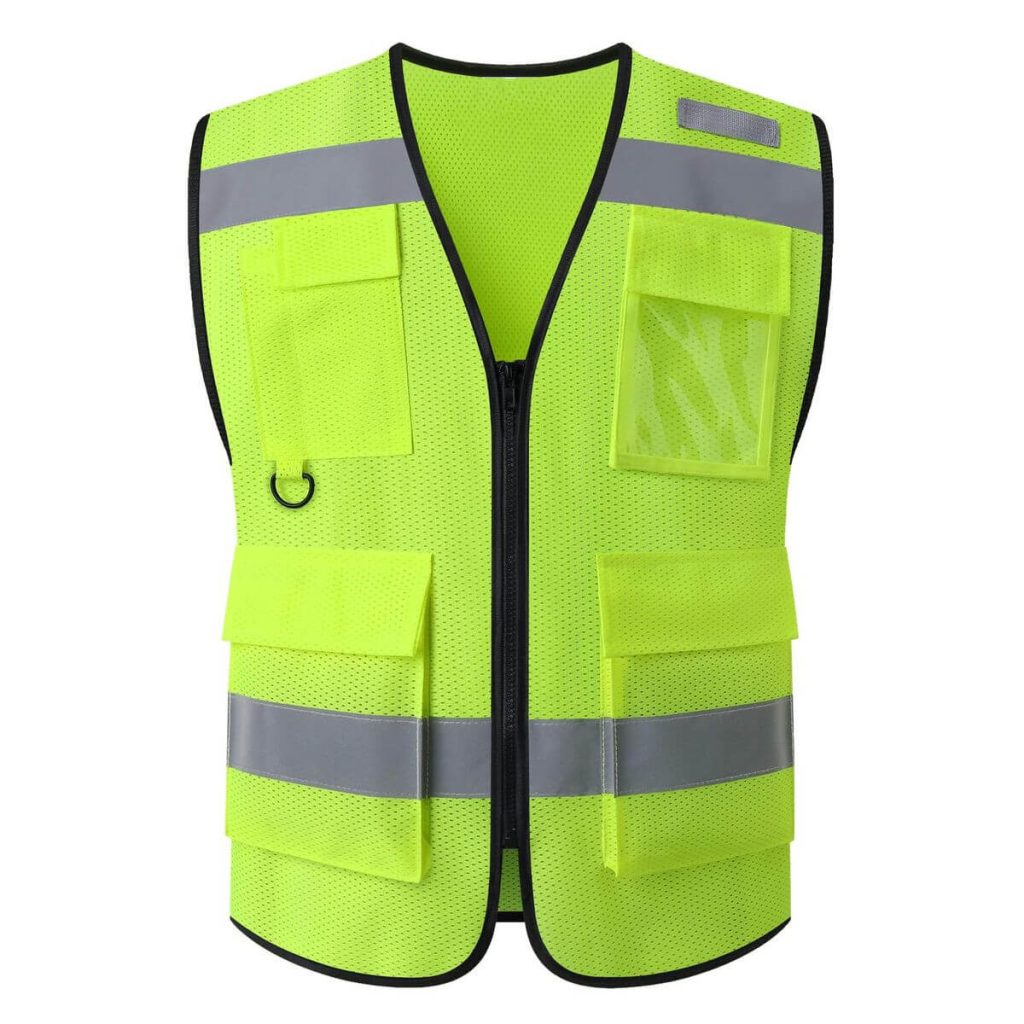
Get a Custom Hi-Vis Vest Quote from VisonSafety
Why Is Polyester the Preferred Fabric for Hi-Vis Vests?
Polyester is widely used because of mechanical resilience and superior colour fastness: the polymer matrix retains fluorescent dyes and resists photodegradation, preserving chromaticity over service life. Polyester also offers moisture-management properties that reduce wearer discomfort and support reliable performance in demanding conditions, lowering replacement frequency and total cost of ownership.
How Does Reflective Tape Enhance Visibility and Safety?
Retroreflective tape redirects incident light back toward its source, improving night-time and low-light detectability. Correctly designed and positioned tape increases a wearer’s conspicuity to vehicle and machinery operators and is a required component of certified visibility assemblies.
How Do Hi Vis Vest Materials Meet International Safety Standards?
Materials for hi-vis garments must satisfy prescribed international standards to ensure effective performance. Standards such as ANSI/ISEA 107 and EN ISO 20471 define visibility classifications, minimum retroreflective surface areas, and material selection criteria. Meeting these standards is necessary for garments to provide the intended level of protection in hazardous environments.
Which ANSI and ISO Standards Govern Hi Vis Vest Materials?
ANSI/ISEA 107 and EN ISO 20471 set performance and design requirements for high-visibility clothing. They categorise garments by visibility level based on the amount and placement of retroreflective material and overall design. For example, Class 1 provides the lowest visibility, while Class 3 meets the highest criteria for elevated-risk applications. Understanding these classifications lets organisations specify appropriate hi-vis vests for their risk profile.
What Role Does Material Compliance Play in Worker Safety?
Material compliance supports worker safety by ensuring consistent visibility performance and durability. Garments produced to standardised specifications retain reflective properties and structural integrity during routine use, reducing incident rates. Robust quality control and documented conformity also reduce legal and financial exposure for employers, making investment in compliant apparel a prudent risk-management step.
Empirical studies have assessed the functional performance and regulatory compliance of safety vests in operational contexts.
Safety Vest Performance: Compliance & Material Testing
ABSTRACT: En Lima, el sector construcción presenta altos niveles de riesgo laboral, donde los chalecos de alta visibilidad cumplen un papel clave en la protección del personal. Este estudio analizó el desempeño y el cumplimiento normativo de seis chalecos nuevos de tres marcas presentes en el mercado local (3M, Werken y una marca nacional genérica), aplicando una metodología cuantitativa y comparativa. Las pruebas de laboratorio se realizaron conforme a la NTP 399.010:2019, evaluando su resistencia al desgarro y a la tracción, así como sus propiedades ópticas de color y reflectividad en estado inicial.
Análisis del Cumplimiento Normativo y Desempeño Funcional de los Chalecos de Seguridad en Obras Civiles de Lima, Perú, 2010
What Are the Functional Benefits of Hi Vis Vest Material Properties?
Hi-vis materials deliver clear benefits: enhanced visibility across lighting conditions, mechanical durability against abrasion and environmental exposure, and wearer comfort for extended shifts. These attributes support operational continuity and reduce apparel lifecycle costs.
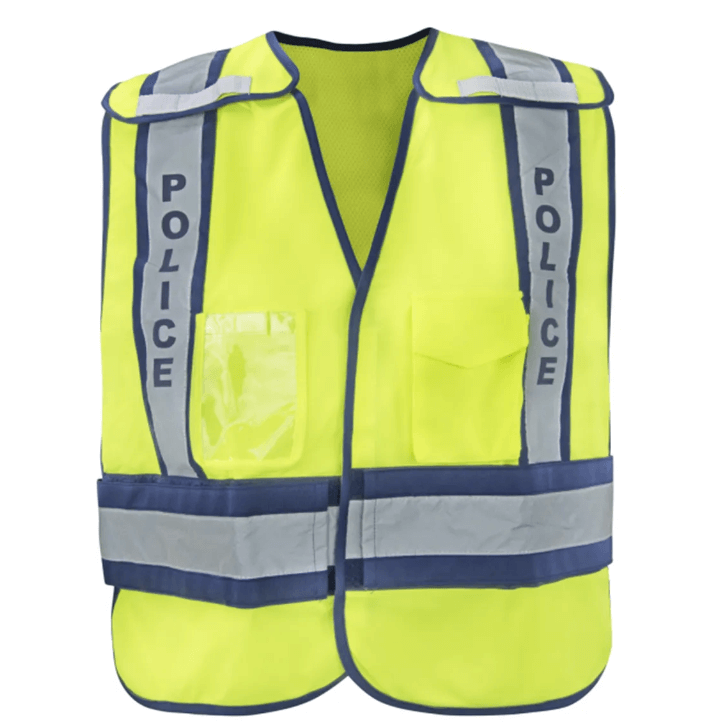
Get a Custom Hi-Vis Vest Quote from VisonSafety
How Does Oil Resistance Improve Vest Durability?
Oil and contaminant resistance is important for vests used in industrial settings. Oil-resistant finishes and resistant fibres limit staining and fibre degradation, preserving fabric strength and visible performance. This extends service life and reduces replacement frequency where oil exposure is routine.
Why Is Breathability Critical in High Visibility Fabrics?
Breathability regulates the microclimate and moisture transport within the garment, preventing heat accumulation and sweat build-up during prolonged use. Fabrics with vapour permeability support wearer comfort and cognitive performance, sustaining productivity and safety during long shifts.
How Can Hi Vis Vest Materials Be Customized for Branding and Business Needs?
Customisation lets organisations add corporate identification while maintaining function. Fabric choice and approved printing or embroidery methods can be specified to preserve reflective zones and material properties. All customisations must be validated so they do not compromise compliance with visibility standards.
VisonSafety specialises in supplying customised hi-vis vests that conform to international safety standards, helping organisations enhance workforce visibility while preserving regulatory compliance. By specifying suitable materials and customisation methods, companies can project brand identity without undermining protection.
Frequently Asked Questions
What are the different classes of hi-vis vests according to ANSI and ISO standards?
Hi-vis vests are categorised by visibility class under ANSI/ISEA 107 and EN ISO 20471. Class 1 provides minimum conspicuity for low-risk environments. Class 2 offers increased visibility for workers exposed to moderate traffic or hazards. Class 3 meets the highest visibility requirements and is used for high-risk scenarios. Choosing the correct class supports hazard mitigation and regulatory conformity.
How do weather conditions affect the performance of hi-vis vest materials?
Environmental conditions influence material performance. Heavy precipitation can reduce certain assemblies’ effective reflectivity, and sustained high temperatures may alter breathability and comfort. Manufacturers commonly perform environmental testing; organisations should select vest constructions suited to the expected operational climate.
Can hi-vis vests be used in non-industrial settings?
Hi-vis vests are useful beyond industry: outdoor events, cycling, pedestrian use and other low-light activities benefit from added conspicuity. Their visibility-enhancing properties make them practical wherever improved detection by motorists and equipment operators is needed.
What maintenance is required to ensure the longevity of hi-vis vests?
Proper maintenance preserves performance. Follow the manufacturer’s laundering instructions to maintain fabric luminance and retroreflective efficacy. Avoid bleach and fabric softeners that can degrade coatings and reflective elements. Inspect reflective areas regularly and store garments away from direct sunlight and extreme temperatures to prevent premature deterioration.
Are there specific regulations for customizing hi-vis vests?
Regulations control permissible customisation to ensure visibility is not compromised. Logos, printing or embroidery must not obstruct retroreflective tape or reduce required visible areas. Work with manufacturers knowledgeable about ANSI/ISEA 107 and EN ISO 20471 to keep customised garments compliant.
What are the environmental impacts of hi-vis vest materials?
Environmental impact varies by material and process. Polyester is petroleum-derived and raises sustainability considerations; some suppliers now offer recycled polyester or organic blends to reduce footprint. Organisations should evaluate lifecycle impacts and consider sustainable options when specifying safety apparel.
Conclusion
A focused understanding of hi-vis materials and relevant standards is essential to deliver reliable worker protection and sustained visibility. Selecting high-quality, standards-compliant materials reduces operational risk, controls lifecycle costs, and supports branding objectives. Review our range of customisable hi-vis vests that meet international visibility standards to ensure your team is both safe and identifiable. For further information or to place an order, visit our website.
 English
 Deutsch
 Français
 Polski
 Português do Brasil
 Español
 日本語
日本語 Русский
 العربية
 Italiano
 Nederlands
 Türkçe
 한국어
한국어