
Hi‑vis shirts — also called high‑visibility safety shirts — are garments designed to keep workers visible in industrial settings. Common on construction sites, road crews and in warehouses, their primary job is simple: make people easier to see in low light or hazardous conditions. Below we summarize the materials and colors that work best, the standards and certifications that show compliance, customization options, and the industries that rely on hi‑vis apparel.
What Makes a Shirt Hi‑Vis — and Why It Matters for Workplace Safety?
Hi‑vis shirts pair bright fluorescent base colors with reflective elements to increase a wearer’s visibility. That visibility reduces the chance a worker will be overlooked by vehicle drivers, equipment operators or co‑workers. In many industries regulators require high‑visibility clothing because it helps prevent accidents and serious injuries on the job.
Research shows high‑visibility apparel plays a key role in preventing severe workplace incidents, especially traffic‑related fatalities.
Preventing Workplace Fatalities with High‑Visibility Safety Apparel
Traffic‑related fatalities are among the most common workplace hazards for law enforcement. They accounted for approximately 44% of all fatalities within the law enforcement occupational field between 2002 and 2011. Although many law enforcement officers’ deaths were due to being struck by vehicles, these incidents could be reduced through the use of High‑Visibility Safety Apparel (HVSA). Misperceptions and inconsistent protective behavior often limit HVSA use, even when it could prevent harm.
Personal Protective Clothing: Law Enforcement Officers’ Attitudes and Safety Behavior Assessments Toward High-Visibility Safety Apparel, 2013
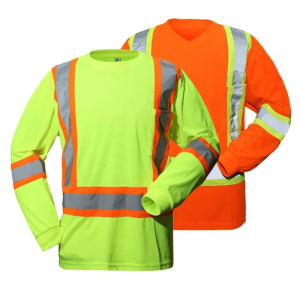
Get a Custom Hi-Vis Shirt Quote from VisonSafety
What Materials and Colors Make a Shirt High Visibility?
Visibility depends on color and material. Fluorescent hues such as lime yellow, orange and hot pink are easy to spot in daylight; retroreflective tapes and trims return light to its source for night or low‑light work. Fabrics and reflective components should retain their properties through repeated wear and washing.
How Do Reflective Work Shirts Improve Worker Safety?
Retroreflective materials send light back to drivers and equipment operators, making wearers noticeable sooner and from farther away. This is especially important at night or in poor light, and studies link reflective clothing with reduced accident risk in low‑visibility conditions.
Which Standards and Certifications Define ANSI‑Compliant Shirts?
Standards give measurable criteria so buyers know a product performs. In the U.S., ANSI/ISEA 107 specifies color, minimum retroreflective amounts and design features; EN ISO 20471 provides comparable requirements in Europe. Choosing certified products helps ensure predictable on‑site performance.
What Are the Key Requirements of ANSI/ISEA 107 and EN ISO 20471?
ANSI/ISEA 107 defines performance classes by base color, reflective area and placement to ensure visibility at distance. EN ISO 20471 uses similar rules for fluorescent bases and minimum reflective areas. Both standards aim to ensure reliable real‑world performance.
Researchers have tested material properties to confirm compliance with international standards such as ISO 20471.
Fluorescent & Retroreflective Materials for Hi‑Vis Clothing Compliance
The study compared physical properties of several fluorescent fabrics and retroreflective materials to evaluate their suitability for meeting international high‑visibility clothing standards. Four fluorescent fabrics were selected: a PET 71%/Cotton 23%/PU 6% fabric used in public road cleaner uniforms in Korea (S1), an ISO‑compliant Japan‑made PET 65%/Cotton 35% + conductive fabric (S2), and two Korean‑made PET 100% fabrics selected at random for adults (S3) and children (S4). Each sample was tested against seven ISO 20471 criteria to assess compliance.
An evaluation of the suitability of fluorescent fabrics and retroreflective materials for road traffic warning clothing in compliance with international standards, 2019
How Do Certifications Confirm Industrial Safety Clothing Quality?
Independent testing by certification bodies verifies garments meet the applicable standard’s performance requirements. Certification simplifies procurement, gives buyers confidence in durability and visibility, and is often required by safety policies.
How Does Custom Hi‑Vis Apparel Manufacturing Meet B2B Needs?
Custom manufacturing lets businesses order garments tailored to their safety needs and brand identity. By selecting fabrics, colors and reflective layouts, companies can meet standards while maintaining recognition and professionalism on site.
What Customization Options Are Available for Hi‑Vis Shirts?
Common options include base color, fabric weight and breathability, reflective tape placement and logo position. These choices balance visibility with wearer comfort and durability without compromising safety.
Why Choose Custom Manufacturing for Reflective Work Shirts?
Custom production provides scale and control—bulk orders lower unit cost, and bespoke specifications ensure materials and construction match operational needs. Working directly with a manufacturer helps secure consistent quality and the specific features your team requires.
Which Industries Rely on Hi‑Vis Shirts for Safety Compliance?
Sectors that routinely depend on hi‑vis shirts include construction, logistics, transportation and public works. Anytime staff work near moving vehicles or heavy equipment, high visibility reduces risk and often satisfies regulatory requirements.
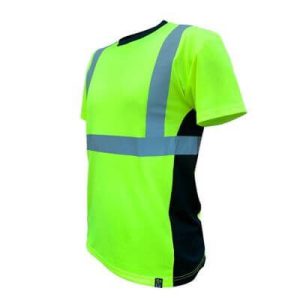
Get a Custom Hi-Vis Shirt Quote from VisonSafety
How Are Hi‑Vis Shirts Used in Construction and Logistics?
On construction sites hi‑vis shirts help operators and co‑workers spot personnel among materials and machinery. In logistics they make dock and yard staff visible to drivers of trailers and forklifts, reducing collisions and improving site safety.
What Are Global Compliance Requirements for Industrial Safety Clothing?
Requirements differ by region but generally prioritize fluorescent base colors and reflective performance. Many countries follow standards similar to ANSI/ISEA 107 or EN ISO 20471; multinational employers should confirm local rules for compliance and procurement.
What are Hi‑Vis Shirts | FAQs
What are the benefits of wearing hi‑vis shirts in low‑light conditions?
Hi‑vis shirts make workers easier to detect by returning light to its source and by contrasting with the background, lowering the chance of being struck by vehicles or equipment.
How do I choose the right hi‑vis shirt for my industry?
Identify hazards—night work needs high reflectivity; hot, active jobs need breathable fabrics. Check relevant standards (ANSI/ISEA 107, EN ISO 20471 or local equivalents) and choose a visibility class that fits the risk.
Can hi‑vis shirts be customized for branding purposes?
Yes. Manufacturers commonly offer logo printing or embroidery, custom colors and tailored reflective tape layouts that preserve required safety features.
What maintenance is required for hi‑vis shirts to ensure longevity?
Follow the manufacturer’s care instructions to preserve fluorescence and reflective performance. Avoid bleach and fabric softeners, inspect regularly for wear or fading, and replace compromised items.
Are there specific regulations for hi‑vis shirts in different countries?
Yes. Regulations typically reference standards like ANSI/ISEA 107 in the U.S. and EN ISO 20471 in Europe; review the local standard for each market where you operate.
What are the differences between ANSI and EN standards for hi‑vis shirts?
Both set criteria for color, reflective area and design but use different classification systems and test methods. ANSI is common in the U.S.; EN ISO 20471 applies across Europe. Specify the correct standard for your operations.
Conclusion
Hi‑vis shirts are a practical, proven means to improve worker safety by increasing visibility. Choosing certified apparel and appropriate materials ensures expected performance, while customization lets organizations align safety with brand and operational needs. Invest in quality hi‑vis clothing to protect your team and maintain compliance.
 English
 Deutsch
 Français
 Polski
 Português do Brasil
 Español
 日本語
日本語 Русский
 العربية
 Italiano
 Nederlands
 Türkçe
 한국어
한국어