
Shrinking a safety vest can provide a more effective fit where an oversized garment compromises safety and comfort. This guide examines controlled methods for reducing vest dimensions while preserving fabric integrity and reflective performance. It reviews common vest materials, their responses to specific shrinking techniques, and recommended procedures for achieving a safe, compliant fit. It also addresses potential regulatory implications and outlines the customization services available from VisonSafety, a specialist in safety apparel solutions.
The widespread occurrence of ill-fitting safety vests underscores the industry need for better-tailored PPE solutions.
The Problem of Ill-Fitting Safety Vests & PPE Compliance
As the construction industry transitions to reflect a more diverse population, it is essential that personal protective equipment (PPE) accommodates this shift in demographics. In particular, the “One size fits all” approach is no longer an appropriate metric of fit for the safety vest. Previous student research reflected an overwhelming consensus that construction workers do not have vests which appropriately fit them.
Safely Covered or Dangerously Exposed: Analyzing the Safety Vest Code of Compliance, 2022
What Are the Fabric Types Used in Safety Vests and Their Shrinkage Potential?
Safety vests are manufactured from a limited set of textiles, each with distinct mechanical and dimensional behaviour. Common options include polyester, cotton and polyester-cotton blends. Each material presents a different shrinkage profile and care requirement that directly influences durability and long-term fit.
The table shows that fabric selection determines dimensional stability, post-wash fit and service life; these factors should inform procurement and care procedures.
A technical understanding of fabric shrinkage mechanisms, particularly for cotton, informs finishing and treatment strategies to control dimensional stability.
Compressive Shrinkage for Fabric Dimensional Stability & Properties
Compressive shrinkage or compressive shrinkage finishing is one of the most important finishing procedures in the textile industry to improve the dimensional stability of cotton fabrics. Study of the physical and mechanical properties of compressive shrinkage finished fabrics could be useful for optimizing the treatment conditions. This research was carried out in a production line of a recognized garment company on cotton woven fabrics with two different woven patterns (twill and plain).
New insight into compressive shrinkage finishing in a garment company: The effects on physical, mechanical and colorimetric properties of cotton woven fabrics, M Parvinzadeh Gashti, 2016
Which High Visibility Fabrics Are Common in Safety Vests?
High-visibility vests commonly employ polyester and polyester-cotton blends to achieve durability and luminance retention. Polyester is preferred where low shrinkage and abrasion resistance are required. Cotton provides wearer comfort but exhibits greater dimensional change when exposed to heat or moisture, which can compromise fit and performance if not managed.
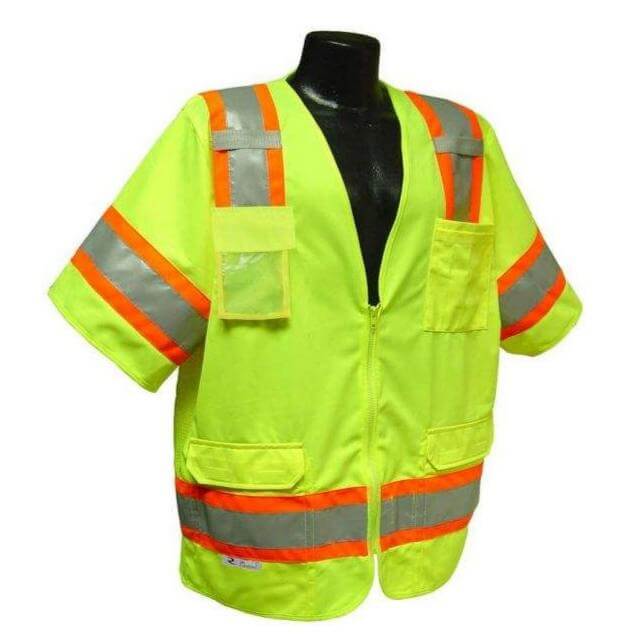
Get a Custom Hi-Vis Vest Quote from VisonSafety
How Do Different Fabrics Respond to Shrinking Techniques?
Fabrics display distinct behaviours under mechanical and thermal stress. Washing temperature, mechanical agitation and dryer heat can each alter garment dimensions and substrate integrity. Evaluating material-specific responses reduces the risk of unintended distortion or damage.
What Are the Recommended Methods to Shrink a Safety Vest Safely?
Established methods for controlled shrinkage prioritise retention of reflective tape and overall fabric performance. Appropriate techniques balance thermal exposure and mechanical action to produce incremental size reduction without compromising visibility or structural integrity.
Washing : Use warm water and a gentle cycle to wash the vest. This approach can reduce size gradually while protecting the fabric.
Heat Application : Carefully applying heat via a dryer can shrink the vest; monitor frequently to avoid over-shrinkage.
Professional Resizing : If unsure about DIY methods, professional resizing services deliver a tailored fit without risking damage.
How Does Washing Affect Safety Vest Size and Integrity?
Washing can induce measurable shrinkage, particularly for natural fibres. Use cold or warm cycles and avoid high dryer temperatures to preserve dimensional stability and reflective properties. These precautions help maintain compliance with relevant safety specifications.
Can Heat Application Be Used to Adjust Safety Vest Size?
Thermal exposure via a tumble dryer can reduce garment dimensions when applied judiciously. Operate dryers at low settings and inspect the vest frequently to prevent over-shrinkage or damage to reflective materials.
How Does Shrinking a Safety Vest Impact Compliance with Safety Standards?
Alterations that change the size or placement of high-visibility panels and retroreflective tape can affect compliance with ANSI and NFPA requirements. Any dimensional modification should be evaluated against applicable standard criteria to ensure continued conformity.
What Are the ANSI and NFPA Requirements for Safety Vest Modifications?
ANSI and NFPA standards specify minimum areas and positional criteria for reflective materials to achieve 360-degree visibility. Modifications, including shrinkage, must not reduce reflective surface area or alter placement in a way that compromises those criteria.
This compliance constraint is particularly relevant when assessing fit for diverse body types, including women of smaller stature.
ANSI/ISEA Standards & Baggy Safety Vest Fit for Women
The American National Standards Institute (ANSI) and the International Safety Equipment Association (ISEA) develop safety vest standards to ensure 360-degree visibility of workers, but these standards create limitations in manufacturer’s abilities to create a well-fitted vest for women of smaller stature, particularly in the sizes between XXS and S, as the required square inches of material result in a baggy fit. This project aims to improve the design of safety vests to provide a better fit for women by using a woman-specific bodice block pattern, which addresses the areas of discomfort women have identified with their vests in previous studies.
Designing Safety Vests to Fit Women, 2023
How to Ensure Safety and Reflectivity Are Maintained After Shrinking?
Maintain a scheduled inspection protocol after any resizing. Verify that reflective tape remains intact, seams retain integrity, and the vest provides the required coverage. For substantial alterations, consult a professional to confirm continued compliance with applicable standards.
What Customization and Resizing Services Does VisonSafety Offer for Safety Vests?
VisonSafety provides bespoke safety apparel solutions, including high-visibility safety vests. Service offerings include professional resizing and tailoring to achieve an accurate fit while preserving regulatory compliance and garment performance.
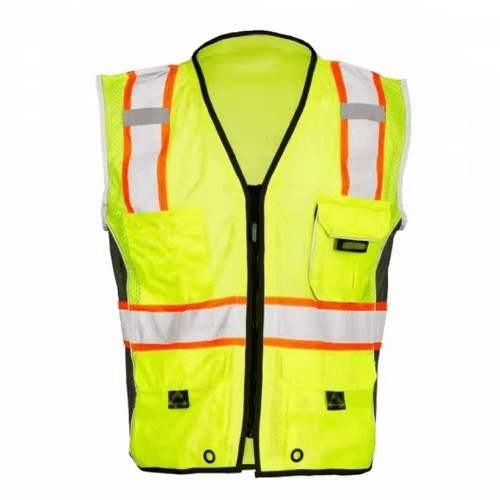
Get a Custom Hi-Vis Vest Quote from VisonSafety
How Can Custom High Visibility Safety Vests Be Tailored for Fit?
Custom vests can be configured to individual anthropometrics to improve comfort and safety. VisonSafety offers adjustments such as strap modifications and the selection of appropriate fabric constructions to optimise fit and functional performance.
How to Contact VisonSafety for Professional Resizing Options?
For professional resizing inquiries, VisonSafety provides easy contact methods and a technical support team capable of advising on customization that meets both ergonomic and compliance requirements.
Frequently Asked Questions
What are the risks of improperly shrinking a safety vest?
Improper shrinkage can reduce reflective effectiveness, produce an inadequate fit and render the vest non-compliant with safety standards. Excessive heat or incorrect laundering can also degrade fabrics and accelerate wear, diminishing the garment’s protective function. Follow recommended care practices to minimise these risks.
Can I shrink a safety vest made from blended fabrics?
Blended fabrics can be dimensionally unstable depending on the dominant fibre. A cotton-dominant blend will typically exhibit greater shrinkage than a polyester-dominant construction. Follow the care instructions for the dominant fibre and trial a small area where feasible to assess response.
How often should I check the fit of my safety vest?
Inspect fit routinely, particularly after laundering or changes in wearer size. Verify that the vest maintains intended coverage and reflective integrity after each wash cycle. If fit or function changes materially, pursue resizing or replacement.
What should I do if my safety vest shrinks too much?
If a vest has excessive shrinkage, engage professional resizing services rather than attempting manual stretching, which can damage the substrate and reflective elements. Resizing specialists can restore fit while evaluating continued compliance; if resizing is infeasible, replace the vest with a correctly sized garment.
Are there specific care instructions for high visibility safety vests?
Yes. Wash in cold or warm water and avoid high dryer temperatures to protect reflective materials and limit shrinkage. Always consult the garment care label for fabric-specific instructions. Proper maintenance preserves visibility and compliance over the garment’s service life.
What are the benefits of professional resizing services for safety vests?
Professional resizing secures an accurate fit without compromising reflective components or structural integrity. Trained technicians adjust garments to individual body shapes while ensuring adherence to safety regulations and preserving material performance during the alteration process.
Conclusion
Controlled shrinking can improve vest fit and wearer comfort while retaining functional performance when executed with material-specific techniques and compliance in mind. Understanding fabric behaviour and following recommended methods is essential to maintain regulatory conformity. For tailored solutions, VisonSafety offers professional resizing and customization services to ensure garments meet fit, safety and compliance requirements.
 English
 Deutsch
 Français
 Polski
 Português do Brasil
 Español
 日本語
日本語 Русский
 العربية
 Italiano
 Nederlands
 Türkçe
 한국어
한국어