
The legality of black hi-vis vests presents a substantive compliance issue for employers and workers across multiple sectors; accurate interpretation of high-visibility apparel regulations is necessary to maintain safety performance and legal conformity. This article examines the governing standards for hi vis vests, with a primary focus on ANSI and OSHA requirements. It evaluates whether black hi vis vests satisfy those requirements, summarises the operational risks associated with their use, and provides practical guidance for businesses seeking compliant customization.
What Are the Legal Standards for Hi Vis Vests?
Legal standards for hi-vis vests are established principally by ANSI/ISEA 107, which defines acceptable colors, material properties, and minimum performance levels for high-visibility apparel. The standard targets enhanced conspicuity in varied work environments, including low-light conditions. Compliance testing and verification are required to confirm that garments meet specified reflectivity and color performance. Familiarity with these requirements is essential for organisations to mitigate regulatory risk and protect personnel.
Ontvang een offerte voor Hi-Vis vesten van VisonSafety
Which ANSI and OSHA Requirements Define Hi-Vis Vest Legality?
ANSI and OSHA define legality through vest classifications—Class 1, Class 2, and Class 3—each tied to quantified visibility criteria and intended use cases. Class 1 addresses low-risk environments, while Class 3 applies to high-risk situations where maximum conspicuity is necessary. The standards specify acceptable fluorescent base colors and reflectivity levels for each class. Failure to comply can result in regulatory fines and elevated liability following workplace incidents.
How Do Reflectivity and Color Impact Compliance?
Reflectivity and base color are determinative elements of compliance. Retro-reflective materials provide critical night and low-light performance, while fluorescent base colors substantially improve daytime conspicuity. Regulatory requirements typically mandate the integration of both fluorescent materials and specified reflective tape configurations to satisfy ANSI/OSHA performance thresholds and ensure worker detectability in diverse conditions.
Are Black Hi-Vis Vests Compliant with Safety Regulations?
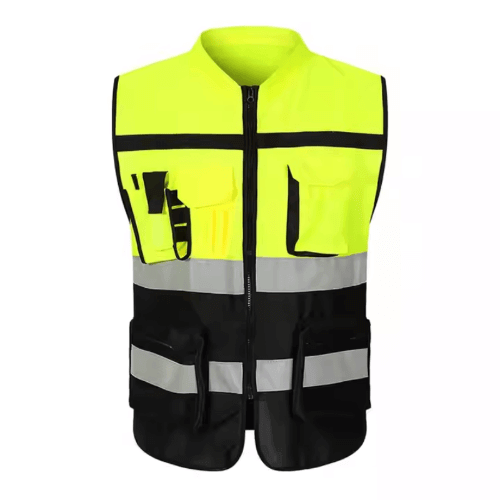
Black hi vis vests are generally regarded as non-compliant with prevailing safety regulations. The standards prioritise fluorescent base colours because they demonstrably increase detectability. Although black elements may be incorporated for branding or contrast, vests that rely primarily on black do not meet the ANSI/OSHA visibility criteria required to provide the intended level of protection.
Do Black Hi-Vis Vests Meet ANSI 107 and OSHA Visibility Criteria?
Black hi vis vests do not satisfy the ANSI/ISEA 107 and OSHA visibility criteria. Those standards explicitly require fluorescent base colours to achieve the minimum contrast and conspicuity specified for each garment class. Dark colours such as black fail to deliver the necessary contrast against many worksite backgrounds, particularly under reduced lighting, and therefore should be avoided when compliance is required.
What Are the Risks and Limitations of Using Black Hi-Vis Vests?
Using black hi vis vests introduces multiple risks and operational limitations. Reduced conspicuity increases the likelihood of collisions and other accidents, which can result in severe injury. Organisations also face regulatory enforcement, fines, and greater legal liability in the event of incidents. Perceived compromises in protective equipment can diminish workforce confidence and adversely affect productivity.
How Can Businesses Ensure Compliance When Customizing Hi-Vis Vests?
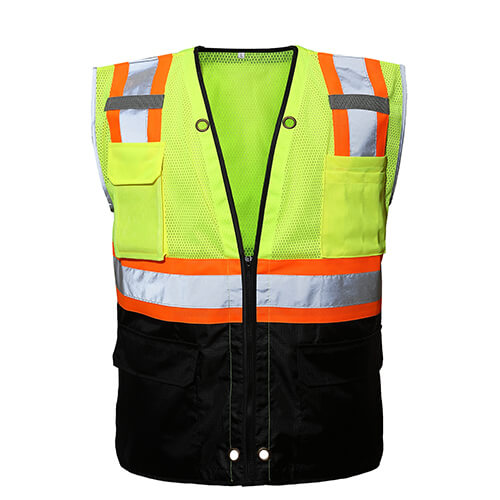
When customising hi vis vests, businesses must ensure adherence to ANSI and OSHA requirements. This entails selecting certified fluorescent materials, specifying reflective tape that meets required performance criteria, and confirming that branding or logos do not obscure mandated high-visibility areas. Implement controlled quality-assurance processes and retain documentation of material specifications and test results to demonstrate ongoing compliance.
Ontvang een offerte voor Hi-Vis vesten van VisonSafety
What Customization Options Maintain ANSI and OSHA Standards?
Use of Fluorescent Materials: Ensure that the base color of the vest is fluorescent to enhance visibility.
Plaatsing van reflecterende tape: Strategically place reflective tape to maximise visibility from all angles.
Branding Without Compromising Compliance: Incorporate branding elements in a way that does not obscure the fluorescent colors or reflective materials.
How Does Brand Visibility Influence Safety and Compliance?
Brand visibility affects both compliance and functional performance. Material selection and logo placement can alter the effective conspicuity of the garment, and organisations must ensure that branding does not reduce the performance of the hi vis vests. Customisation should be validated through documented testing and routine inspections to confirm that garments continue to meet regulatory performance criteria while supporting brand objectives.
If you have questions or require assistance, please neem contact met ons op. We can support regulatory interpretation and provide guidance on compliant high-visibility solutions for your organisation.
Veelgestelde vragen
Wat zijn de gevolgen van het gebruik van niet-conforme veiligheidsvesten?
Using non-compliant hi vis vests exposes organisations to significant consequences. These include enforcement actions and fines from regulatory authorities, increased legal liability following workplace incidents, and potential litigation from injured parties. Non-compliance can also impair corporate reputation and reduce employee trust. Ensuring all protective apparel meets applicable standards is a fundamental risk-management requirement.
Can black hi vis vests be used in any specific industries?
Although black hi vis vests are generally non-compliant, some low-risk or controlled environments may permit limited use under specific conditions. Prior to implementation, organisations must consult industry-specific regulations and internal risk assessments to determine acceptability. The primary obligation remains the protection of personnel through compliant equipment selection.
How can businesses educate employees about hi-vis vest compliance?
Effective education combines formal training sessions, clear written procedures, and regular safety meetings. Provide employees with explicit guidance on the required classes of hi vis apparel, correct wear and maintenance practices, and the operational risks associated with non-compliance. Engaging staff in compliance discussions reinforces a safety culture and encourages adherence to mandated protective measures.
Ontvang een offerte voor Hi-Vis vesten van VisonSafety
Are there alternatives to black hi-vis vests that provide better visibility?
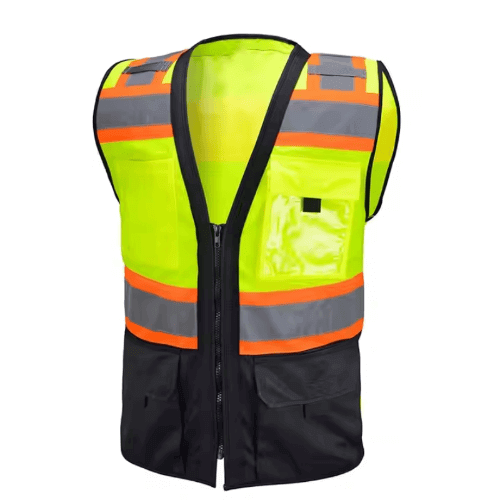
Yes. Compliant alternatives include vests with fluorescent base colours such as lime green, orange, or pink, which meet ANSI/ISEA 107 specifications. Garments incorporating certified reflective materials and appropriate tape configurations further enhance detectability in low-light conditions. Organisations should prioritise these options to achieve regulatory compliance and improve worker safety.
What should businesses consider when selecting hi-vis vest suppliers?
When selecting suppliers, evaluate their ability to deliver garments that comply with ANSI and OSHA standards, the documented quality of materials and construction, and their reputation for reliability. Confirm available customization options and require suppliers to provide certifications, test reports, and traceable documentation to substantiate compliance claims.
How often should hi vis vests be inspected for compliance?
Hi vis vests should undergo routine inspections at a minimum monthly cadence, with increased frequency when garments experience heavy use or harsh environmental exposure. Inspections must assess colour fading, material degradation, and the integrity of reflective components. Scheduled maintenance and replacement policies ensure ongoing conformity to visibility requirements.
What role does color contrast play in hi vis vest effectiveness?
Color contrast is a critical determinant of garment effectiveness. Vests must present a clear contrast against typical worksite backgrounds to maximise daytime conspicuity, and reflective elements must provide adequate retro-reflectivity for night-time detection. Specifying fluorescent base colours and certified reflective materials ensures the required contrast and supports compliance with legal standards.
Conclusie
Understanding applicable legal standards is essential to maintain worker safety and regulatory compliance under ANSI and OSHA frameworks. Black hi vis vests do not meet the visibility criteria required by those standards and therefore present elevated operational and legal risk. Prioritising compliant fluorescent garments with certified reflective materials allows organisations to enhance protection, reduce liability, and maintain regulatory conformity. For additional information on compliant high-visibility apparel, review our product range and specification data.
 English
 Deutsch
 Français
 Polski
 Português do Brasil
 Español
 日本語
日本語 Русский
 العربية
 Italiano
 Nederlands
 Türkçe
 한국어
한국어