
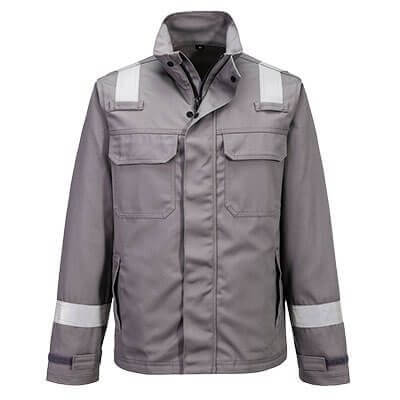
FR welding jackets from VisonSafety balance protection with breathability, using flame-resistant fabrics from 240gsm to 320gsm tested to NFPA 2112 standards. Leather jackets offer superior slag resistance but trap heat, increasing heat stress. For most industrial welding applications, FR cotton provides adequate protection with significantly less operator fatigue.
Demandez un devis personnalisé pour une veste de soudage ignifugée auprès de VisonSafety
What defines a welding jacket’s protection level?
A welding jacket’s protection level hinges on its fabric’s ability to resist ignition and block thermal hazards. Flame-resistant materials must maintain protective characteristics through repeated daily exposure to intense sparks, high heat, and molten metal.
FR welding jacket vs leather options present distinct protection profiles. FR fabric jackets rely on chemically treated cotton or inherent flame-resistant blends. These garments are tested to meet NFPA 2112 and EN ISO 11612 standards, ensuring consistent performance in high-risk industrial settings such as welding workshops, oil refineries, and construction sites. The certification confirms the fabric self-extinguishes and limits thermal transfer.
Leather jackets provide a different kind of barrier. Engineered for heavy-duty applications, leather delivers dependable protection against weld splatter, sparks, heat, and workplace hazards. The material does not ignite easily. It sheds molten metal rather than absorbing it.
Material thickness directly impacts durability. Premium split natural cowhide leather with an approximate thickness of 1.3 mm offers outstanding long-lasting performance. This density resists puncture and abrasion far longer than lighter fabrics. The trade-off is weight and heat retention.
How do industry standards verify jacket protection?
Certifications provide objective benchmarks for safety. NFPA 2112 governs flash fire protection, while EN ISO 11612 covers heat and flame risks. VisonSafety jackets undergo testing to both standards. This dual compliance confirms the garment prevents ignition and limits heat transfer during arc flash or molten metal splash events.
Does leather or FR fabric last longer in daily welding?
Leather outlasts FR fabric under direct spatter and abrasion. The 1.3 mm cowhide construction resists the mechanical wear that gradually thins treated cotton. FR fabric jackets, however, maintain their protective characteristics through repeated laundering and light exposure. The choice depends on whether the primary threat is physical abrasion or sustained thermal comfort. For guidance on material selection across hazard types, review the best FR clothing options for specific workplace risks.
How does leather compare to FR fabric for spatter?
Leather resists spatter penetration far better than FR welding jacket vs leather fabric alternatives. Spatter lands on leather and cools without breaching the surface. On FR-treated cotton, the same spatter creates a hole. The material does not ignite, but the damage accumulates fast. A leather jacket shrugs off what destroys a fabric jacket in weeks.
Demandez un devis personnalisé pour une veste de soudage ignifugée auprès de VisonSafety
What happens when spatter hits FR fabric?
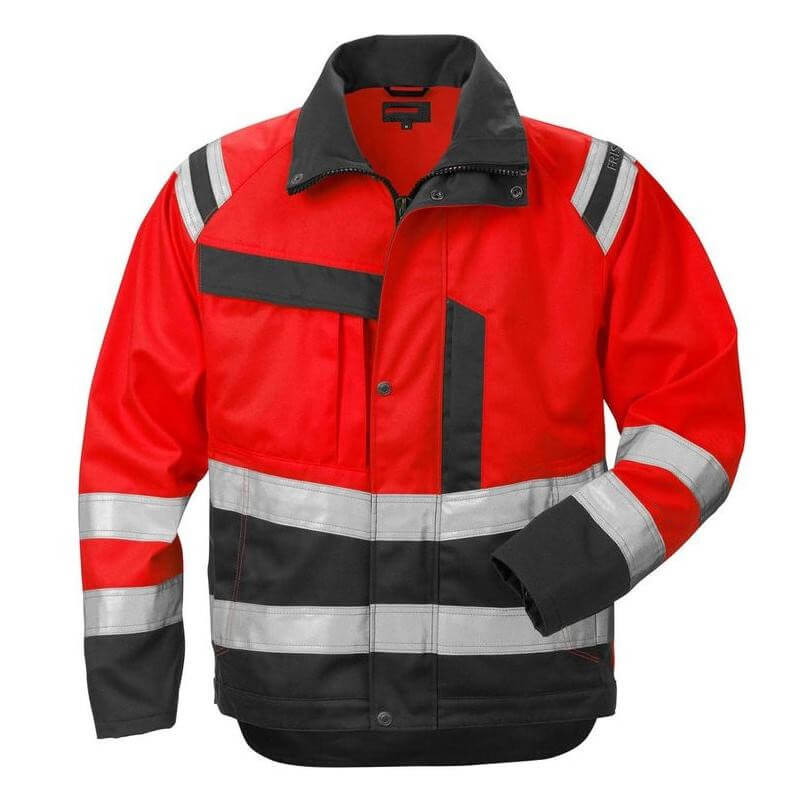
FR fabric withstands sparks and molten metal splashes by design. VisonSafety constructs its hi-vis welding jackets from flame-resistant materials engineered for exactly this exposure. The fabric self-extinguishes. It does not burn. But spatter still burns through. Holes appear. The garment remains non-flammable yet progressively loses structural integrity. For a procurement manager tracking replacement cycles, this distinction matters. A jacket that never ignites still fails when perforation compromises coverage.
Does leather actually stop spatter damage?
Leather stops it cold. The dense fiber structure resists heat, fire, oil, water, and punctures. Spatter bounces off or sticks momentarily without penetrating. A discussion on WeldingWeb confirms leather is much tougher than cotton for resisting slag and splatter holes. The trade-off is weight and heat retention. Leather runs hotter. For heavy overhead welding or extended shifts in summer, that heat stress becomes a safety factor of its own. Our hi-vis welding jackets are constructed using flame-resistant fabrics designed to withstand sparks, molten metal splashes, and radiant heat. Fabric options include treated cotton and inherent FR blends with weights ranging from 240gsm to 320gsm. The material property remains: leather blocks spatter completely while FR fabric manages the aftermath.
Procurement decisions hinge on the application. A shop running continuous MIG welding at high amperage destroys fabric jackets quickly. Leather sleeves or full leather construction eliminate that replacement cost. A facility with intermittent welding and a strong emphasis on heat stress reduction finds FR fabric the practical choice. VisonSafety supplies both configurations, with fabric weights from 240gsm to 320gsm and reinforcement at every stress point.
Which jacket type reduces heat stress better?
FR cotton jackets reduce heat stress far more effectively than leather. Leather traps body heat and accelerates fatigue during extended welding shifts. The choice between an fr welding jacket vs leather directly impacts worker endurance, productivity, and compliance with heat safety protocols.
Why does leather cause more heat stress than FR fabric?
Leather’s density works against thermal regulation. WeldingWeb forum users consistently report leather jackets as “way hotter” than cotton alternatives. One welder described owning two jackets: a cotton primary and a leather-sleeved backup reserved only for exceptionally heavy welding, which occurred rarely. The leather version simply proved too hot for daily use.
Weight compounds the problem. Full leather jackets feel excessively heavy on the body. A contributor on MIG-Welding.co.uk noted that full leathers were “just too heavy,” leading to the jacket sitting unused while work clothes accumulated spatter holes. A jacket that stays on the hook provides zero protection.
How do FR fabric jackets manage heat better?
VisonSafety engineers FR welding jackets with breathable panels that release trapped heat without compromising protection. Adjustable cuffs and extended back hems maintain coverage while allowing airflow. These design elements keep core temperature lower during continuous welding operations.
Lightweight FR construction also preserves agility. VisonSafety’s approach to garment design keeps welders mobile in tight spaces and around moving equipment. Reduced bulk means less physical strain and lower metabolic heat production over an eight-hour shift.
Procurement managers evaluating heat stress risks should prioritize FR fabric jackets for roles involving sustained activity. Leather’s protective qualities come at a thermal cost that undermines worker comfort and consistent use.
What are the total cost differences over time?
Total cost differences between an fr welding jacket vs leather extend far beyond the initial purchase price. Procurement managers who ignore maintenance, replacement frequency, and compliance verification absorb hidden expenses that erode departmental budgets over a garment’s service life. Leather and FR fabric jackets follow fundamentally different cost trajectories.
How do maintenance requirements affect long-term costs?
Leather jackets demand conditioning and cleaning rather than standard laundering. This specialized care adds labor and product costs that compound across a jacket’s lifespan. FR fabric jackets require proper laundry soap to maintain flame-resistant properties through many wash cycles. Harsh chemicals or detergent residue reduce a garment’s ability to self-extinguish and affect compliance. VisonSafety’s guidance on laundry soap selection details safe detergent ingredients that preserve protective performance.
Which option delivers lower replacement frequency?
Leather resists sparks and splatter effectively but degrades under repeated heat exposure without conditioning. FR fabric jackets face a different risk: improper washing destroys their protective chemistry. A single wash cycle with the wrong detergent compromises the garment permanently. VisonSafety batch-tests fabrics and maintains traceability records. This documentation supports compliance audits and extends the useful life of each jacket by verifying that protective properties remain intact after repeated laundering.
Procurement teams that calculate total cost of ownership factor in these divergent maintenance paths. A leather jacket’s higher upfront price combines with conditioning expenses. An FR fabric jacket’s lower initial cost carries the ongoing requirement for compliant laundering. Skipping either maintenance protocol accelerates replacement cycles and multiplies costs.
Which jacket should your welding team choose?
The decision between an fr welding jacket vs leather hinges on the specific welding application, ambient temperature, and required mobility. VisonSafety’s custom hi-vis welding jackets address this directly with flame-resistant fabric options ranging from 240gsm to 320gsm, providing a calibrated balance of protection and wearability. A wrong choice here does not just waste procurement budget. It introduces preventable burn injuries, accelerates heat stress cases, and shortens garment service life to a fraction of what a properly specified jacket delivers.
Demandez un devis personnalisé pour une veste de soudage ignifugée auprès de VisonSafety
What makes a fabric-based FR jacket the right call for daily welding?
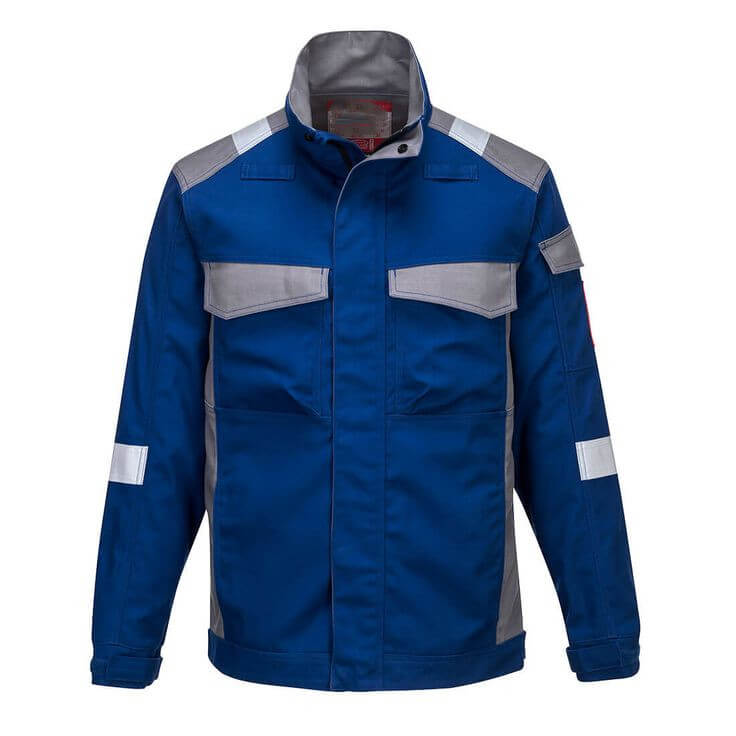
Fabric jackets built from treated cotton or inherent FR blends excel in situations demanding sustained wear and freedom of movement. VisonSafety constructs each jacket with reinforced seams, bar-tack stress points, and heavy-duty closures to withstand daily industrial use. These jackets breathe better than leather. That breathability reduces core temperature buildup during long shifts, which directly lowers heat-stress incidents on the shop floor. For teams performing MIG welding at moderate amperage or working in warm environments, a 280gsm FR cotton jacket often becomes the default choice.
When does a leather jacket outperform FR fabric?
Leather resists sparks and spatter with a toughness that fabric cannot match. A hybrid design with leather sleeves and an FR cotton body offers a practical compromise for heavy welding tasks. The leather takes the direct abuse on the arms while the fabric torso keeps the welder cooler. Full leather jackets provide maximum spark resistance but impose a weight and heat penalty that limits their use to short-duration, high-amperage work. Procurement managers evaluating this trade-off should consider job rotation schedules. A team that welds overhead for hours will reject a full leather jacket within a week.
How does compliance documentation factor into the decision?
Certification traceability separates a reliable supplier from a transactional vendor. VisonSafety operates within an ISO 9001 environment and provides OEKO-TEX, CE, and UL documentation as needed. This documentation streamlines safety audits and removes the administrative burden of verifying fabric performance claims. A jacket that lacks these records exposes the facility to compliance gaps that no physical inspection of the garment can close.
FAQ
Which welding jacket type reduces operator fatigue more?
FR fabric jackets provide breathability and reduce heat stress, while leather traps heat and increases fatigue risk.
Does leather or FR fabric last longer under heavy spatter?
Leather outlasts FR fabric under direct spatter and abrasion due to its 1.3 mm cowhide construction.
What standards certify VisonSafety FR jacket protection?
VisonSafety FR jackets undergo testing to NFPA 2112 and EN ISO 11612 standards for flash fire and heat/flame risks.
Conclusion
The choice between an FR fabric jacket and a leather jacket comes down to the specific welding application, ambient temperature, and required mobility. Procurement managers who prioritize sustained worker comfort and compliance documentation will select an FR fabric jacket for daily use, while those managing short-duration, high-amperage tasks will accept the heat penalty of full leather.
 English
 Deutsch
 Français
 Polski
 Português do Brasil
 Español
 日本語
 Русский
 العربية
 Italiano
 Nederlands
 Türkçe
 한국어