
Yes, embroidery can be applied to flame resistant (FR) clothing, but only when the materials and processes preserve the garment’s protective performance. This guide walks through how FR embroidery works, why thread selection and backing matter, and how standards such as NFPA 2112 and ASTM F1506 shape safe customization for employers and uniform specifiers. Procurement teams need practical rules—stitch density limits, approved thread types, and when to choose embroidery, heat transfer, or patches—so branding doesn’t void FR compliance. We cover whether embroidery can remain compliant, which threads and backings to use, practical logo sizing and placement, and alternative finishing methods. You’ll also find manufacturer-aligned workflows for ordering certified custom FR workwear and concise tables and lists to help B2B buyers make informed decisions. Read on to learn how to brand FR shirts, jackets, coveralls, and hi‑vis garments while keeping workers safe and meeting regulatory expectations.
Is Embroidering Flame Resistant Clothing Safe and Compliant?
Embroidery can be safe and compliant when you use inherently flame‑resistant thread, tested backing materials, and a process that preserves the garment’s certified performance. The basic requirement is that any added stitched material must not increase heat transfer, melt, or change ignition behavior. Choosing meta‑aramid or para‑aramid threads and non‑thermoplastic backings helps maintain thermal performance. Compliance also requires documentation showing the modified area still meets the applicable standards or that the added components are themselves tested FR materials. Below are concise compliance rules to use when evaluating an embroidery job.
Embroidery compliance checklist:
- Use only inherently flame‑resistant thread and backing materials that have been tested or are known to be FR‑safe.
- Follow garment manufacturer guidance and relevant standards to limit stitch density and logo area.
- Keep test certificates on file or perform sample testing after customization to confirm continued compliance.
Use this checklist as your immediate decision tool, then move to identifying acceptable FR thread types and why they matter.
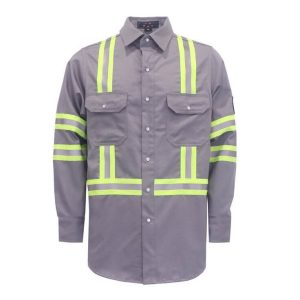
Get a Custom FR Clothing Quote from VisonSafety
What Flame Resistant Threads Are Required for FR Embroidery?
FR thread is an inherently non‑melting yarn engineered to hold strength and limit flame spread when exposed to heat. Commonly accepted options include meta‑aramid and para‑aramid fibers, which offer thermal stability, high tensile strength, and low melt propensity—properties that prevent stitched logos from becoming weak points or fuel sources during exposure. Inherently FR synthetic blends that meet NFPA or ASTM requirements are also used when color or wash durability is needed. Choosing the correct thread reduces the risk that embroidery will alter a garment’s protective performance; manufacturers usually note recommended thread types in product datasheets.
Recommended thread selection:
- Meta‑aramid thread: excellent thermal stability and low shrinkage; suitable where NFPA 2112 performance is required.
- Para‑aramid thread: high tensile strength for heavy‑duty coveralls and outerwear embroidery.
- Inherently FR synthetic blends: offer color and laundering durability while remaining non‑melting.
With thread selection clarified, the next section explains which industry standards govern acceptable customization and testing.
Which Safety Standards Govern FR Clothing Customization?
Several standards set performance expectations for FR garments and affect acceptable customization methods. The most relevant are NFPA 2112 and ASTM F1506, with EN standards used in Europe. NFPA 2112 covers flash fire protection and implies any modification must preserve certified performance; ASTM F1506 addresses arc flash fabric behavior and warns against adding non‑FR materials. EN standards such as EN 11611/11612 carry similar regional requirements. Practically, procurement and manufacturers must review product technical files, retain certificates, and perform sample testing whenever embroidery or other branding is added.
Key takeaways from standards:
- Verify that modifications do not invalidate the garment’s original test results—or re‑test modified samples.
- Restrict logo size and placement according to manufacturer guidance and the intent of the standard.
- Maintain documentation and traceability for all added materials and processes for audits or compliance reviews.
With the standards in mind, buyers and manufacturers can choose a certified, documented process for safe FR embroidery. The next section describes how an experienced manufacturer operationalizes that workflow.
VisonSafety provides compliant FR embroidery services using certified workflows and full material traceability, helping buyers control compliance risk when branding FR garments. As an ISO 9001 certified safety clothing manufacturer based in China, VisonSafety specializes in flame‑retardant and hi‑vis workwear for global B2B clients and supports OEM and ODM ordering paths that include material approval and testing. Our approach features 100% fabric batch testing, strict quality control, rapid sampling, flexible MOQs, and on‑time delivery—so you have traceability at every step of the manufacturing process.
How Does VisonSafety Provide Custom FR Workwear with Logo?
VisonSafety follows a stepwise, certified process designed to preserve FR properties during customization. The workflow is straightforward: source inherently FR fabrics and threads, approve backing materials, produce and test samples under realistic conditions, then run 100% fabric batch testing and final inspection before shipment. This approach reduces compliance risk and gives procurement teams documented assurance that branded garments meet relevant standards. Below is a concise process flow showing how custom FR branding is executed in practice.
| Process Phase | Key Activity | Outcome |
|---|---|---|
| Material Approval | Source inherently FR fabric and FR thread | Verified non‑melting components |
| Sampling | Produce branded prototype and perform sample testing | Confirmed performance before bulk |
| Batch QC | 100% fabric batch testing and inspection | Traceability and documented quality |
| Delivery | Controlled packing and on‑time shipment | Consistent, auditable supply |
This process map shows how a certified workflow minimizes compliance risk and delivers consistent results for B2B orders.
What Is VisonSafety’s Certified Process for Safe FR Embroidery?
Our certified process starts with sourcing certified FR fabric and approved FR thread, then moves to pre‑production approval of logo artwork, backing choice, and stitch specs. We produce a sample and run functional checks and fabric batch testing to confirm the embroidery does not change thermal or ignition properties. Production only starts after sample approval. We label materials and batches for traceability so future audits can reference source data. This disciplined flow reduces surprises for procurement teams and keeps compliance discussions focused on test evidence, not speculation.
Core QC checkpoints:
- Incoming material certification and batch recording.
- Sample testing of modified garments.
- 100% fabric batch testing and final inspection before shipment.
These QC checkpoints tie directly to how our OEM and ODM services support different branding needs.
How Do OEM and ODM Services Support Custom FR Garment Branding?
OEM services let buyers place private‑label orders using existing product constructions with custom logos or minor trim changes—an efficient route to compliant branded garments. ODM packages allow deeper customization—altering design, materials, or adding protective features—suitable when buyers need bespoke solutions that still meet FR standards. Flexible MOQs and rapid sampling enable procurement teams to validate fit, function, and compliance before committing to bulk. Traceability and ISO‑aligned processes ensure consistent replication. These models let organizations choose the level of engineering involvement and manufacturing control that matches their compliance risk tolerance.
Benefits summarized:
- OEM: Fast private‑label branding with predictable production.
- ODM: Tailored design and protective feature customization.
- Procurement flexibility: Sampling, MOQs, and batch testing to control risk.
What Are the Best Practices for FR Garment Branding Guidelines?
Branding FR garments requires balancing visibility with thermal performance and regulatory responsibilities. Follow proven rules for logo area, placement, and construction to avoid degrading protection. The approach is to minimize added material on critical thermal panels, use inherently FR threads and tested, non‑thermoplastic backings, and respect manufacturer‑specified logo area limits. The practical benefits are preserved protection, predictable laundering behavior, and retained certifiability for safety audits. Below are concrete guidelines for logo placement and construction to guide spec writers and designers.
Recommended logo placement and size:
- Place logos on non‑critical panels (upper chest, upper sleeve) and avoid covering most of an insulating chest panel with large designs.
- Limit logo area to a modest percentage of the panel—consult garment datasheets and default to conservative maximums when unsure.
- Choose stitch patterns and densities that avoid excessive layering; flatter fills with lower density reduce added insulation and heat retention.
These placement rules lead into backing selection, the next technical decision affecting long‑term compliance.
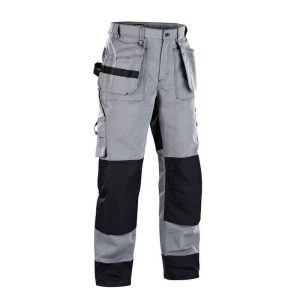
Get a Custom FR Clothing Quote from VisonSafety
How Should Logos Be Positioned and Sized on FR Clothing?
Position logos to preserve wearer mobility and keep primary thermal insulation zones clear—small chest logos and upper‑sleeve marks typically work well. Size guidance usually defaults to a conservative maximum; many specifiers consider a chest logo larger than a standard pocket panel excessive. Always consult the garment datasheet to confirm allowable square‑inch area. Balance stitching density so the design holds but doesn’t form thick, heat‑retentive patches. Document placement and size in procurement specs and request sample verification to confirm no adverse thermal impact.
Practical sizing rules:
- Chest logos: keep within pocket‑size or smaller unless the datasheet allows larger.
- Sleeve logos: prefer upper arm locations away from crease lines.
- Avoid full‑panel embroidery on garments intended for flash fire or arc protection.
These sizing practices lead to the final construction detail: which backing materials are acceptable to preserve FR performance.
What Backing Materials Are Suitable for Maintaining FR Properties?
Backings must be inherently flame‑resistant, launderable, and non‑thermoplastic so they won’t melt or allow adhesive flow. Washable FR backings or stitched satin backings are preferred over heat‑activated adhesives. Thermoplastic or standard adhesive backings can create a continuous film that changes heat transfer and may melt under exposure. Choose backings tested together with the garment fabric and embroidery thread, and specify laundering cycles and care labels that reflect field conditions. Regular inspection after repeated wash cycles helps ensure backings remain intact and do not degrade protective characteristics.
Acceptable backing options:
- Inherently FR woven or nonwoven backings tested with the garment system.
- Stitched backing methods that avoid adhesives where possible.
- Avoid heat‑seal adhesive backings unless they are explicitly tested and certified with the garment system.
Partnering note: manufacturers experienced in FR production can advise on backing selection and provide tested samples—request a sample or quote to validate backing and embroidery choices for your specification.
What Are Alternative Customization Methods for FR Clothing Besides Embroidery?
Beyond embroidery, common branding methods include heat transfer, sewn‑on patches, and dye sublimation on compatible FR substrates. Each option has different compliance, durability, and appearance trade‑offs. Heat transfers and adhesive‑based methods can add thermoplastic layers that may melt or alter thermal response, while sewn patches are replaceable or repairable but require FR‑compatible patch materials and stitching. Dye sublimation is limited to substrates that accept the process and may not suit many inherently FR fabrics. Use the comparison below to select the approach that balances visibility, lifecycle, and compliance for your work environment.
| Method | Attribute | Compliance Impact |
|---|---|---|
| Embroidery | Inherently FR thread, stitched construction | Low risk when FR materials are used |
| Heat Transfer | Adhesive/thermoplastic layer | Higher risk unless the system is tested and FR‑rated |
| Sewn Patches | Replaceable, can use FR materials | Moderate risk; depends on patch backing and thread |
| Dye Sublimation | Ink infusion into substrate | Low risk if the substrate is inherently FR and the process is validated |
This table underlines that method selection must focus on material compatibility and test evidence, not just cost or appearance.
How Does Embroidery Compare to Heat Transfer and Patches on FR Apparel?
When done with proper FR threads and backings, embroidery usually offers the best balance of durability and low compliance risk because it relies on non‑melting yarns and stitched attachment. Heat transfer and many adhesive methods introduce thermoplastic elements that increase melt risk and can invalidate performance claims unless the transfer system is FR‑rated and tested with the garment. Sewn patches are a practical compromise if the patch materials and stitching are fully FR‑compatible, offering replaceability and repairability. For procurement, prioritize methods supported by sample testing and manufacturer documentation to avoid surprises during safety audits.
Comparison highlights:
- Embroidery: durable, low risk when FR materials are used.
- Heat transfer: efficient but often carries higher compliance risk.
- Patches: flexible and replaceable if constructed to FR standards.
These trade‑offs help decide when patches or dye sublimation are the better option.
When Should You Choose Custom Patches or Dye Sublimation for FR Workwear?
Choose sewn FR patches when you need replaceability—useful for rotating contractors or when logos change frequently—since patches can be removed and replaced without altering the garment body. Dye sublimation works on inherently FR fabrics engineered for the process and where a printed, flat finish is required; always validate the substrate and process with sample testing. Patches suit heavy‑use garments that need field repairability, while dye sublimation fits lightweight FR shirts and items requiring full‑art graphics on validated substrates. Procurement tips: specify patch construction details, request wash‑cycle test results, and require sample sign‑off.
Decision guidance:
- Use patches for replaceability and field repairability.
- Use dye sublimation only on validated, FR‑compatible substrates.
- Always require sample testing and documented laundering performance.
These situational rules complete the practical comparisons and help teams write clear specifications that protect workers while delivering brand visibility.
Can You Embroider FR Clothing | FAQs

Get a Custom FR Clothing Quote from VisonSafety
What are the potential risks of using non-FR materials in embroidery?
Using non‑FR threads or backings can undermine the protective qualities of FR clothing. Non‑FR components may melt or ignite under heat, increasing burn risk and potentially creating weak points on the garment. Modifying a certified garment with non‑FR materials can also void compliance with standards such as NFPA 2112 and ASTM F1506. Always confirm that every material in the embroidery system is certified FR to preserve protection and compliance.
How can I verify the compliance of my embroidered FR clothing?
Ask the manufacturer for documentation that confirms use of inherently FR materials and adherence to relevant standards. This should include test certificates for threads and backings and evidence that the modified garment still meets original performance specifications. Perform sample testing after customization when needed, and maintain records for audits. Regular inspections and periodic retesting are good practice for ongoing assurance.
What should I consider when selecting a vendor for FR embroidery services?
Choose vendors with proven experience handling FR materials and certified processes. Look for suppliers who provide material traceability, batch certificates, and clear quality control protocols such as batch testing and final inspections. Confirm their ability to meet your branding requirements—logo placement, size, color—while preserving the garment’s protective features. Sample approval and documented testing should be part of the offering.
Are there specific laundering instructions for embroidered FR clothing?
Yes. Follow the garment manufacturer’s laundering instructions to maintain both the garment and the embroidery. Use mild detergents, avoid bleach and fabric softeners unless specified, and respect recommended wash temperatures. Regularly inspect garments after laundering to ensure embroidery and backings remain intact and haven’t compromised protective properties.
What are the advantages of using patches over embroidery for FR clothing?
Patches offer flexibility and repairability. They’re easy to replace if logos change or garments are damaged, making them ideal for rotating workforces. Patches can be designed to meet FR standards if constructed with compliant materials and proper stitching, and they avoid permanently altering the garment’s main fabric—helpful for preserving original certification.
How does the choice of logo size impact FR garment compliance?
Logo size matters. Large logos can cover critical thermal insulation areas and may compromise protective performance. Follow manufacturer guidance on allowable logo area and favor modest sizes on non‑critical panels. When in doubt, default to conservative limits and require sample verification to confirm no adverse thermal effects.
What are the best practices for maintaining the FR properties of embroidered clothing?
Maintain FR properties by using inherently FR thread and tested backing materials, following proper laundering instructions, and conducting regular inspections. Limit logo size and placement to non‑critical areas, document specifications in procurement, and require sample testing and batch‑level traceability to ensure protective performance is preserved.
Conclusion
Embroidering flame‑resistant clothing is both viable and compliant when the right materials and processes are used. By following established guidelines and standards—and working with experienced manufacturers—organizations can brand FR workwear without compromising safety. If you need compliant embroidery, patching, or printing solutions, partner with a supplier that offers sample testing, material traceability, and documented QC. Contact us to explore options that keep your team visible, branded, and protected.
 English
 Deutsch
 Français
 Polski
 Português do Brasil
 Español
 日本語
日本語 Русский
 العربية
 Italiano
 Nederlands
 Türkçe
 한국어
한국어