
Customizing a welding jacket for OEM or private label orders starts with selecting flame-resistant fabric engineered to meet ANSI, EN, or NFPA standards. Clients then specify fit, reflective trim placement, and branded labels. VisonSafety supports full OEM development — from fast sampling through a notable share fabric batch testing. Before final production ships to OEM clients.
Key Takeaways
- VisonSafety manufactures custom FR welding shirts with 15 years of expertise in OEM production.
- Customization options match product performance, compliance requirements, and brand positioning for industrial teams.
- Private label welding apparel suits fabrication workers exposed to sparks, heat, and flame exposure.
- Custom orders serve welding schools, businesses, and organizations seeking durable, branded protective gear.
What Do You Need Before Starting?
Starting a welding jacket OEM order requires three upfront decisions: compliance standards, fabric selection, and branding specifications. Skipping any one of these before production begins delays sampling and risks costly rework.
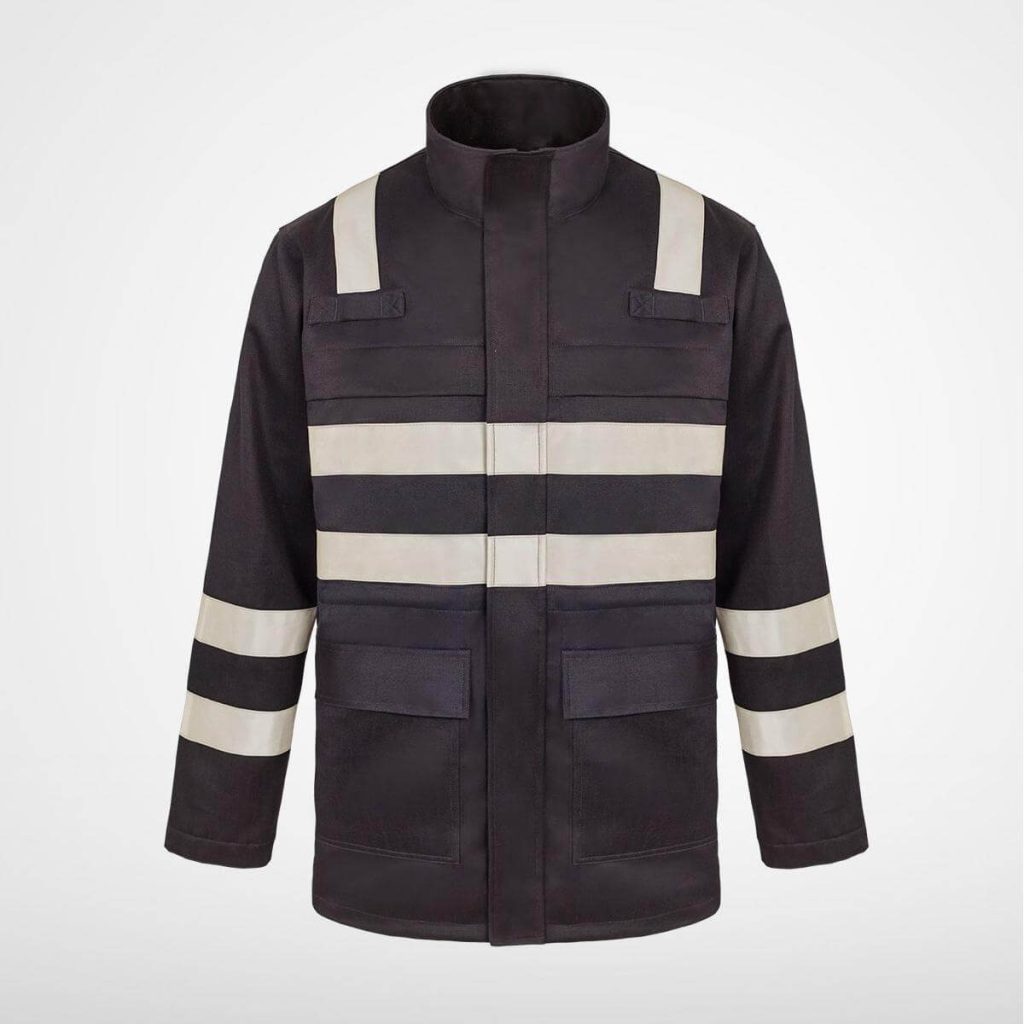
Get a Custom FR Welding Jacket Quote from VisonSafety
What Compliance Standards Apply to Welding Jackets?
OEM clients sourcing welding jackets for industrial markets need to identify the relevant protection standards before fabric is cut. VisonSafety engineers FR jackets to meet NFPA 2112 and related UL and EN requirements. Clients must confirm which standard governs their target market. North American distributors typically require NFPA 2112; European buyers reference EN ISO standards. Clarifying this early shapes every downstream material and construction decision.
Here is a practical pre-production checklist:
- Confirm the target compliance standard — NFPA 2112, UL, or EN — based on the end market.
- Select the fabric system — specify fiber content, weight, and any anti-static or thermal requirements.
- Define branding specifications — logo placement, reflective trim, label content, and colorways for the welding jacket private label program.
- Determine order volume — VisonSafety accommodates small pilot runs through large-scale production, allowing brands to test market response before committing to full volume.
What Are Custom Welding Jackets Actually Made From?
FR jacket construction relies on meta-aramid and cotton blends engineered for thermal resistance and durability. Fabric choice directly affects compliance certification, so clients must finalize material specifications before sampling begins.
How Do You Define Your Jacket Specifications?
Defining jacket specifications starts with material selection and construction standards. Two decisions that determine whether a garment protects workers or fails them. Custom welding jackets built without a clear specification framework routinely fail compliance audits, costing OEM clients time, money, and market credibility.
What Materials Should a Welding Jacket Be Made From?
The foundation of any compliant welding jacket is the fabric. Meta-aramid and cotton blends deliver the thermal resistance required by strict global standards. They remain the benchmark material for heavy industry, welding, and utilities applications. Anti-static properties and fire-proof trim options extend protection further, giving OEM clients a technically defensible product.
Follow these steps to lock down material and construction specifications before sampling begins:
- Confirm the compliance standard — identify whether the jacket must meet NFPA 2112, EN ISO 11612, or another applicable regulation for the target market.
- Select the fabric blend — specify meta-aramid percentage, cotton ratio, and weight in grams per square meter based on the thermal hazard level.
- Define construction requirements — require reinforced stress areas, verified seam strength, button stability, and dimensional consistency across all production sizes.
- Choose closure and trim details — evaluate optional snap closures and metal-free trims, which reduce friction during work and improve usability in industrial settings.
- Document every parameter — record fabric specs, construction tolerances, and trim choices in a written tech pack before approving any sample.
How Does Quality Control Protect the Specification?
Specifications mean nothing without verification. VisonSafety batch-tests a notable share of fabrics. Maintains traceability records for more than three years within an ISO 9001 environment. That documentation chain gives welding jacket OEM. welding jacket private label clients auditable proof that every production run matches the approved specification. A non-negotiable requirement for regulated markets.
How Do You Build Your Private Label Branding?
Welding jacket private label programs give retailers, safety distributors, and industrial brands the ability to sell high-quality welding gear under their own identity. Building that brand presence requires deliberate decisions at every stage — from logo placement to trim selection to compliance documentation.
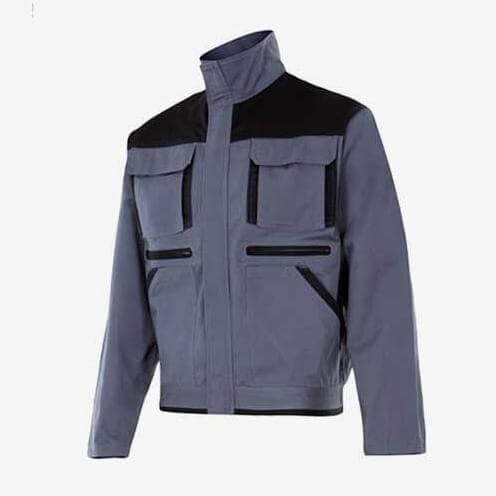
Get a Custom FR Welding Jacket Quote from VisonSafety
What Branding Options Are Available on FR Welding Jackets?
VisonSafety, a China-based manufacturer that ships to OEM clients worldwide, offers advanced branding options on flame-retardant garments. Reflective logos and heat-transfer embellishments are both available, allowing brands to achieve strong visual identity without sacrificing protective performance. Custom fire-proof trim and logo applications are engineered directly into the FR construction. The garment stays compliant while carrying the client’s mark.
Follow these steps to build a private label welding jacket program:
- Define the target end-user. Identify the industry sector — welding, fabrication, heavy construction — and the compliance standard required, such as NFPA 2112 or EN ISO 11612.
- Select base garment specifications. Choose fabric weight, fiber blend (meta-aramid, FR cotton, or blends), and construction features like reinforced stress points.
- Submit branding assets. Provide logo files, preferred placement locations, and any trim color requirements. VisonSafety applies precise production controls to match brand guidelines exactly.
- Approve a branded sample. Review the physical sample for logo accuracy, trim finish, and garment performance before committing to production volume.
- Confirm compliance documentation. Ensure the finished garment ships with the appropriate certifications for the OEM destination market.
Who Typically Uses Private Label Welding Jacket Programs?
Retailers, safety brands, power tool brands, and welding equipment providers all develop private label welding lines. The custom welding jackets category serves a broad commercial base. Any distributor supplying OEM industrial accounts benefits from branded, certified product that builds long-term customer loyalty.
How Do You Manage Sampling and Production?
VisonSafety manages sampling and production through a structured, stage-by-stage process that gives OEM clients full visibility before committing to large-scale orders. Fast sampling and on-time delivery are core operational commitments, not aspirational targets.
Follow these steps to move from initial concept to confirmed production:
- Submit specifications. OEM clients provide garment requirements — fabric weight, compliance standard (ANSI/ISEA 107, NFPA 2112, EN ISO 20471), and branding details for custom welding jackets.
- Request a sample. VisonSafety produces a physical sample so clients can evaluate construction quality, fit, and protective performance before any production commitment.
- Review compliance documentation. During the approval stage, request OEKO-TEX, CE, or UL documentation as needed. These records support internal compliance verification and simplify regulatory sign-off.
- Place a pilot order. Low minimum order quantities allow clients to validate product fit and test market demand without committing to full-volume production upfront.
- Confirm full production. Once the sample and pilot results meet requirements, clients scale the welding jacket OEM order with confidence.
- Arrange shipment. DDP shipping options reduce total logistics costs and simplify cross-border fulfillment, so clients receive orders without navigating complex customs processes independently.
What Documentation Is Available During the Sample Stage?
VisonSafety provides full compliance and traceability documentation on request during the sampling and approval phase. Clients use these records to verify that garments meet the compliance standards required in their target markets.
Can Clients Order Small Quantities for a Welding Jacket Private Label Program?
Small initial orders are fully supported. Low minimum order quantities let clients test a private label program, confirm demand. Scale production only after real-world validation — a practical approach that reduces financial exposure at launch.
What Mistakes Should OEM Buyers Avoid?
OEM buyers sourcing custom welding jackets most often derail projects by skipping compliance specifications and underestimating construction requirements. Both errors produce garments that fail in the field. Or worse, fail a regulatory audit before they ever reach one.
Follow these steps to avoid the most costly mistakes:
- Define compliance standards before sampling begins. Specify required certifications — such as NFPA 2112 or UL requirements — in the initial brief. Jackets produced without these parameters cannot be legally sold in many target markets, regardless of how well they are constructed.
- Review seam construction and stress-area reinforcement during specification sign-off. Welding jackets endure hard use, repeated washing, and constant movement. Garments built without reinforced stress points deteriorate quickly, generating returns and damaging brand reputation.
- Request full traceability documentation from the manufacturer. VisonSafety, a China-based manufacturer that ships to OEM clients, maintains traceability records spanning more than three years. That documentation protects buyers during compliance audits and product liability reviews.
- Run a pilot order before committing to full-scale production. Flexible small-run options exist precisely to validate fit, performance, and compliance before large financial exposure occurs.
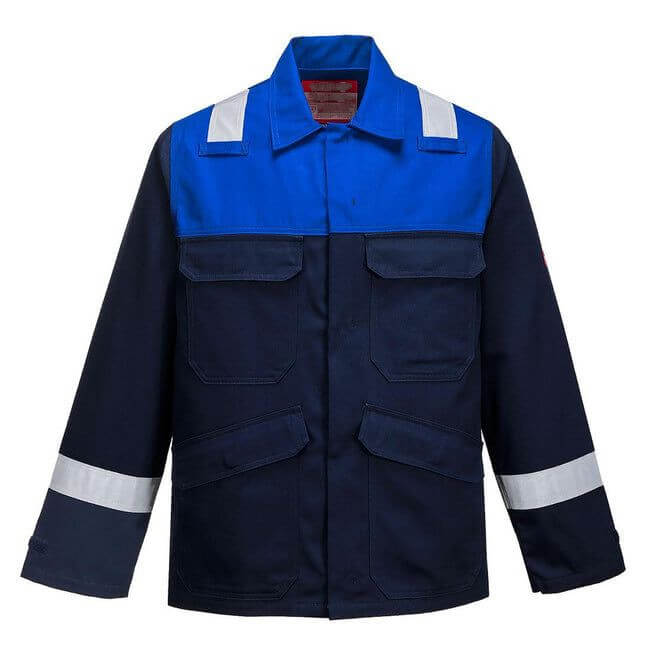
Get a Custom FR Welding Jacket Quote from VisonSafety
Does the welding jacket OEM process require compliance documentation upfront?
Yes — and omitting it is the single most expensive mistake buyers make. A welding jacket OEM program built without documented standards produces inventory that distributors and retailers cannot legally stock.
How does welding jacket private label differ from standard OEM in terms of risk?
A welding jacket private label program places the brand owner’s name on the product. Means compliance failures become the brand owner’s liability. Thorough documentation and pilot runs are not optional — they are the minimum standard for responsible private label sourcing.
FAQ
What compliance standards do OEM welding jackets need to meet?
VisonSafety engineers FR jackets to meet NFPA 2112, UL, and EN ISO requirements. North American distributors typically require NFPA 2112, while European buyers reference EN ISO standards.
What fabrics are used in custom welding jackets?
Meta-aramid and cotton blends deliver the thermal resistance required by strict global standards and remain the benchmark material for heavy industry, welding, and utilities applications.
Who orders custom private label welding jackets?
Welding schools, businesses, and organizations seeking durable, branded protective gear place custom orders. Private label welding apparel also suits fabrication workers exposed to sparks, heat, and flame.
 English
 Deutsch
 Français
 Polski
 Português do Brasil
 Español
 日本語
日本語 Русский
 العربية
 Italiano
 Nederlands
 Türkçe
 한국어
한국어