
Safety vests are key PPE where visibility matters. This guide covers classification, compliance obligations, and operational and commercial benefits of specifying compliant high-visibility vests, plus practical guidance on standards, performance and customisation.
Compliance Requirements
Safety vests must meet recognised standards to qualify as PPE. Standards set visibility performance, construction, fit and testing protocols; ANSI/ISEA 107 is the primary US reference, defining retroreflective and background material requirements. Conformance is both a regulatory and programme-quality consideration.
The table summarises core compliance criteria for safety vests.
Achieving an optimal fit across diverse body types remains a design challenge within current standardised area and placement requirements.
Safety Vest Design, ANSI/ISEA Standards, and Fit for High Visibility PPE
This paper examines the design and construction of safety vests for women, with emphasis on XS and XXL sizes. It notes that ANSI and ISEA dimensional requirements intended to ensure 360-degree visibility can constrain manufacturers’ ability to achieve a close fit for smaller statures, as the mandated material area may produce a baggy silhouette. The project proposes a women-specific bodice block pattern to address the areas of discomfort identified by users. Designing Safety Vests to Fit Women, 2020
Business Benefits
Deploying compliant safety vests reduces exposure, improves regulatory posture, and can boost workforce engagement and productivity.
Reduced Incident Risk : High-visibility vests lower accident risk by improving worker conspicuity to drivers and machine operators.
Enhanced Compliance : Compliant vests help organisations meet legal requirements and reduce the risk of fines.
Improved Worker Morale : Providing PPE demonstrates a commitment to safety and can improve morale and retention.
Including vests in formal protocols protects personnel and supports a culture of compliance and accountability.
Importance in Workplace Safety Protocols
Safety vests are integral in sectors such as construction, roadwork and warehousing. Their function is to increase conspicuity so vehicle and equipment operators detect workers under varied lighting and environmental conditions.
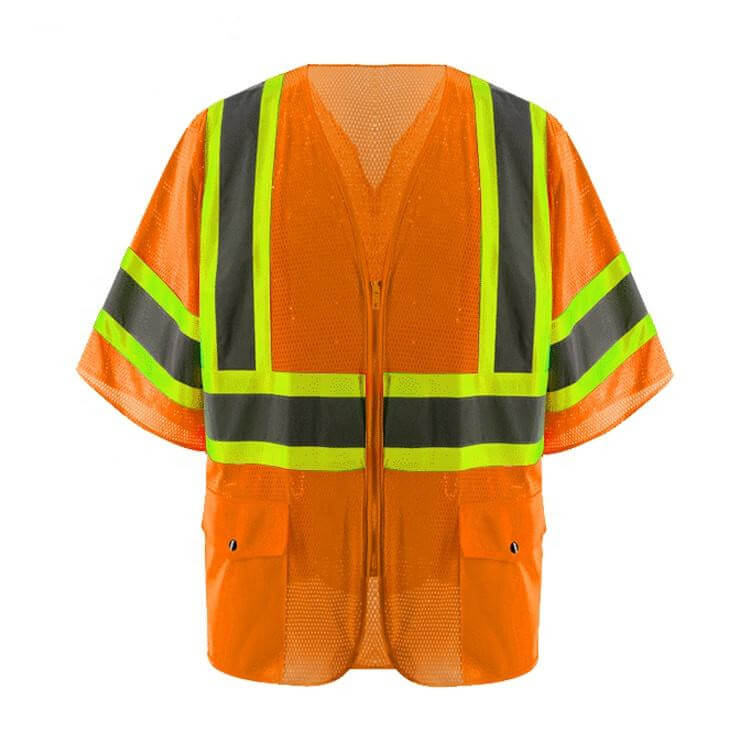
Get a Custom Hi-Vis Vest Quote from VisonSafety
Empirical evidence supports the role of high-visibility apparel in reducing accident risk by improving conspicuity.
High-Visibility Vests: Reducing Accident Rates Through Conspicuity
High-visibility safety apparel comprises vests, jackets and trousers. In occupational and road safety contexts, conspicuity has been shown to reduce accident rates, and high-visibility garments are an effective means of increasing conspicuity.
Selecting effective colors for high-visibility safety apparel, A Lanitis, 2021
What Defines Personal Protective Equipment and Where Do Safety Vests Fit?
Personal protective equipment (PPE) is intended to reduce exposure to workplace hazards. Safety vests qualify as PPE when they meet recognised performance standards that enhance visibility and reduce collision-related risk.
Research further highlights the foundational role of high-visibility vests within structured workplace safety frameworks.
High-Visibility Vests as PPE: Workplace Safety Importance
Typical PPE ensembles include hard hats, high-visibility vests and protective boots. PPE is a critical component of any comprehensive safety programme. Effective workplace safety also requires clear procedures, training and supervision to ensure that personnel apply PPE and follow safe work practices. Personal protective equipment for biohazards as a cascade for safety measures, 2020
How Are Safety Vests Classified Within PPE Standards?
Vests are classified by measurable design parameters, photometric visibility levels and laboratory test outcomes. Classification matches a garment’s performance to the operational risk and environment for which it is intended.
What Are the Core Functions of Safety Vests in Worker Protection?
The core functions of safety vests in worker protection include:
Visibility Enhancement : Bright colours and reflective materials ensure workers are seen, especially in low light.
Compliance with Standards : Standards-based vests provide assurance of performance.
Fit and Comfort : A proper fit allows freedom of movement while maintaining conspicuity.
Together these functions help mitigate risk and support operational continuity.
Which International Standards Govern Safety Vest Compliance?
Widely referenced standards include ANSI/ISEA 107 (US) and EN ISO 20471 (EU), each setting minimum requirements for background material, retroreflective placement and construction.
ANSI/ISEA 107 : Outlines performance requirements for high-visibility apparel.
EN ISO 20471 : Specifies European requirements for high-visibility clothing.
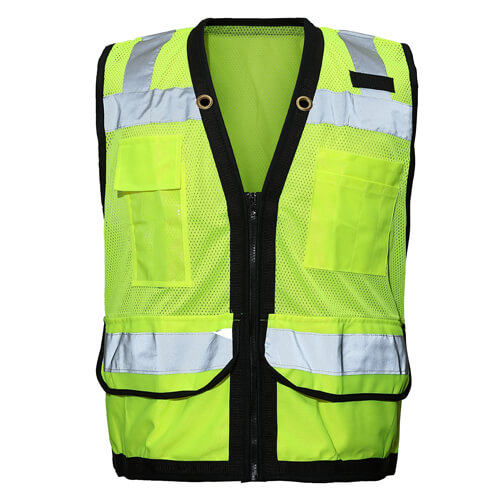
Get a Custom Hi-Vis Vest Quote from VisonSafety
What Are the Key ANSI and OSHA Requirements for Hi-Vis Safety Vests?
ANSI and OSHA expectations focus on visibility levels, design to allow comfortable wear, and documented testing to confirm performance.
Visibility Levels : Vests must meet brightness and reflectivity standards for the environment.
Design Specifications : Appropriate cut and features that maintain visibility while enabling tasks.
Testing Requirements : Laboratory and photometric testing verify compliance.
How Do EN and ISO Standards Apply to Safety Vest Certification?
EN and ISO provide repeatable certification criteria, requiring laboratory testing of visibility, material durability and garment construction so products perform as intended under operational conditions.
How Can Customized Safety Vests Enhance Brand Visibility and Compliance?
Customised safety vests allow organisations to combine corporate identity with compliant PPE. When applied within performance constraints, branding can reinforce recognition without reducing safety.
What Are the Business Advantages of Customizing Safety Vests?
The business advantages of customizing safety vests include:
Brand Visibility : Customized vests act as mobile branding while on site.
Compliance with Safety Standards : Branding can be applied without compromising standard conformance.
Worker Comfort : Tailored options can improve fit and satisfaction.
Which Customization Options Align with PPE Safety Regulations?
Customisation options that align with PPE safety regulations include:
Logo Application : Place logos so they do not obstruct reflective areas or reduce visibility.
Fabric Type and Color : Choose materials and colours that meet required performance levels.
Reflective Tape Layout : Ensure designs preserve the tape layout required for classification.
What Are Best Practices for Selecting and Inspecting Safety Vests as PPE?
Specify vests based on hazard exposure, environmental conditions and workforce needs, and establish inspection and replacement protocols to maintain performance.
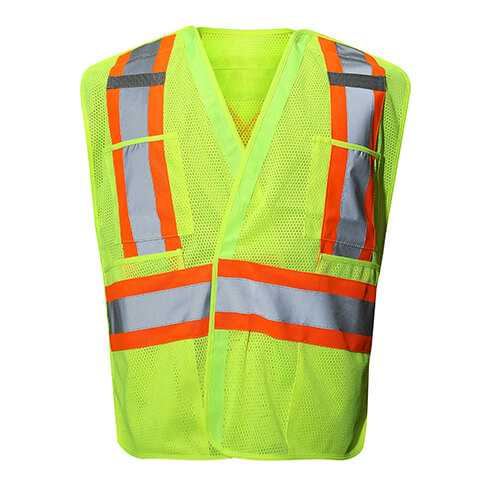
Get a Custom Hi-Vis Vest Quote from VisonSafety
How to Choose the Right Safety Vest for Industry-Specific Requirements?
Choosing the right safety vest involves:
Compliance with Standards : Verify relevant standard conformance for the task and jurisdiction.
Proper Fit : Select sizes and cuts that allow movement while keeping visibility.
Visibility Levels : Match reflective and background materials to working conditions.
Following these practices helps ensure selected vests provide protection and maintain workforce compliance.
Frequently Asked Questions
What types of industries require the use of safety vests?
Industries where visibility reduces collision risk—construction, roadwork, warehousing, traffic control, event management and emergency services—commonly require safety vests.
How often should safety vests be inspected for compliance?
Inspect vests at least monthly, with more frequent checks in heavy-use or harsh conditions. Verify material integrity, reflective performance and fit; remove and replace any garment that shows damage or degraded conspicuity.
Can safety vests be used in adverse weather conditions?
Yes. Select models with water-resistant shells or thermal liners as needed, ensuring the materials preserve visibility and meet performance standards for the environment.
What are the differences between Class 1, Class 2, and Class 3 safety vests?
Classes differ by background material area and reflective coverage. Class 1 suits low-risk, limited-traffic settings; Class 2 is for moderate-risk tasks; Class 3 provides the highest conspicuity for high-risk or complex traffic environments.
Are there specific regulations for safety vests in different countries?
Yes. ANSI/ISEA 107 is the primary US standard, while EN ISO 20471 applies in Europe. Purchasers must observe regional criteria for visibility, design and testing to ensure compliance.
How can businesses ensure their safety vests are compliant with regulations?
Procure vests from reputable manufacturers that certify conformance to recognised standards. Maintain inspection and maintenance routines, track regulatory updates, provide employee training, and keep procurement and inspection records for audits.
Conclusion
Correct classification of safety vests as PPE is essential to risk management and compliance. Well-specified, certified high-visibility vests enhance visibility, reduce incident exposure and demonstrate organisational commitment to worker safety. Integrating approved vests into safety programmes supports operational resilience and legal defensibility.
 English
 Deutsch
 Français
 Polski
 Português do Brasil
 Español
 日本語
 Русский
 العربية
 Italiano
 Nederlands
 Türkçe
 한국어