
Hi‑vis jackets are a frontline safety tool — designed to keep people visible and protected in risky work zones. They combine specific fabrics with reflective and fluorescent elements to balance visibility, comfort, and durability. Below we explain core materials, how reflective and fluorescent components work, and key treatments and certifications. Understanding what hi‑vis jackets are made of helps safety teams choose the right garment for their environment. We outline how VisonSafety builds durable certified jackets.
What Core Fabrics Are Used in Hi Vis Jackets?
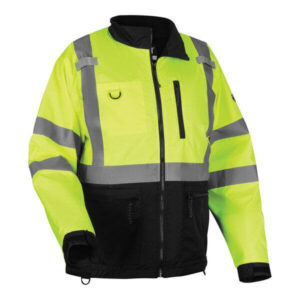
The most common base fabrics for hi‑vis jackets are polyester, nylon, and cotton (or cotton blends). Each serves a purpose: polyester holds color and manages moisture; nylon adds abrasion resistance and strength; cotton blends improve comfort. Knowing these differences helps you pick a jacket suited to the tasks and conditions on site.
Get a Custom Hi-Vis Jacket Quote from VisonSafety
Why Is Polyester the Primary Fabric for Hi Vis Jackets?
Polyester is widely used because it holds color well, resists abrasion, and performs reliably in rough conditions. It dries quickly and helps move sweat away from the body, improving comfort during long shifts. For these reasons, polyester is a go‑to when durability and visibility are priorities.
How Do Nylon and Cotton Blends Enhance Comfort and Durability?
Nylon adds toughness where garments face wear and tear, while cotton provides breathability and a softer feel. Blending provides a middle ground: rugged for heavy use yet comfortable for long wear. These blends also help regulate temperature across climates, making them versatile for many job sites.
How Do Reflective and Fluorescent Materials Improve Visibility?
Reflective and fluorescent materials work together to extend a person’s visibility in different lighting conditions. Reflective tapes return light to its source — crucial at night or in low light — while fluorescent fabrics amplify daylight and UV light to appear brighter during the day. Together they reduce the chance of being missed by drivers, machine operators, or coworkers.
What Are the Differences Between Micro-Prismatic and Glass Bead Reflective Tapes?
Micro‑prismatic tapes use tiny prisms to return more light to its source, producing a brighter, longer‑range reflection. Glass bead tapes rely on microscopic beads embedded in the material; they work well but typically reflect less light and can be more sensitive to weather and wear. For maximum nighttime visibility, micro‑prismatic options often outperform glass bead tapes.
How Do Fluorescent Dyes Enhance Daytime Visibility?
Fluorescent dyes absorb ultraviolet light and re‑emit it as visible light, which makes colors like lime, orange, and yellow look extra vivid in daylight. That increased contrast helps workers stand out against natural and urban backgrounds, especially in busy or cluttered environments.
What Advanced Material Enhancements and Certifications Define Hi Vis Jackets?
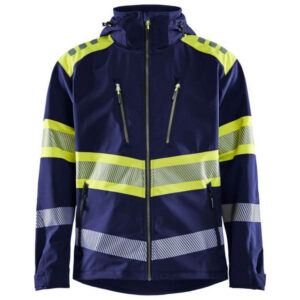
Beyond basic fabrics and tape, hi‑vis jackets may include waterproof membranes, flame‑resistant finishes, anti‑static treatments, and other functional coatings. These enhancements adapt the garment for specific hazards. Equally important are certifications like ANSI/ISEA 107 (U.S.) and EN ISO 20471 (Europe), which set measurable performance criteria for visibility and durability.
Get a Custom Hi-Vis Jacket Quote from VisonSafety
How Do Waterproof, Flame-Resistant, and Anti-Static Fabrics Work?
Waterproof fabrics repel or block water to keep the wearer dry. Flame‑resistant materials are engineered or treated to resist ignition and slow flame spread, protecting against heat and fire risks. Anti‑static fabrics dissipate static charge to lower the chance of sparks in flammable atmospheres. Each treatment targets a different hazard while maintaining required visibility levels.
What Are the Key Safety Standards: ANSI/ISEA 107 and EN ISO 20471?
ANSI/ISEA 107 and EN ISO 20471 define how bright garments must be, where reflective material should sit, and how garments perform under wear and washing. ANSI/ISEA 107 applies mainly in the U.S.; EN ISO 20471 covers Europe and many international markets. Choosing certified garments ensures consistent, tested performance on the job.
Research continues to test fluorescent fabrics and retroreflective materials against international standards such as ISO 20471 to verify long‑term performance and compliance.
Hi-Vis Fabric & Retroreflective Material Compliance to ISO 20471
This study compared physical properties of several fluorescent fabrics and retroreflective materials to assess their compliance with ISO 20471. Samples included blends such as PET 71%/Cotton 23%/PU 6% used in public road cleaner uniforms, an ISO‑compliant Japan‑made PET/Cotton + conductive fabric, and two PET 100% samples for adults and children. Each sample was evaluated across the seven ISO 20471 criteria to determine suitability for high‑visibility warning clothing.
An evaluation of the suitability of fluorescent fabrics and retroreflective materials for road traffic warning clothing in compliance with international standards, 2019
How Does VisonSafety Manufacture Durable and Certified Hi Vis Jackets?
At VisonSafety, we combine material selection, tested reflective systems, and strict quality checks to produce hi‑vis jackets that meet regulatory standards and real‑world demands. Our processes focus on repeatable performance: colorfastness, reflective durability, and construction quality that holds up under repeated use and laundering.
What Quality Control Processes Ensure Material Performance?
We test incoming fabric for tensile strength, color retention, and reflectivity. During manufacturing we inspect seam integrity, tape adhesion, and fit. Final samples undergo visibility and durability checks to ensure performance.
Independent studies underline the importance of rigorous testing and standard compliance to maintain visibility, reflectivity, and mechanical performance in demanding work environments.
Hi-Vis Vest Performance, Durability & Reflectivity Standards
A study in Lima examined the performance and regulatory compliance of six new high‑visibility vests from three brands available locally. Laboratory tests followed NTP 399.010:2019 and assessed tear and tensile strength, plus optical properties like color and initial reflectivity. The research highlights how standard testing identifies performance differences between brands and products in real construction settings.
Análisis del Cumplimiento Normativo y Desempeño Funcional de los Chalecos de Seguridad en Obras Civiles de Lima, Perú, 2010
How Does Customization Influence Material Selection and Jacket Features?
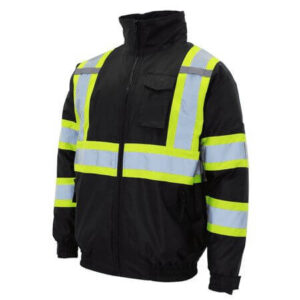
Customization lets you match materials and features to the job. Through our OEM/ODM services, VisonSafety accepts client specifications for fabric weight, color, reflective layout, and extra treatments. That flexibility ensures garments meet both safety requirements and brand or operational needs for any sector.
What Are Hi-Vis Jackets Made Of | FAQs
Get a Custom Hi-Vis Jacket Quote from VisonSafety
What are the benefits of wearing hi vis jackets in various work environments?
Hi‑vis jackets make workers easier to see, which lowers the risk of collisions and accidents in low‑light, high‑traffic, or complex sites. Beyond visibility, many jackets include practical features — pockets, vents, and weather protections — that improve comfort and usability during long shifts.
How do I choose the right size and fit for a hi vis jacket?
Use the manufacturer’s sizing chart and measure chest, waist, and torso length. The jacket should allow full movement and room for layering without restricting reach. Adjustable cuffs, hems, and ventilation points help fine‑tune the fit for both comfort and safety.
Can hi vis jackets be used in extreme weather conditions?
Yes. Manufacturers offer hi‑vis jackets with waterproof membranes, insulation, and breathable liners for varied climates. Select a jacket rated for the specific environment — waterproof for wet jobs, insulated for cold, and breathable for hot or active work.
What maintenance is required to keep hi vis jackets in good condition?
Follow the care label: most jackets are machine washable, but avoid bleach and fabric softeners, which can degrade reflective materials. Air drying prolongs tape life. Inspect garments regularly and replace them if color or reflectivity drops below the required standard.
Are there specific regulations for hi vis jackets in different industries?
Yes. Standards like ANSI/ISEA 107 and EN ISO 20471 set minimum visibility and design requirements and are widely used across industries and regions. Some sectors also require additional certifications for flame resistance or anti‑static properties — check the rules that apply to your industry.
What are the environmental impacts of manufacturing hi vis jackets?
Traditional materials such as polyester and nylon come from petrochemicals, which raises sustainability concerns. Many manufacturers — including suppliers we work with — are moving toward recycled content, reduced waste processes, and energy‑efficient production. When sustainability matters, ask about recycled materials and responsible manufacturing practices.
Conclusion
Choosing the right hi‑vis jacket means balancing visibility, protection, and comfort. The right fabrics, reflective systems, and certifications protect workers and meet regulatory needs. If you need certified, durable hi‑vis garments tailored to your site, explore VisonSafety’s range or contact us to discuss a custom solution.
 English
 Deutsch
 Français
 Polski
 Português do Brasil
 Español
 日本語
日本語 Русский
 العربية
 Italiano
 Nederlands
 Türkçe
 한국어
한국어